
CAA Launches UK Consultation on Airlines’ Mishandling of Wheelchairs and Mobility Aids
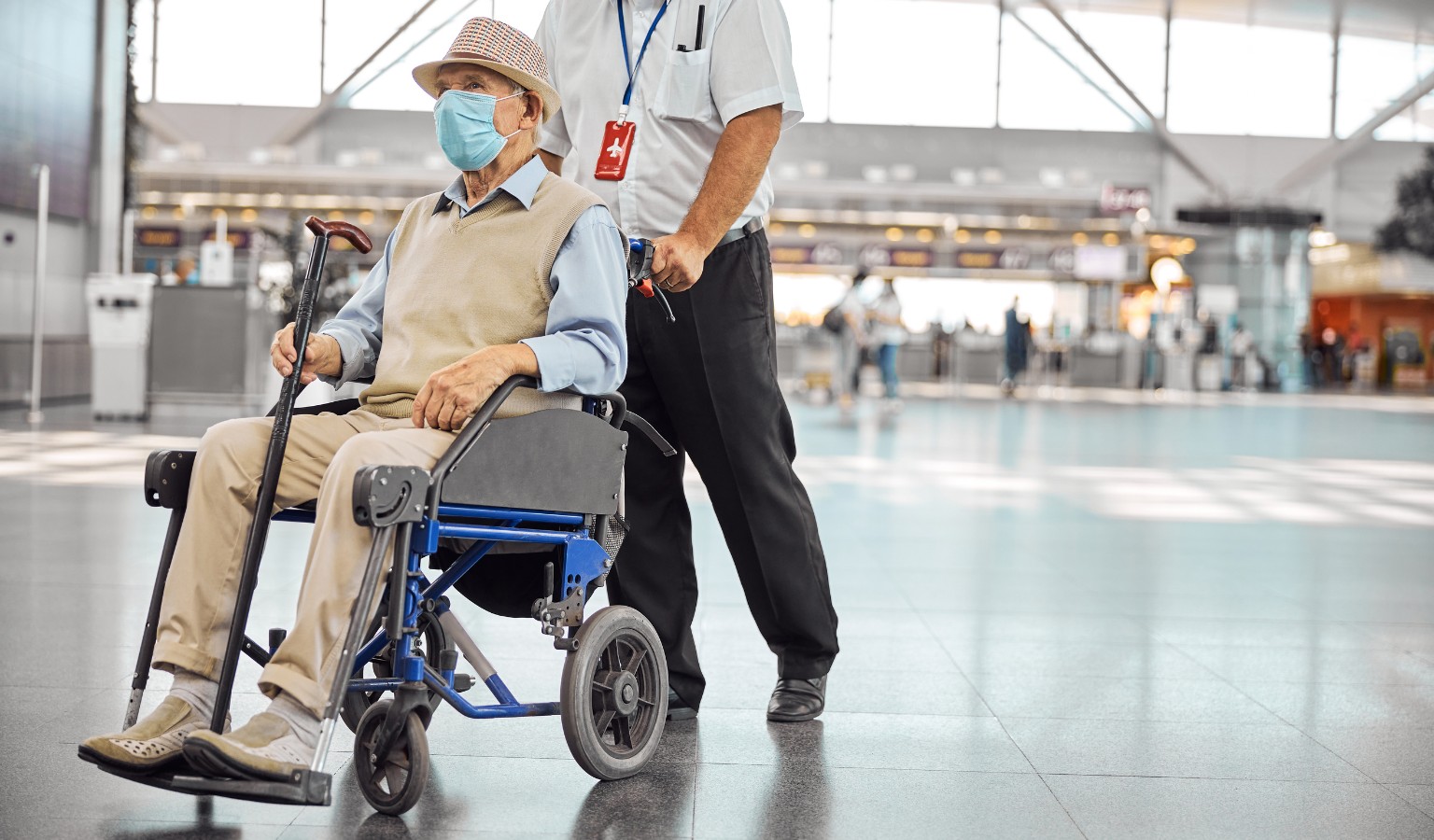
For anyone who travels with a mobility aid, handing over your wheelchair at the airport can feel like surrendering a part of yourself. Too many of us have watched our independence disappear down a baggage belt, not knowing if our chair will arrive intact on the other side. Even for those who get to take their mobility aid right up to the gate, being separated from it can be jarring.
Now, for the first time, the UK Civil Aviation Authority (CAA) is tackling this issue head-on. Its newly launched consultation on mishandled mobility aids could mark a turning point for how airlines handle — and report — wheelchair damage.
The CAA’s CAP 3088: Consultation on the Requirement to Publish Information on Mishandled Mobility Aids reveals what many wheelchair users have long suspected for a long time: damage is happening far more often than airlines care to admit.
According to data gathered from 13 major airlines (covering 95% of UK domestic passengers and 77% of international passengers), more than 283,000 wheelchairs were carried on flights in 2023 — and at least 1,217 were damaged. That equates to an average of over 100 wheelchairs every month.
The CAA, however, believes the true figure is likely even higher, due to the inconsistency in ways in which airlines collect their data, or when and how passengers file their claims. Some airlines don’t even collect any data at all.
This mirrors findings we explored in our earlier guide, “Airline Damaged Your Wheelchair? Here’s What to Do.” While that article focuses on what passengers can do after the fact, this new consultation looks at how to stop the cycle of damage in the first place — by demanding transparency.
AD:

What the CAA Found — and Why It Matters
The CAA discovered that most airlines either:
- Rely on passenger complaints to record incidents,
- Have incomplete internal systems, or
- Don’t differentiate between manual, powered, or scooter-type mobility aids.
That last point is crucial. Losing or damaging a £20,000 powered wheelchair isn’t comparable to a scratched suitcase — yet many airlines still treat them as ordinary baggage.
The impact is devastating: travelers are stranded, independence is lost, and in some cases, trips end before they begin. The CAA admits these stories create “heightened anxiety among individuals travelling with mobility aids” — and that many are avoiding air travel altogether.
For more background on how international regulations have failed to keep pace, see our explainer “Wheelchair Users No Longer Protected When Flying.”
So, What’s the CAA’s Proposed Fix?
The CAA’s plan is refreshingly straightforward and the key is transparency. All airlines operating at least 0.5% of UK flights would be required to publish quarterly data showing:
- The number of mobility aids they carry (to and from each UK airport)
- The proportion that were lost, delayed, or damaged
- Breakdown by airport, and eventually by wheelchair type
This information, the CAA says, “should already be collected” under existing regulation. Making it public would finally allow passengers to compare airlines based on how they handle mobility aids — and create a reputational incentive for airlines to do better.
This builds directly on our earlier overview, “Airline Wheelchair Damage Rules 2025: What You Need to Know.” That article explained the evolving legal framework worldwide; the UK’s consultation now provides a concrete opportunity for change at a national level.

What the Law Already Says in the EU — and What’s Missing
Under Assimilated Regulation (EU) 1107/2006, airlines must ensure disabled passengers have equal access to air travel and compensate for damaged mobility aids. Yet, compensation is still limited by the Montreal Convention, which caps payouts at around £1,500 unless passengers declare a higher value in advance — something few even know they can do.
The CAA’s 2024 Airline Accessibility Guidance (CAP 2990) already urges airlines to fully cover repair or replacement costs. But as the consultation shows, most haven’t followed through voluntarily. The upcoming requirement would make transparency — and accountability — non-negotiable.
Learning from the U.S. Model
The CAA points to the U.S. Department of Transportation, which has required airlines to report mishandled wheelchairs and scooters since 2019. American carriers now publish monthly figures, and the data is public — a model that’s improved accountability across the industry. You can find these monthly reports on the Air Travel Consumer Reports page on the U.S. Department of Transportation website. For instance, the September 2025 report shows that 983 wheelchairs or scooters were either lost, damaged, or mishandled, out of a total of 85,963 that were enplaned. This equates to a reported percentage of 1.14%.
If adopted in the UK, similar quarterly reporting would let travelers see exactly which airlines treat their mobility aids responsibly, and which need to improve.
What Happens Next — and How You Can Have Your Say
The consultation is open until 19 November 2025. After that, the CAA will review all submissions and decide whether to introduce a mandatory reporting requirement.
You can share your views directly through the official CAA portal: 👉 Consultation on Mishandled Mobility Aids Information (CAP 3088)
This is a pivotal moment. As the CAA itself puts it:
“The availability of information would empower mobility aid users to make informed decisions and promote accountability in air travel.”
If the CAA’s proposals go ahead, the UK could finally set a new standard — one where airlines are held publicly responsible for how they treat mobility aids, and where passengers no longer have to fly in fear.
Transparency is just the beginning. But it’s a beginning that could change everything.
What’s Next: Our Upcoming Airline Interview Series
Over the coming months, we’ll be speaking directly with airlines around the world to understand how they’re making flying more inclusive — from check-in to landing, and everything in between.
We’ll be asking about their accessibility training, how they handle mobility aids like wheelchairs and scooters, and what practical steps they’re taking to reduce damage and improve confidence in air travel for everyone.
It’s an opportunity to hear first-hand how airlines are addressing these issues — and we’d love your input. If you have questions you’d like us to put forward, please share them in the comments below or email us at hello@theworldisaccessible.com.
TWIA
Although all hotel and vacation rental information on this site is thoroughly vetted, we recommend calling ahead to ensure your needs are met.
Newsletter Sign Up:
Thank you!
You have successfully joined our subscriber list.
1 thought on “CAA Acts on Airline Wheelchair Damage in the UK”
This could pretty much be solved if airlines would make provision for passengers to travel inside the cabin in their wheelchair. The technology is already there. Delta Airlines have a prototype. The passenger enters the cabin in their wheelchair, the chair is anchored the same way it is in a vehicle. More comfort and dignity for the passenger and no damage! It’s really not rocket science!