A word to the wise: this blog post is incredibly long. My longest ever! I really enjoyed writing it, and I hope you will enjoy reading it. It felt a shame to cut bits out, and I wanted to be as detailed and as honest as possible. Feel free to bookmark the page and come back to it.
We arrived in Paris in the early afternoon after flying overnight from Rio de Janeiro. See: ‘Air France Accessibility Tested’. Once we cleared customs and located our bags, we were directed to station Aéroport Charles de Gaulle 1, where we planned to catch a train to central Paris and then the Metro. My research suggested our chosen route was accessible. We paid almost €40 for two adults and a child, and despite my being in a wheelchair, we were told nothing about the trains’ inaccessibility for the tickets we’d purchased.
We passed the barrier and took the elevator to the platform, rendering our tickets ‘used’. We were told that no one on the platform had the authority to help us and that we needed to go back upstairs and request assistance. €40 down the drain and a flat-out refusal at the ticket office to reimburse or reprint tickets.
What followed was a chain of information passed from person to person for more than an hour and a half, with each giving a different version of a) how we could book assistance and b) which routes were accessible. Spoiler alert: none of them — except those who said a taxi was the only way — got it right. Even the person who seemed to have authority over others, and who told us to take the RER B line to Denfert Rochereau and then switch to the Metro, got it wrong — as we found out in Denfert Rochereau, when a staff member there abruptly said we had no choice but to hail a cab.
Normally, I would attempt to brush these situations off. But after traveling and being awake for over 24 hours, and with our six-year-old daughter being autistic (she was a trooper, despite the tiredness), fatigue and frustrations were biting, and it took everything I had to ensure it didn’t boil over.
We booked our hotel through Fora Travel, and our assigned advisor, Judy, gave us a wide range of options, all tailored to our needs. We chose the ibis Paris Tour Eiffel Combronne 15ème because it offered great value for money and was conveniently located, as the name suggests, near the Eiffel Tower. There were also plenty of great brasseries close by.
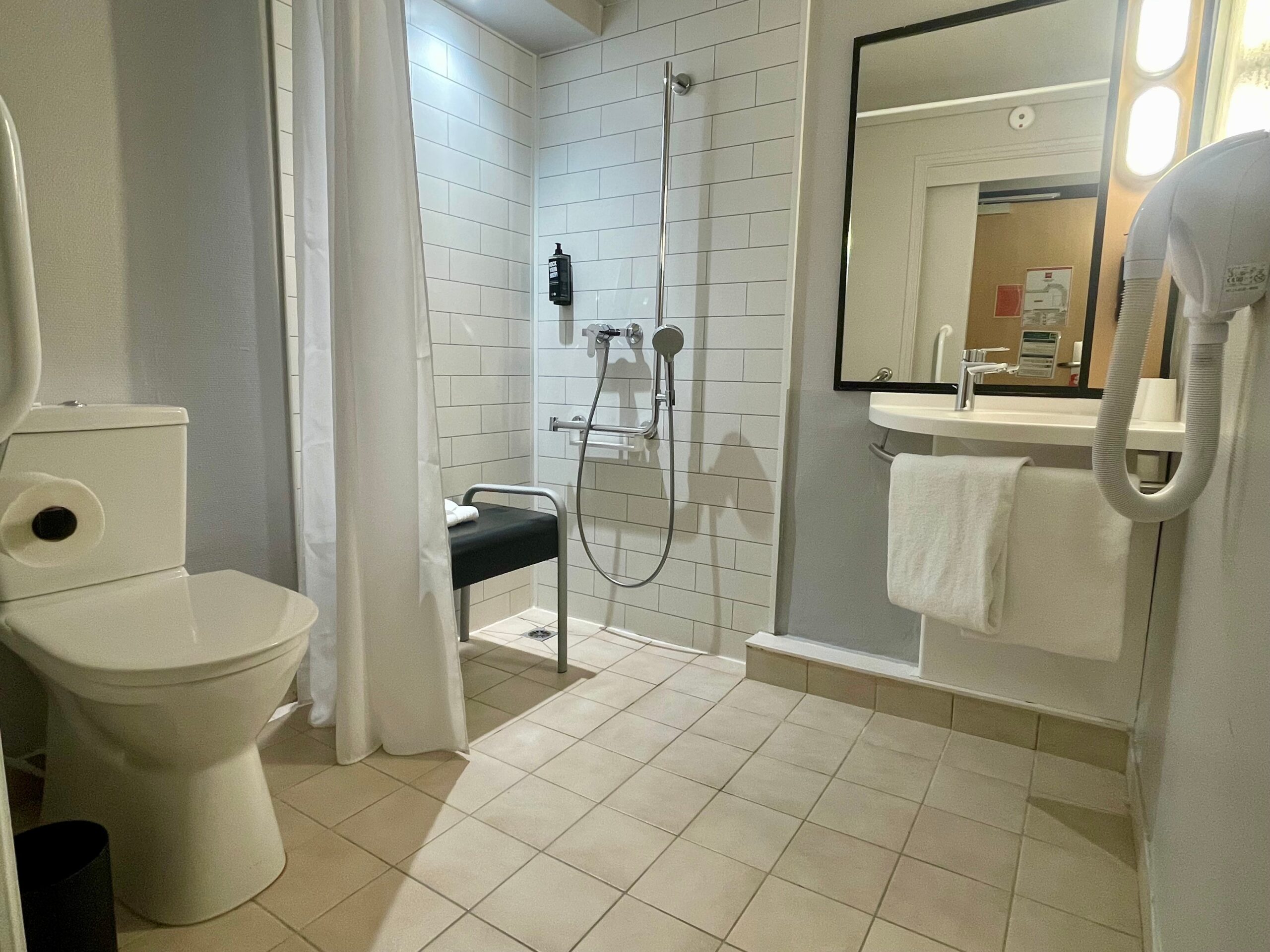
Thankfully, after our hellish afternoon, check-in was smooth and painless. Our accessible room featured a large bathroom, a roll-in shower (with a shower stool), grab-bars both in the shower and at the toilet, and the sink was free-standing, providing ample space underneath for my knees.
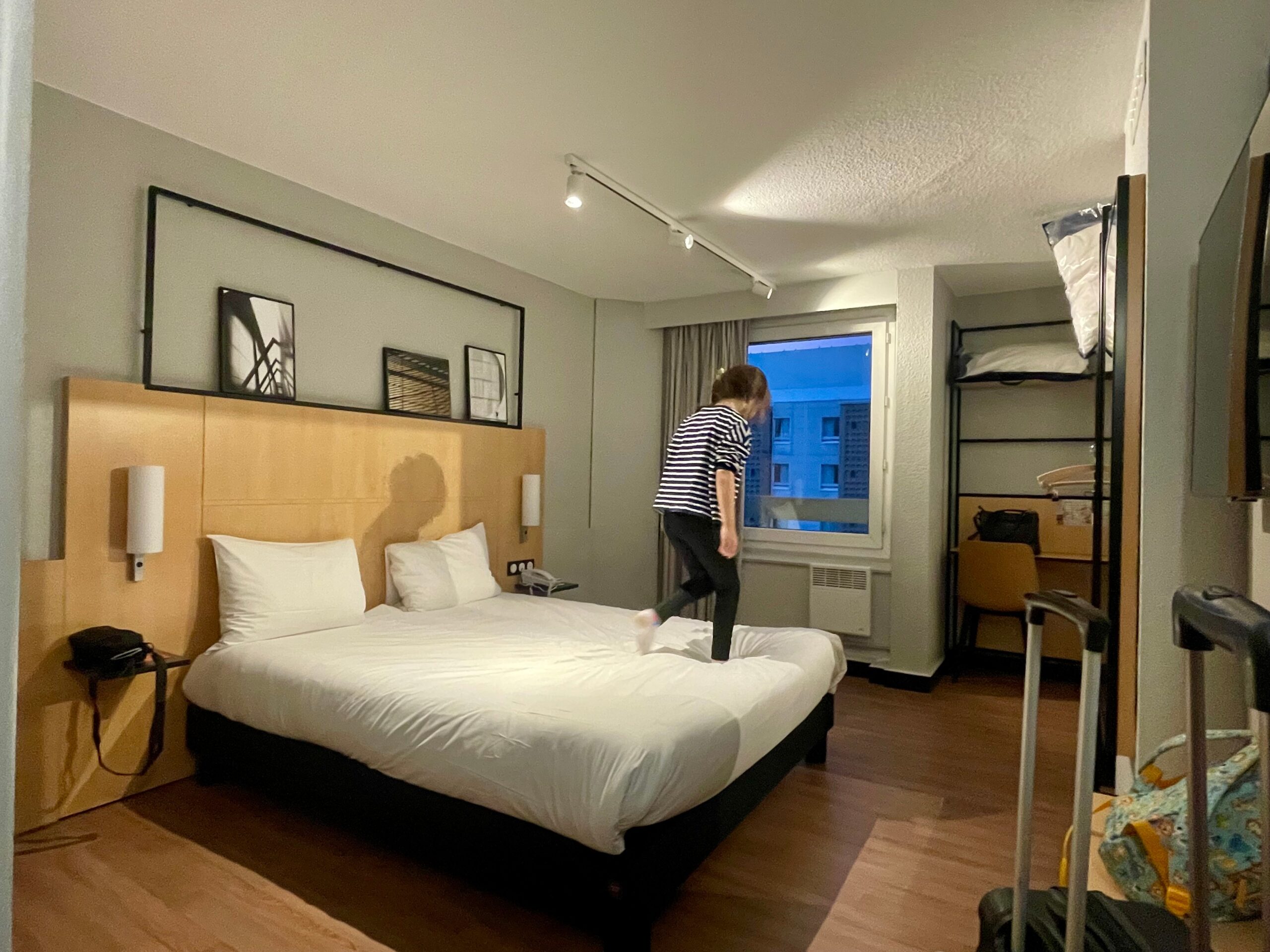
The bed frame was low, though unfortunately, I did not note its height. There was clear space on both sides of the bed and at the foot of it, giving me plenty of room to transfer from my wheelchair. There was a small clearing under the bed, but I did not measure it, so I cannot say if a hoist would fit underneath. This wasn’t something we specified as a need.
The hotel had a bar and restaurant, which we ate at one evening. Food was good, but you can find much better in the various restaurants just a couple of blocks away.
There was an option to pay for breakfast, but we focused on enjoying coffee and croissants at different cafes each morning, so we didn’t opt for the hotel’s breakfast service.
There were some yawns and bleary eyes as we enjoyed our first coffee and croissants, caused by a rushed early start. We hurried to get ready for our taxi, which later whisked us to Café Les Deux Musées, where we’d meet our guide for the morning, Remy. He would be showing us around the Musée d’Orsay. But first, some much-needed coffee and buttery pastry!
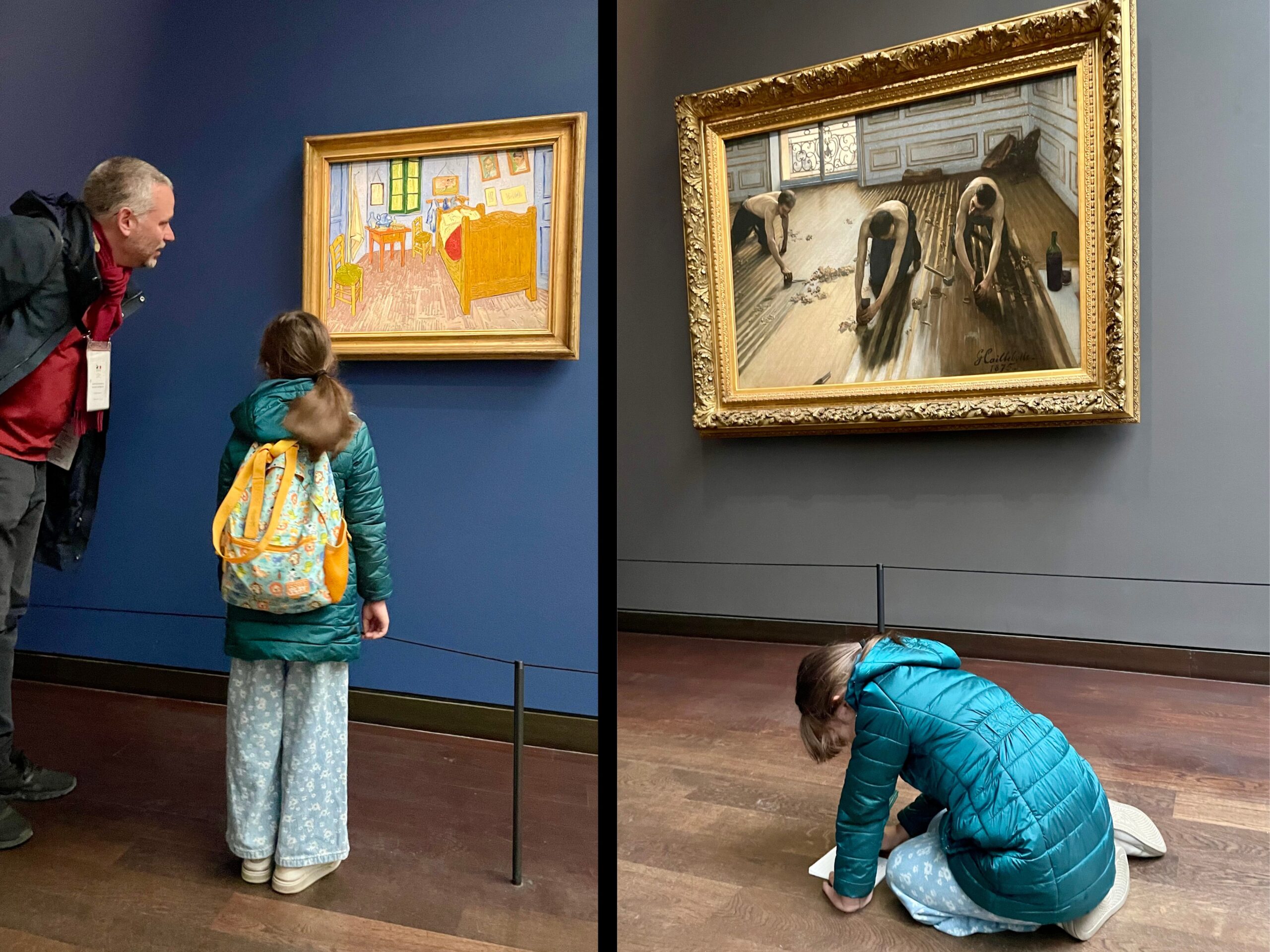
Remy was a really lovely chap. Incredibly knowledgeable and eager to tell us everything there was to know about the Musée d’Orsay, how it used to be an old train station, and about the incredible artwork that we got to see during our tour inside. He was also great with Amélia, involving her as much as the language barrier would allow, even giving her a gift to take home as a souvenir. Remy informed us that he had been to the museum the day before to scout out all of the best accessible routes that avoided the crowds. He also wanted to know ahead of time where the hidden elevators were and the accessible restrooms. We were very grateful for this expert information during our visit.
The highlight of our tour (at least for me) happened early on, as Remy guided us through the crowds on the ground floor to a lift that took us straight to the quieter fifth floor. “Most people start at the bottom and work their way up”, Remy told us, “But we’re going to do the reverse”. It meant that for the first half an hour or so, we had access to Van Gogh’s collection, Monet’s, Degas’s, Renoir’s, and Pissarro’s, all with minimal visitors around us. It was so quiet, in fact, that a group of students was sitting on the floor in front of one of Van Gogh’s paintings, sketching their own version of it.
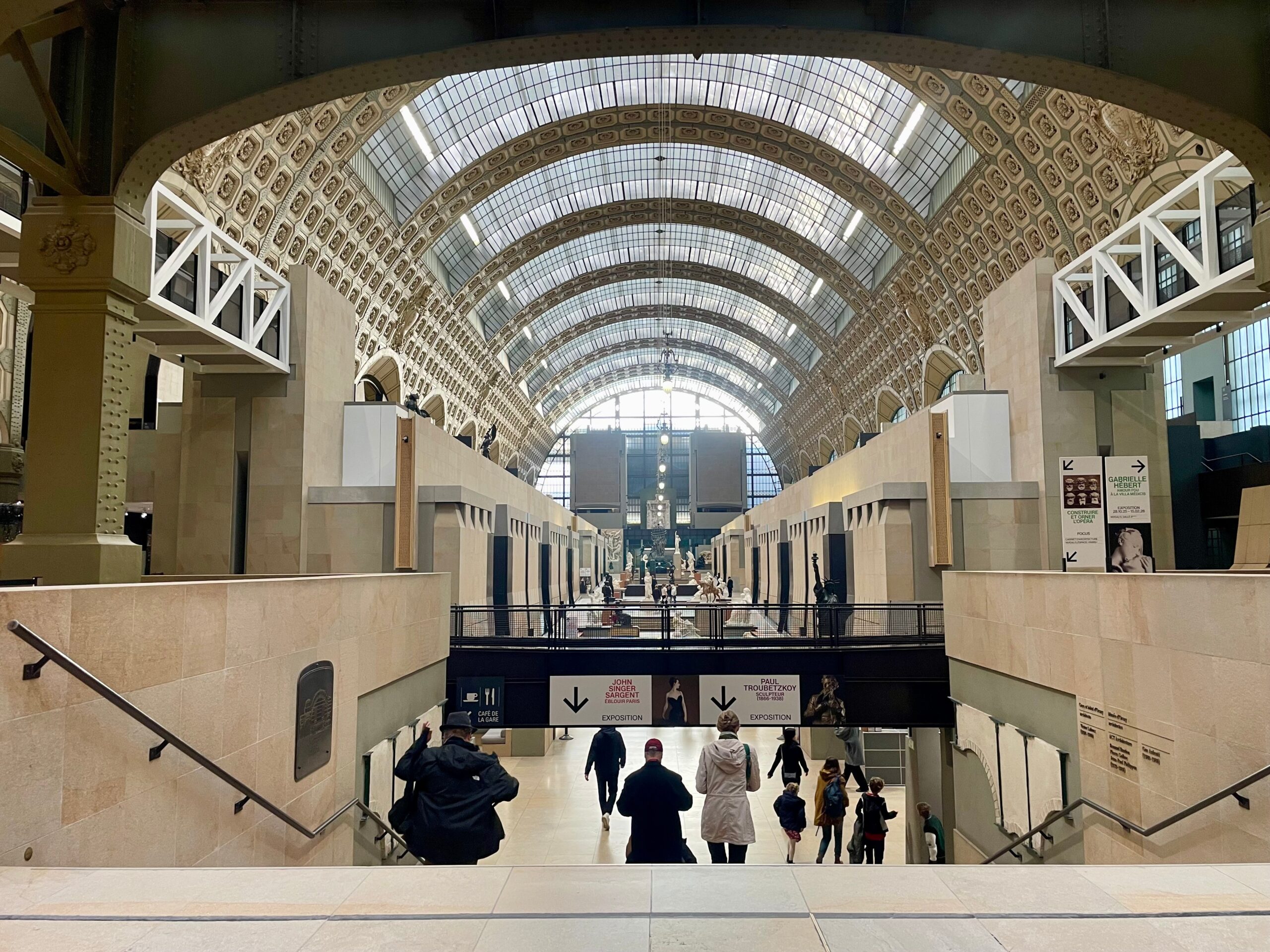
Remy taught us a great deal about the various famous paintings, which were the most coveted, what the likely meaning behind each piece of art was, and some of the history of the painter and their (often difficult) life. This breadth of understanding and informative dialogue extended onto the various other floors, too, and I left thinking “that was really, really great”. If nothing else, it made for a pleasant change to actually leave an art gallery or museum feeling like you learnt a lot.
For those interested, the tour with Remy was called “Musée d’Orsay Tour: A Guided Crash Course by Context” and can easily be requested through your travel advisor when booking with Fora.

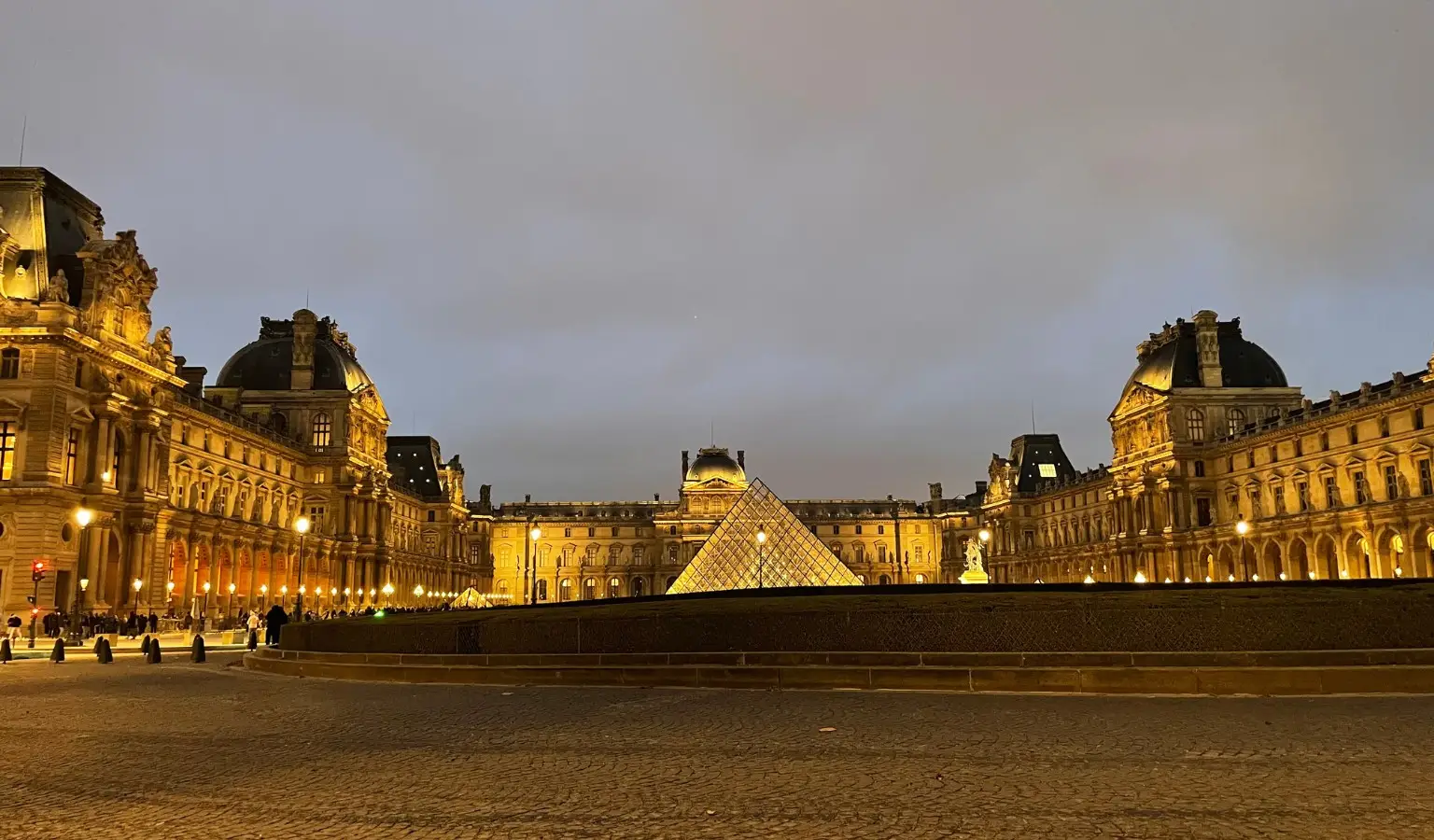
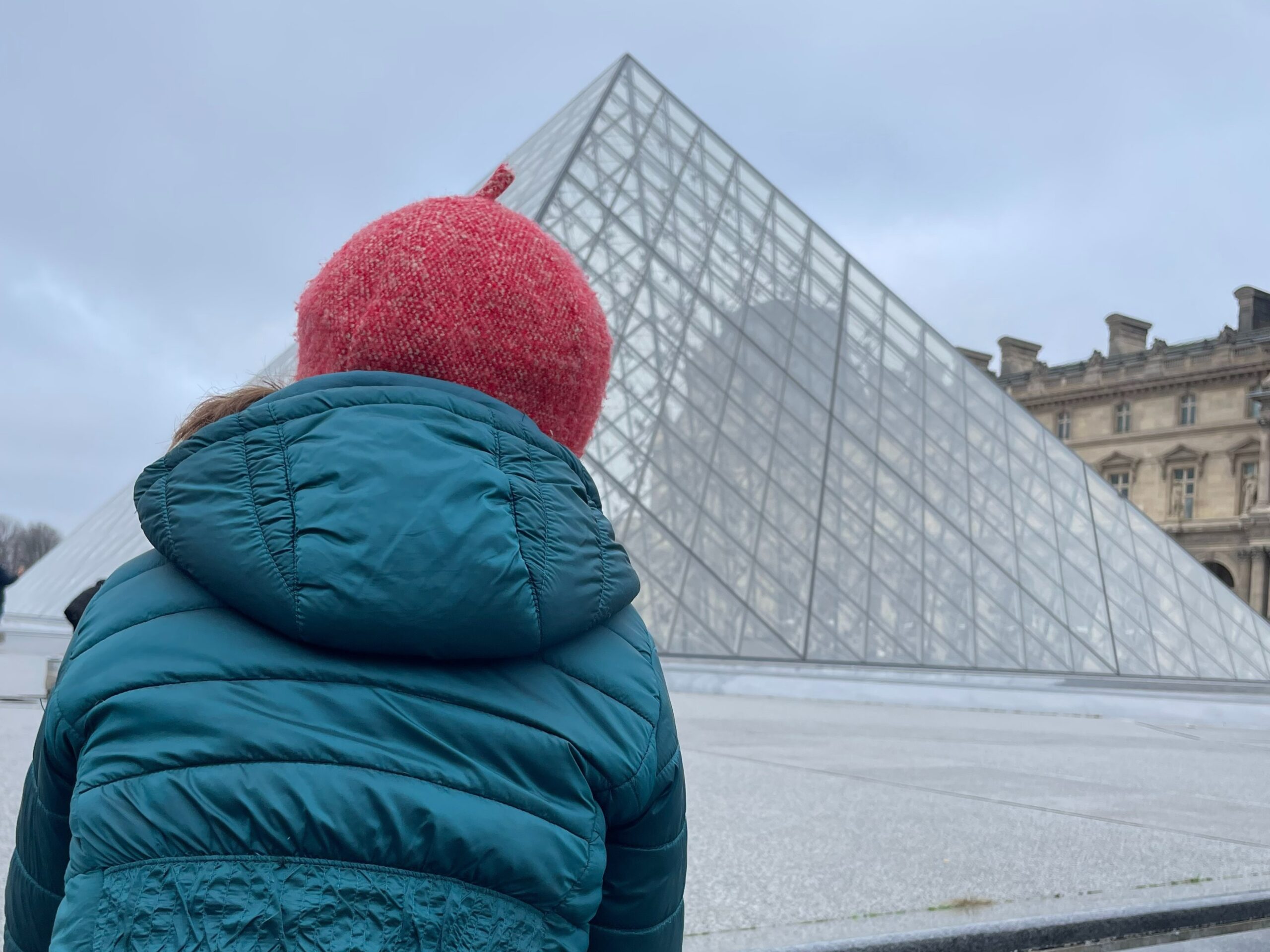
From the Musée d’Orsay, we made our way across the Seine to the forecourt of the Louvre, where we stopped to snap the obligatory shots of the glass pyramid. More on The Louvre during our day two itinerary, but for now, it was awesome enough just to show Amélia such an iconic Parisian landmark.
Directly in front of the Louvre, there is the Jardin des Tuileries, which stretches all the way to the Place de la Concorde. There was a Christmas market in the gardens, and so we spent some time enjoying overpriced drinks and snacks and letting Amélia blow off some steam on a couple of rides — though more fun was had and more steam blown off in the nearby children’s play area, also situated within the Jardin de Tuileries.
It wasn’t long after Amélia started playing that the rain began to spot, and then the heavens quickly opened. We had no access to the internet, so we decided to walk back to our hotel in the rain — a 3 km journey that didn’t feel too daunting, given how easy I’d been finding the walkways and road crossings.
As we crossed the road at the bottom of the Champs-de-Mars, clothes soaked, Amélia announced that she wanted to go up the Eiffel Tower. My wife and I looked at each other, cold andwet , and each said “ah, why not?!” and made our way there.
Regular adult ticket prices to take the elevator to the second floor are 23.10 Euros, but for visitors with a disability, it’s 5.90 Euros. You can also purchase a companion ticket for the same price. Amélia’s ticket was also 5.90 Euros, not only because she is autistic, but also because she’s aged between four and eleven. If you would like to visit the very top of the tower (which we somehow thought wasn’t possible), the price would have been 9.10 Euros, compared to the regular adult price of 36.10 Euros.
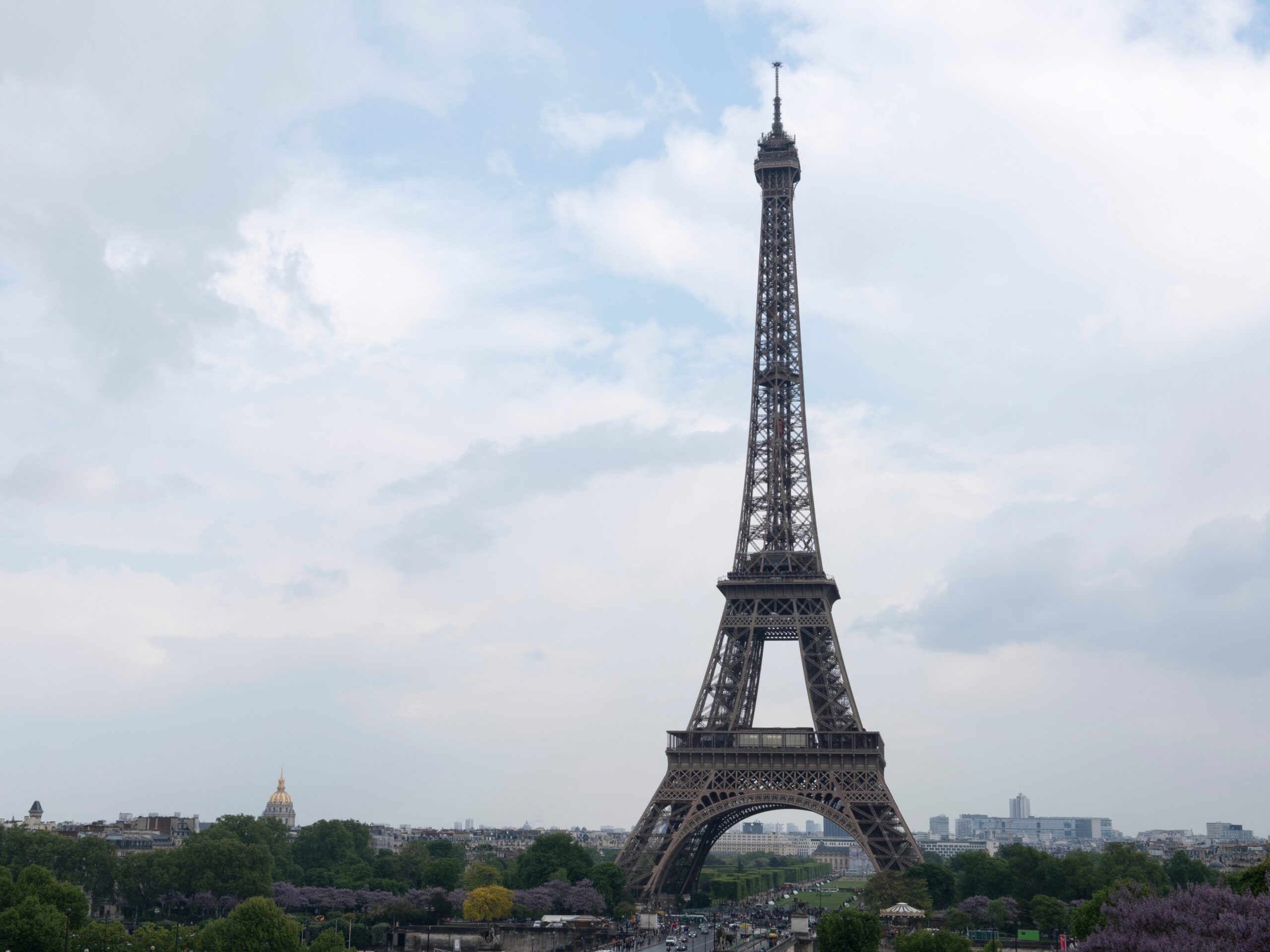
We entered the concourse underneath the Eiffel Tower via the entrance on the north-east facing side of the tower. We had to attract the attention of a security guard who waved us through the bustling crowd, who were having their bags checked. Once inside, we asked a member of staff where we could buy our tickets, and they pointed us toward a kiosk dedicated to tickets for people with disabilities.
If you need a restroom, there is a lift to an underground public toilet, where you’ll find a spacious accessible restroom, which I found to more than cater for my needs as a manual wheelchair user.
After purchasing our tickets, we headed to the elevator behind the kiosk, where we encountered a small queue, but were quickly heading upwards in the glass lift. It’s an experience in itself getting to see the wrought iron girders glide past you as you peer out through the glass-walled elevator, down onto the city below you.
Once out on the second-floor viewing deck, you’re met with panoramic views of Paris, which never fail to be anything short of mesmerizing, even on a cold, overcast, rainy day. You’ll find places to eat, shops to buy souvenirs, a little bit about the history of the tower, and of course, numerous spots to take that perfect picture “for the ‘gram”, or maybe just to show the folks back home?! We entered two souvenir shops, but both were very small and cramped, and difficult to get around in a wheelchair without knocking things over or bumping into other customers.
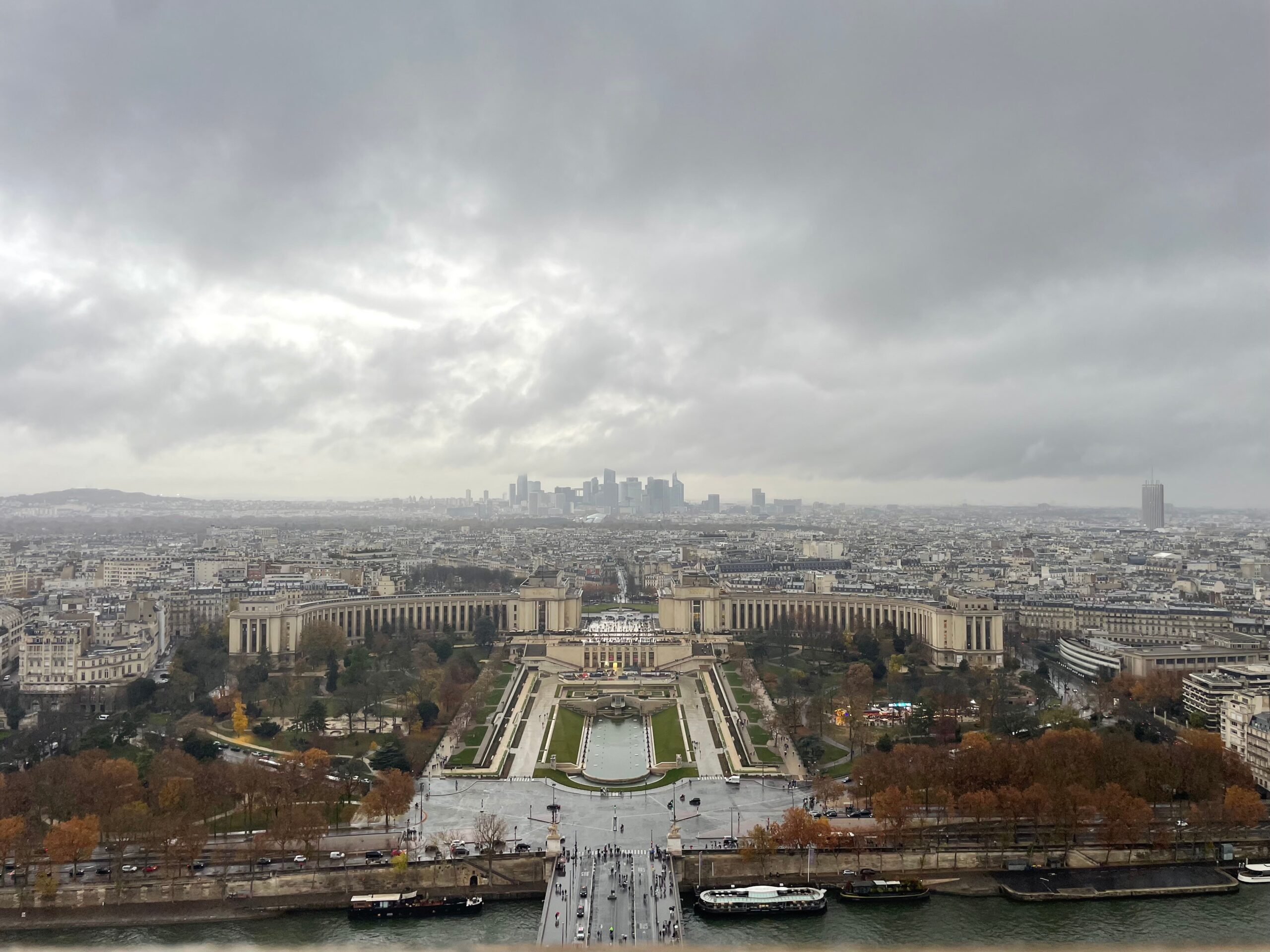
Once you’re ready to descend (which, for us, given how cold and wet it was, didn’t take all that long), grab the attention of a member of staff, and they’ll help you enter the lift via one of the exits, so that you can board first before the crowd enters.
Another day, another tour to start us off. This time, we were to meet a fantastic lady named Elli at the Restaurant Le Flore en L’Île. Not to be denied our essential coffee and croissants, we placed the order, and then were pleasantly surprised when Elli informed us that they were covered by the tour as a refreshment. An excellent start!
Elli began by regaling us a bit about the history of the Île de la Cité, showing us ancient maps and giving us a real feel for the area and its past. Once we’d finished our breakfast, we headed straight toward Notre Dame, whilst Elli gave us a breakdown of how the catholic church and the French royal family were often at odds with each other throughout the centuries, and how royalty often tried to outshine Notre Dame with their construction decisions on the Île de la Cité.
Elli was tremendously helpful. Whenever she saw that I was maybe struggling on an incline or a pesky curb, she stepped in and gave me a hand, freeing up Fernanda to focus on taking care of Amélia. She went the ‘extra mile’, and we are very grateful to her.
The queues at Notre Dame are huge, but thankfully, an accessible entrance let us skip the line and go straight in. However, due to recent rules banning tour guides on Sundays and Saturday afternoons, Elli had to wait outside, which was disappointing because I would have liked to hear more about the interior from our guide. Still, we joined the crowd circling inside the cathedral and stopped near the altar to watch the last moments of Sunday Mass.
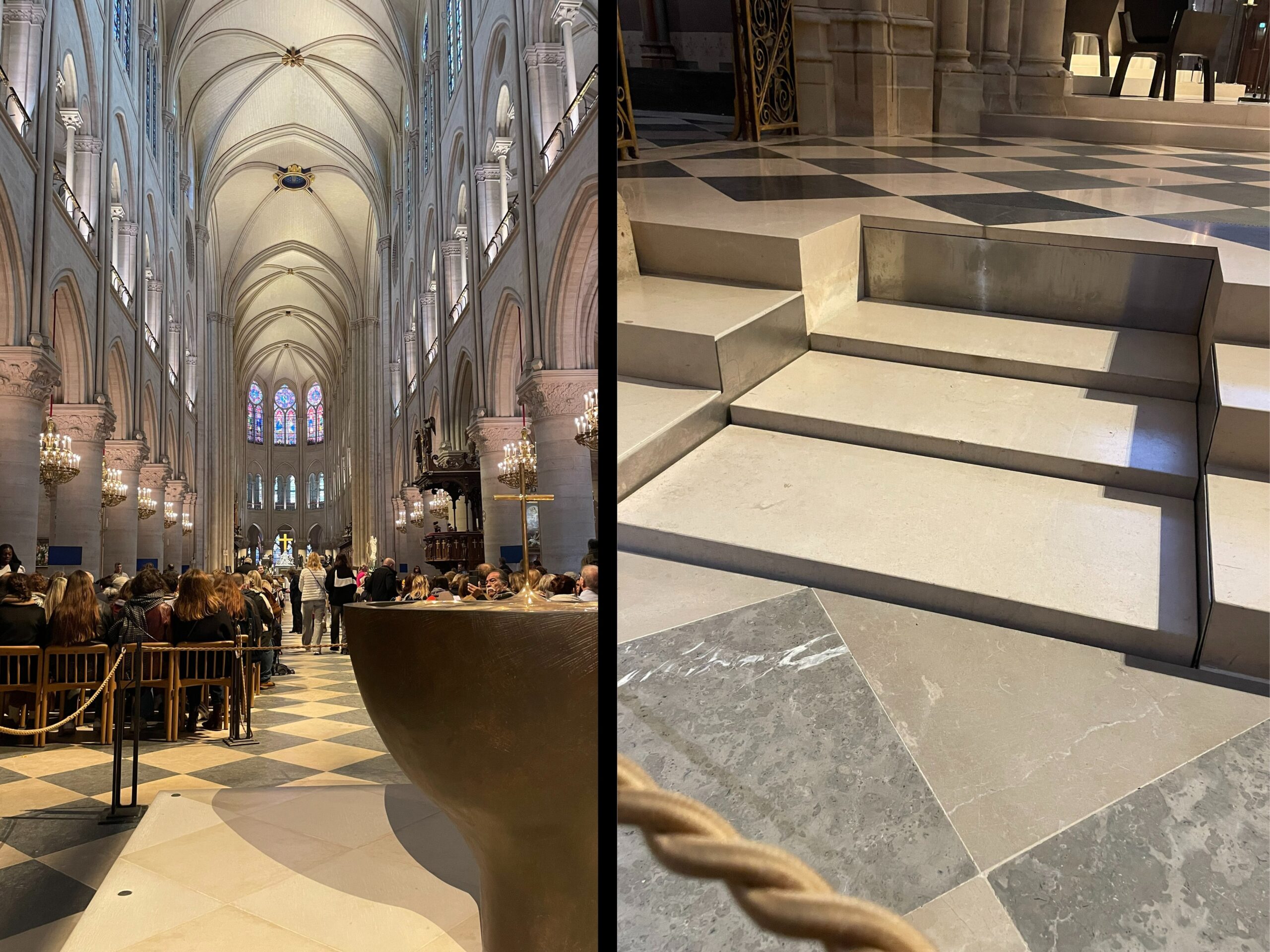
Most of you will likely know there was a major fire at Notre Dame a few years back. Thanks to the fire brigade’s heroics and a decision to sacrifice the cathedral roof, most of the cathedral was saved, and opportunities arose from the destruction. During renovation, new areas were revealed, and there was a chance to modernize and improve accessibility. I saw this at the steps by the altar, where, after Mass, a man pressed a button that revealed a platform lift hidden as steps. I easily rolled onto it and was lifted to the pathway, which I thought was really cool! Notre Dame is free to visit and easy to enter if you are a person with a disability.
After finding Elli on the outside, she took us to the Conciergerie, the Latin Quarter, and the Saint-Germain-des-Prés. Once again, just like with Remy on the previous day, it was so incredibly interesting to be walking around with someone like Elli, so knowledgeable about the local area and the history of the places we were visiting. Being guided around somewhere and having what you’re seeing explained to you really opens up the experience to a whole new level.
Also like Remy, Elli had really done her homework ahead of our meeting. She’d taken the time to scout out restaurants and cafes that had an accessible toilet, so that we could duck in and use one at any moment. This level of consideration is something I am not accustomed to, and as someone who has been caught short far more times than I care to mention, this simple act really did offer me peace of mind. For those interested, the tour with Elli was called “Sites and Insights: An Expert-Led Paris Welcome Tour by Context” and can easily be requested through your travel advisor when booking with Fora.

As Elli departed, she strongly recommended that we consider entering The Louvre and taking a look around. I’ve been to Paris several times, but I’ve never been inside this world-famous museum, so I’ve never viewed the Mona Lisa in person. It took a waiter approximately 10 minutes to empty all of the equipment, Christmas decorations, inventory, and coats that management had clearly given the ‘a-okay’ to store in the accessible toilet. Seriously, don’t you just hate it when that happens? The food was a little more than average as well.
Alright, on to the actual Louvre and visiting as a person with a disability. Entry was via a designated disabled access point, manned by a member of staff, and with a large wheelchair symbol above it. Once inside the pyramid, you’ll be led to a large, circular platform lift, open-topped, with impressive views of the busy Hall Napoléon—the large entrance hall directly below the pyramid.
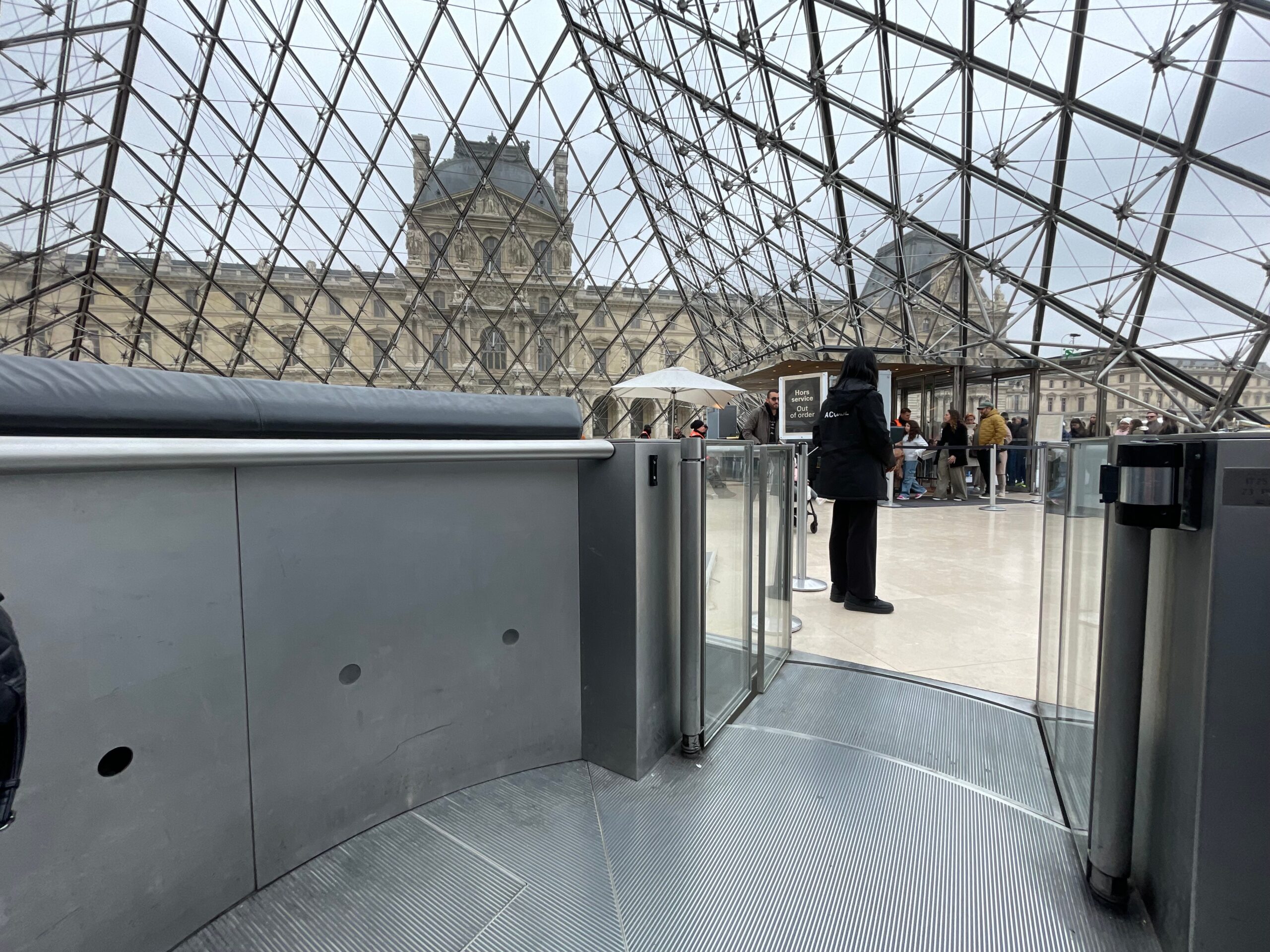
Entry was free of charge for me and my wife (companion ticket), as well as for Amélia, given that she’s under 18. We were simply instructed to enter various wings of the museum by going against the flow of exiting visitors, and sure enough, security staff nodded us through on every occasion.
We got a bit confused when trying to find the Mona Lisa and quickly discovered that by going the ‘regular’ route, you’ll encounter stairs—it’s not barrier-free. A member of staff told us we needed to head back to Hall Napoléon, where we could then utilise the fully step-free route using elevators and passing through the Denon Wing. The Mona Lisa is in room 771, on level 1. If in doubt, there’s plenty of staff around who can help direct you (trust me, we needed it at times). Once again, we entered room 771 through the exit. I’m not sure if this is strictly necessary or just where we happened to wind up, but regardless, it was possible and easy.
Now for the fun part! I really had no idea what to expect when entering the room where the Mona Lisa is displayed. I was quite taken aback by the crowds jostling for position along a roped barrier, all craning their necks, phones aloft to take pictures. The barrier is around 12ft away from the painting, and I was invited to enter the space between the crowd and the painting so that I could get an unobstructed view. What’s more, Fernanda and Amélia were encouraged to join me, and a member of staff came and took a family photo of us, so close to the artwork. I’d say it was one of the coolest things I’ve experienced in Paris, even if a little intimidating to be sitting in front of all those people taking pictures. I wonder how many snaps we ended up being in! I mentioned the experience in our Facebook group, and many folks replied with their own encounters and feelings on the way things are done at the Louvre. All in all, super positive!
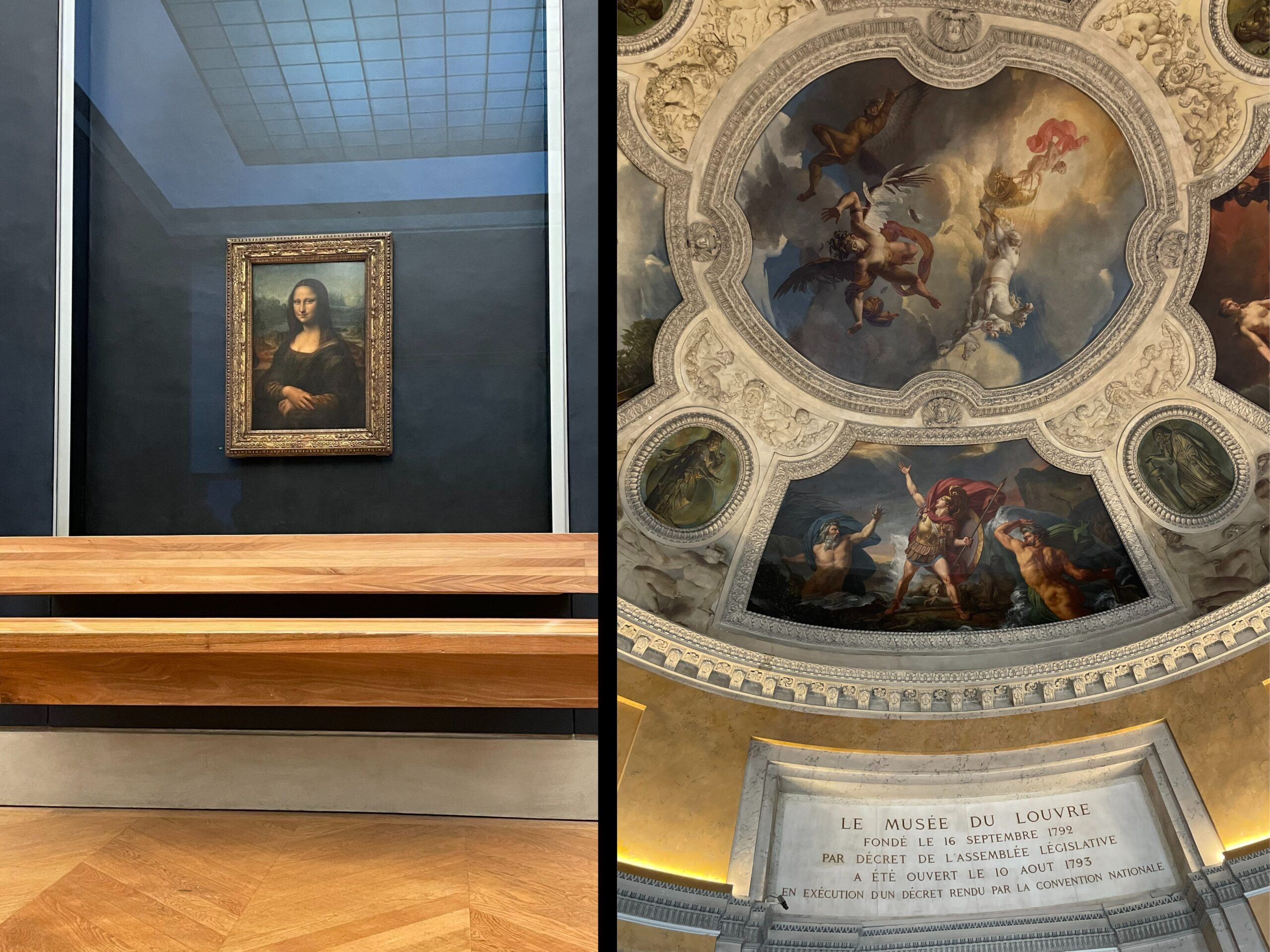
Time was getting away from us, and the Louvre was set to close in an hour or so, so we spent the remainder of our time wandering about with no real sense of where we were going or what displays we’d see. But that’s the beauty of the place: it’s so immersive and huge that you can easily get lost and enjoy hours exploring diverse artifacts and art pieces, all housed in interesting rooms with grand ceilings that feel like an extension of the artwork on display, thanks to dazzling details on the walls and ceilings.
Night was really setting in when we left the museum, and as such, coupled with the fact that we were very cold and very tired, we wanted to avoid having to walk back to our hotel and thought it was as good a time as ever to give the G7 Taxi’s a whirl, especially given that we had been told there was a G7 ACCESS, which was perfect for wheelchair users. As with just about everything in Paris, we had to download the app and begin the finicky task of signing up and then figuring out how to order or schedule a taxi.
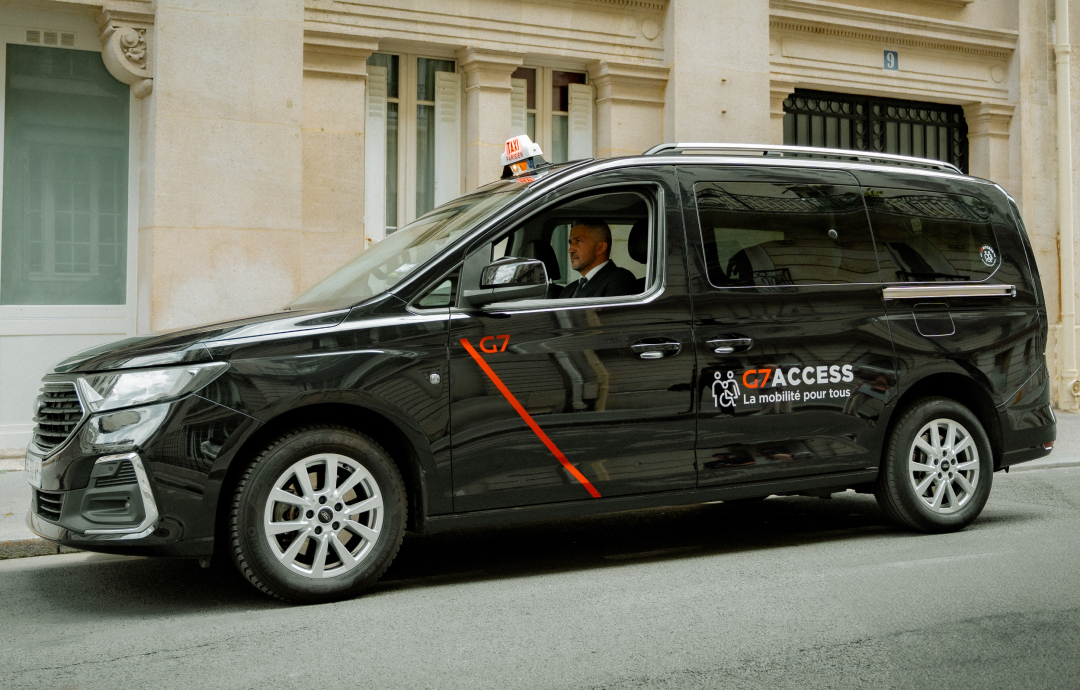
The taxi came, and the ramp to get in was great. The one thing to mention is that the price was much higher than what we had experienced when using Bolt, which we expected, but due to the traffic, it cost us 40 Euros (approx. $45) to be taken less than 4 KM (2.5 miles). I got slightly irritated by the way the driver spent a long time with the meter on, as he asked us where we wanted to go, despite having the exact address on our reservation. Furthermore, when we exited the taxi, the meter said 38 Euros, but we were charged 40. Small things, but still small irritants. We had been tipping all our drivers with cash, but this one seemed to be taking his own tips.
These experiences obviously do not reflect the entire G7 fleet. We probably just got slightly unlucky.
On our third day, we decided to give taking the bus a try. Our destination for the morning was the Sacré-Cœur, and I had found our bus route after some Googling.
We caught the bus from a street that was only a minute walk from the entrance to our hotel, and once on board, we were immediately struck with a problem. No cash or cards accepted, only tickets “via the app”. Uh, those dreaded words. I actually think there’s a reasonable argument to suggest that being strictly app-only can make taking the bus less accessible for ALL.
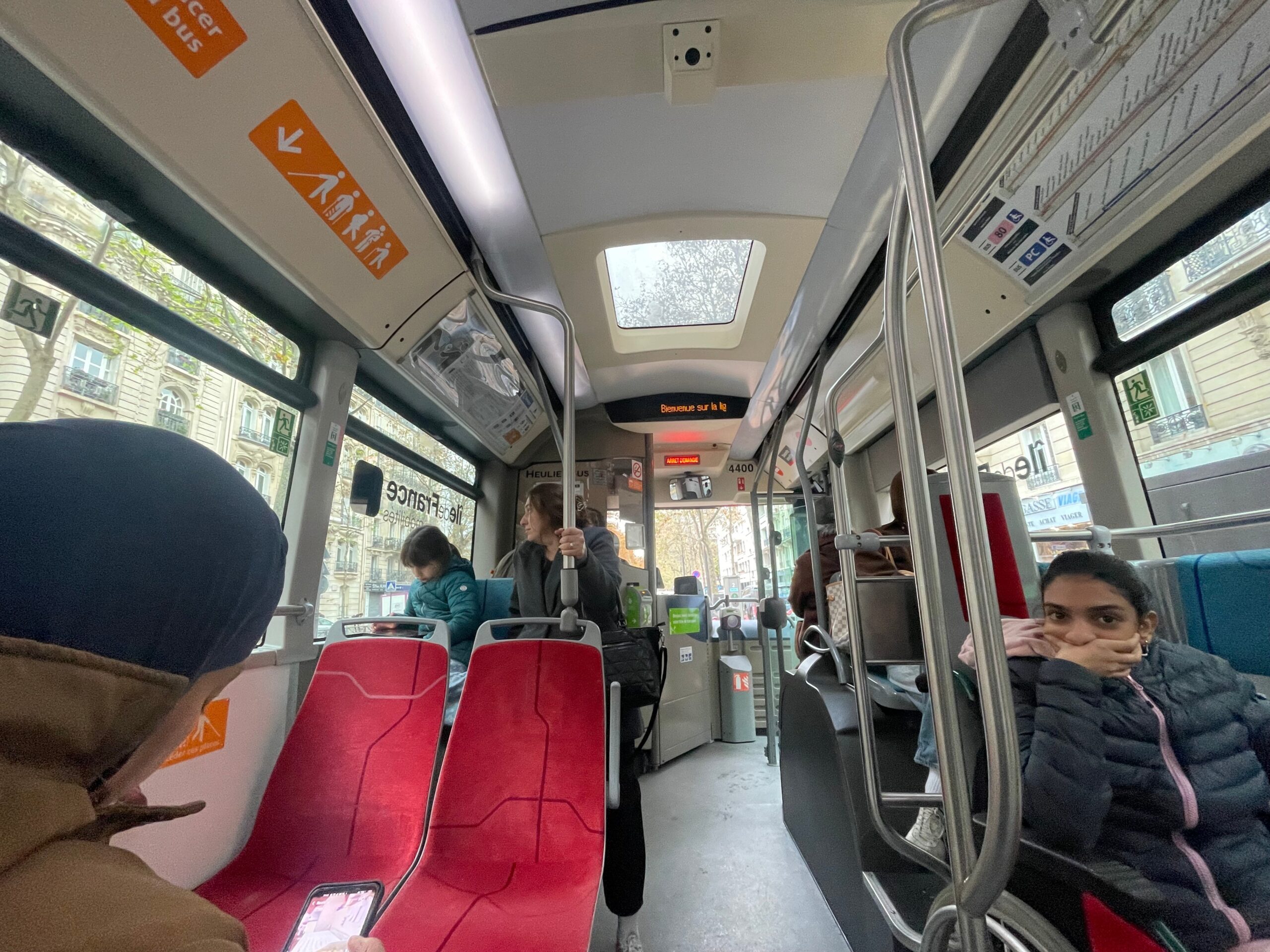
We disembarked, I found some free Wi-Fi, and it took me around twenty minutes to successfully purchase our tickets. I would advise that you create an account before buying because I tried purchasing as a guest, and our first lot of paid tickets simply vanished upon payment completion.
The bus had a ramp in the middle and two wheelchair spaces available. It was a bit uncomfortable, traveling for almost an hour (very slowly due to traffic) to get to where we needed to go. But it helped us to save a little cash on taxi fares, and it enabled us to check out a different mode of transportation in Paris.
It was tricky to figure out where we were when we got off the bus, and in which direction we needed to walk to get to the Sacré-Cœur, which sits on top of Montmartre hill. We could not find the funiculaire either, which would have been fun to ride and would have helped us get to the cathedral much more easily. Another reminder of why having access to the internet is crucial.
The path up to the summit of Montmartre hill is long, windy, and sometimes a little steep, and I would like to pause for a second and thank my wife profusely for her help getting us all up there.
The Sacré-Cœur is simply wonderful. An architectural marvel, standing proud and looking out over the panoramic views of the city streets below. On a cloudy day, it’s amazing to sometimes see breaks in the clouds where rays of sunshine fall across some of the buildings before you. You could almost say it’s biblical.
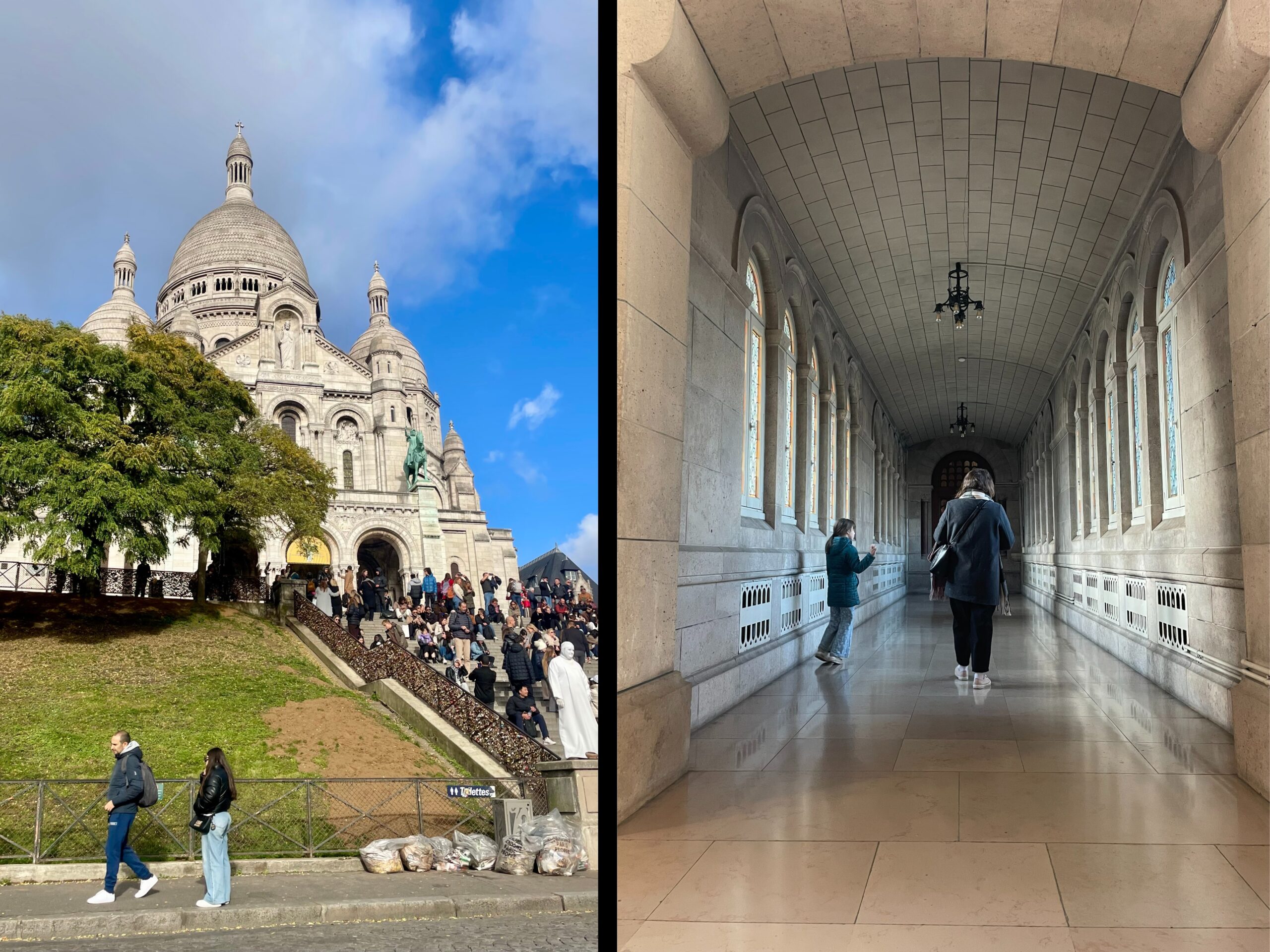
For those who cannot manage the stairs at the front entrance of the Sacré-Cœur, there is a back way, passing through Hôtellerie du Sacré Cœur de Montmartre and entering the cathedral via a connecting enclosed walkway that looks like a corridor fit for Hogwarts. I didn’t actually know that the Hôtellerie was a hotel until researching for this article, despite having entered the Sacré Cœur via this route once before. Guests (mainly pilgrims) can stay with us for five nights there, from as little as 15 Euros per night. The catch? You have to agree to pray for an hour, in the cathedral, anytime from 11 PM to 6 AM. I reached out to the Hôtellerie to ask whether any of the rooms were accessible; they informed me that there is a single ground-floor room adapted for wheelchairs. More to come on that topic in a future post, coming soon.
The Sacré-Cœur is one of Paris’ main highlights and tourist draws, and should be high on your list of things to visit. The interior is spectacular, and mostly accessible. It’s serene, as almost all cathedrals are, and it offers a welcome reprieve from Paris’ busy streets. Furthermore, you’ll find an accessible restroom when entering via the Hôtellerie du Sacré Cœur de Montmartre entrance, as well as a coffee machine and a place to charge your mobile devices if needed.
Our descent of the hill was a lot easier than the ascent, for obvious reasons. I relied a lot less on my wife for help, and before we knew it, we were on Boulevard de Clichy and heading in the direction of the Moulin Rouge.
Anyone familiar with Boulevard de Clichy will know it’s home to a wide variety of adult-oriented shops, so we stuck to the central walkway between the two lanes of traffic to spare our little one anything she really shouldn’t be seeing—a word to the wise if you’re visiting with kids, too. After about twenty minutes, we reached the Moulin Rouge. It’s a place that’s, if I’m honest, a little underwhelming. I imagine it’s far more enjoyable if you have tickets to a show, but from the outside, it’s merely okay: worth seeing once to snap that iconic photo, but not somewhere you’d feel compelled to revisit on a return trip to Paris.
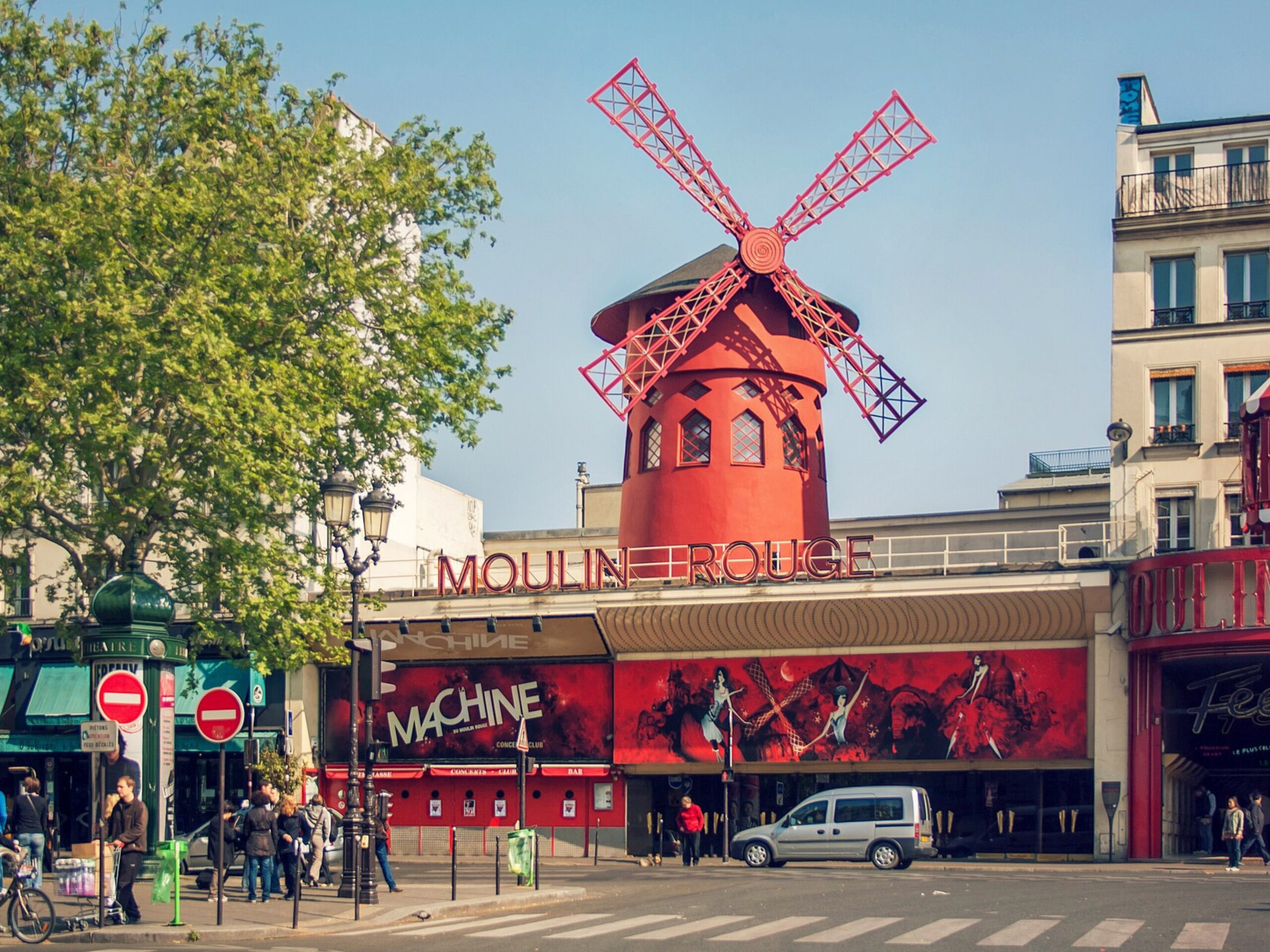
After taking the obligatory snaps, we ducked into Starbucks to beat the cold and then ordered ourselves another Bolt car via the app and headed to the Champs-Élysées, where we saw the Arc de Triomphe twinkling in the night sky, and we spent some time shopping for Amélia in a very nice three-story toy store. From there, a few more pictures, and then we headed back to our hotel on foot and on wheels.
I mentioned that we used Bolt a few times as a taxi service—it works much the same way as Uber. You download the app and order whenever you need, with different vehicle sizes available. Most times we ordered, we immediately messaged the driver to let them know I was a manual wheelchair user. Some drivers canceled, but we always found someone willing to take us. It’s also a much cheaper option than G7 for those traveling on a budget.
I will write a separate piece about the various restaurants, brasseries, and cafes that we visited, as well as ones that we researched or were recommended to us by our Fora travel advisor.