
/ Accessible Travel Stories /
Romania wasn’t what I expected. It was better. Six days, several hundred kilometers, four seasons in a single afternoon, and a country that seemed to stun me at every turn — castles, rural villages, thunderstorms, and flash floods included. As a wheelchair user, I’d spent years searching for European destinations that were genuinely worth the effort. Romania smashed it out the park.
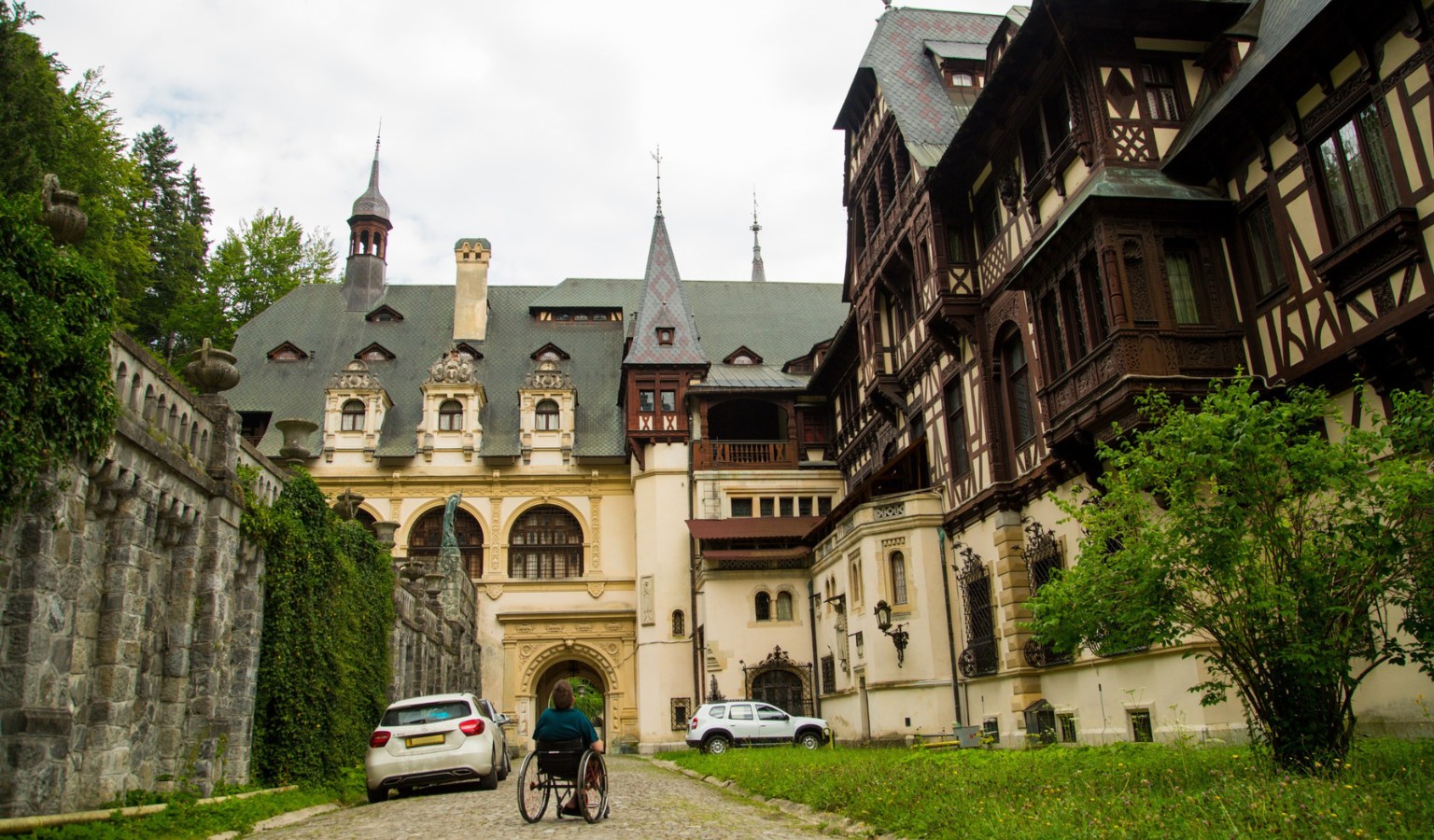
When you want to take a holiday somewhere new in Europe, but you have mobility concerns to contend with, it’s easy to overlook somewhere as far-removed as Romania. You’d be forgiven too for assuming that a country such as Romania would not be a suitable destination for a wheelchair user, such as myself. But I’m here to tell you about my experiences traveling through this fantastic country, courtesy of Accessible Romania by Sano Touring.
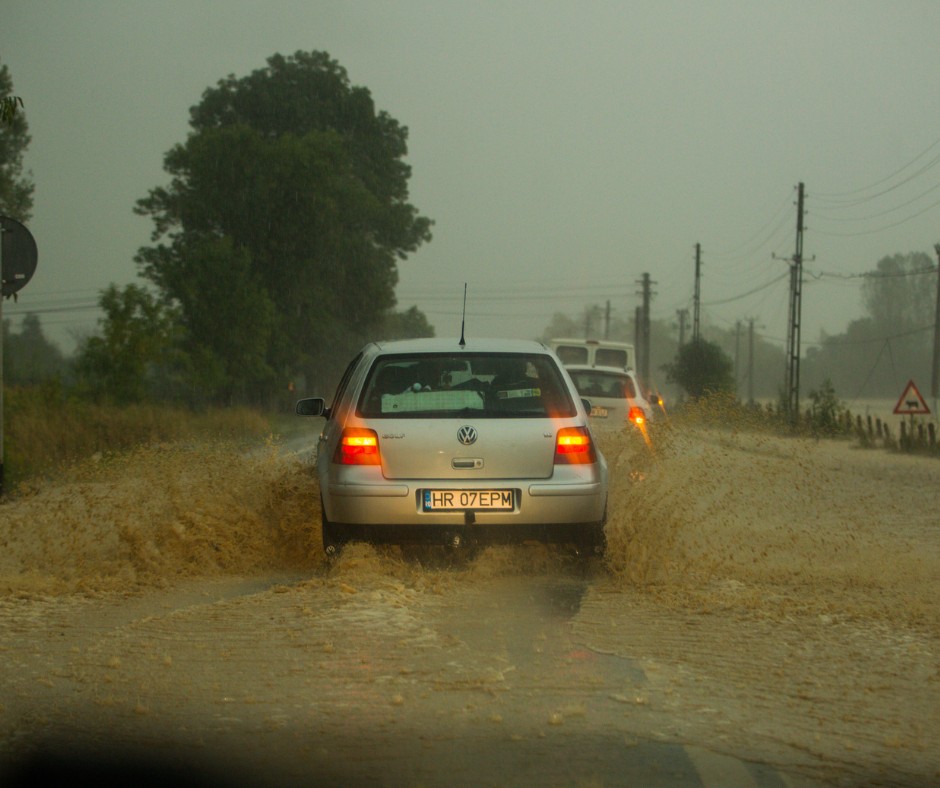
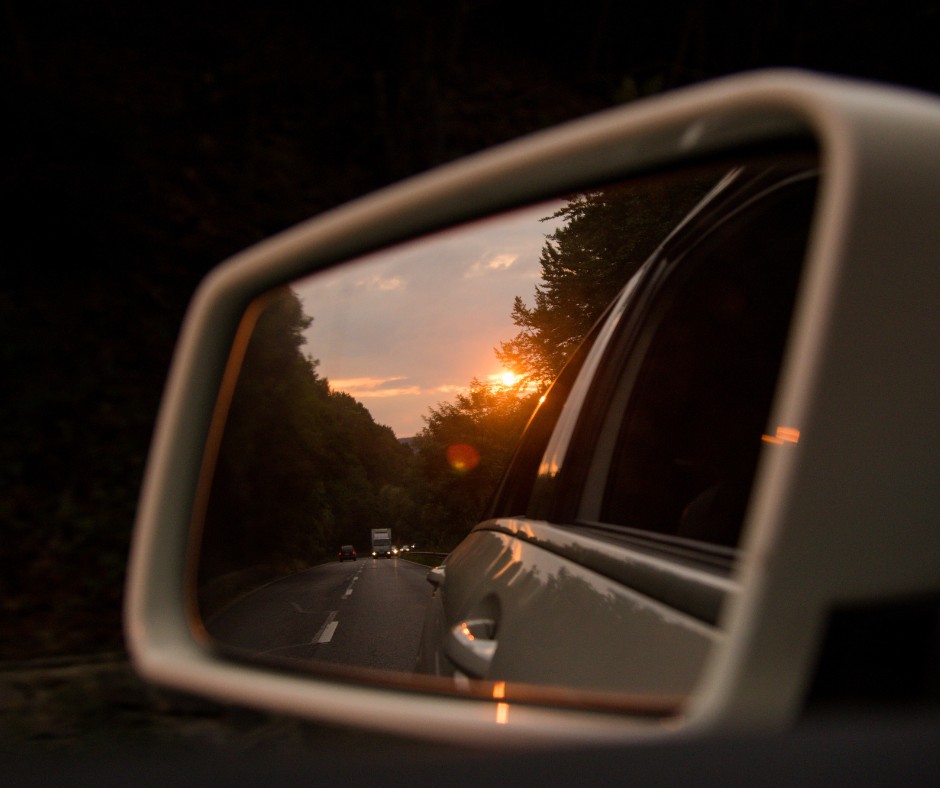
Our road trip actually started long before crossing the border into Romania. We had departed from northern England some days prior, crossing the English Channel, and then making our way across Western and Central Europe. Once in Romania, we headed to Cluj-Napoca, being treated to four seasons in one day along the way. From blazing hot 35°C heat to hailstones large enough to crack a windshield, to a sudden deluge from the heavens and flooded roads ahead — it was quite the sensory assault. During the flash floods (a taste of which you can get from one of the pictures below) many cars around us were pulling over to let the storm pass, but my friend Kathryn and I were foolhardy enough to keep going, our eagerness to reach Cluj after such a long drive offering more than enough encouragement. Thankfully, it didn’t take too long for the skies to clear and the roads to dry — though not before we witnessed a brilliant light display above, with cracks of lightning illuminating the darkened sky.
When things did brighten up, we couldn’t help but feel amazed by the scenic views on the remainder of this first leg of our Romanian journey. Lush green rolling hills merge into expansive forests, and just about everywhere you look there are ancient buildings, villages, citadels, castles, churches… you name it. If it’s old and interesting, it’s likely to be found near the side of a road, or perched on top of a hill, somewhere in rural Romania.
By the time we did eventually arrive in Cluj-Napoca, it was already starting to get late. We located our first port of call, the Opera Plaza Hotel and met with our guide for the week, Andrei. After check-in and a quick refresh, we mustered just enough energy to have dinner together and get to know Andrei better ahead of the tour starting in the morning.
Accessible Romania had arranged for me to stay in a really spacious hotel room with a brilliant roll-in shower and all of the amenities that I need to make my stay both a comfortable one and an independent one. As a wheelchair user, I need enough space around the room to access areas, such as enough clearance down either side of the bed for my chair, and adequate turning circle space. I was really relieved to find that the room not only had more than enough space, but the bathroom was super accessible too.
After some much needed rest and a hearty breakfast in the morning, it was time to be shown around Cluj and to find out more about Romania’s second-city.
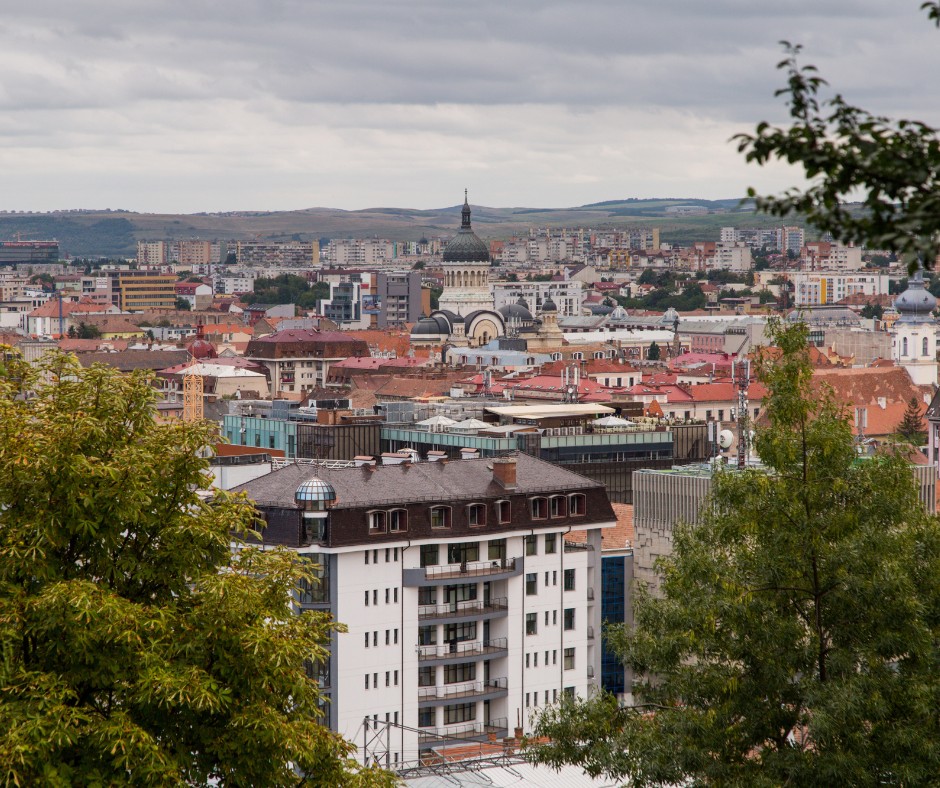
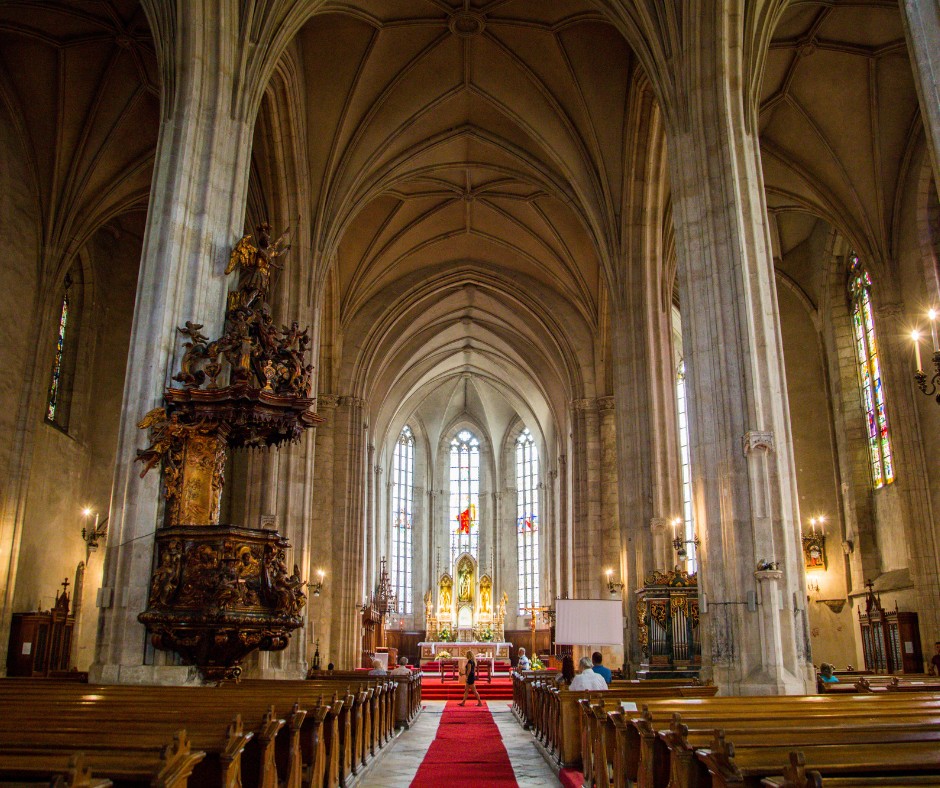
In the heart of Cluj — and really, if we’re being honest, the crown jewel of the city — is its central square; dominated by the Gothic St. Michael’s Church and the large equestrian statue of Matthias Corvinus, the former King of Hungary. Andrei explained to us that during the Middle Ages, large swathes of Transylvania, including Cluj-Napoca, were considered part of Hungary and under the rule of dozens of Hungarian kings across several centuries. Matthias, in particular, was immortalised in bronze and stone on account of Cluj (then known as Kolozsvár) being his birthplace.
Entry into St. Michael’s Church is free of charge and, for the most part, wheelchair accessible — though I should note that some of the paving slabs inside are a little uneven. This could be an issue for some wheelchair users and ambulatory visitors who are unsteady on their feet or prone to tripping. There is a tower that is sometimes open to the public, ascending 80 metres above the ground and showcasing excellent views of the city; however, if stairs defeat you (as they do for me), then this is sadly a no-go.
A jaunt through Cluj’s energetic university campus was a surefire way to cut through all of the ancient history we’d enjoyed that morning. The city has a lot going for it in terms of wheelchair accessibility and things to see and do, and there are great flight connections from several countries across Europe. Many people who travel to Romania will naturally gravitate towards the capital, Bucharest, but Cluj-Napoca is not to be slept on — you might just surprise yourself if you give it a try.
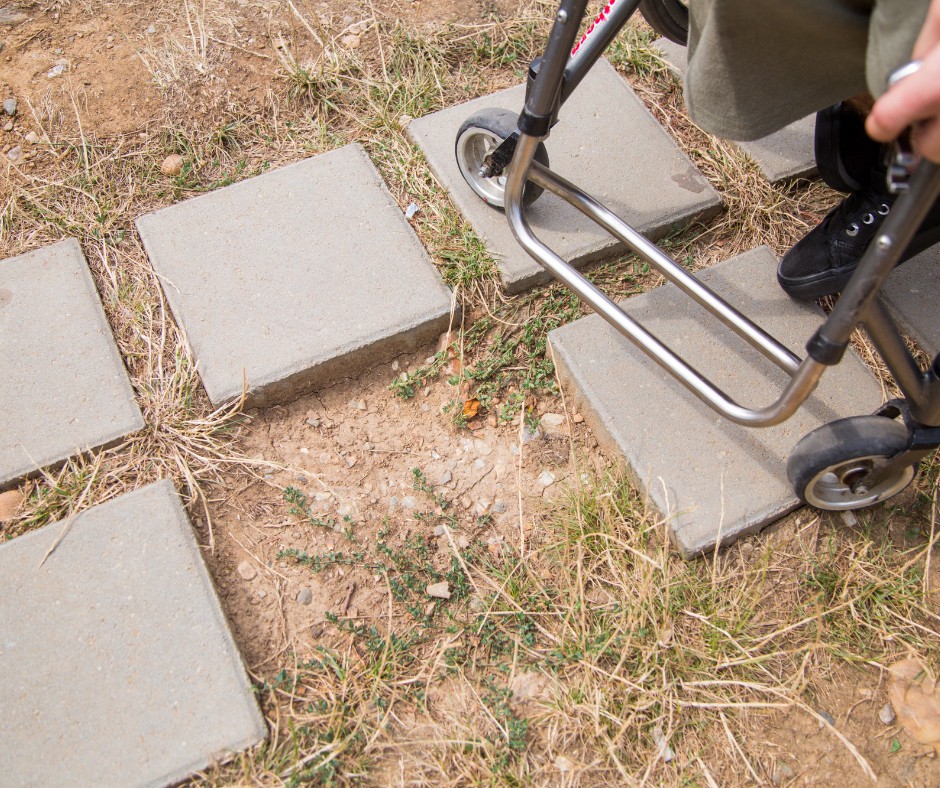
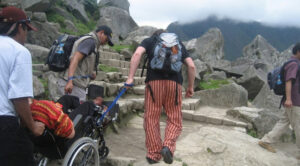
After a late lunch, and to round off the first day of our tour, we headed up Cetățuia Hill, which offers memorable panoramic views of the city below, as well as an interesting park with a kiosk where you can enjoy drinks and snacks. It’s definitely somewhere I would recommend stopping off, not least for the photo opportunities — though a word to the wise: some of the paving slabs left a lot to be desired when we visited and were quite troublesome for a wheelchair user like me (see image below — although this may have improved since we were there). It’s worth flagging these kinds of details, because the honest accounts are always more useful than the glossy ones.
I wish we’d had more time in Cluj — to visit more places, to try certain foods and restaurants, to maybe even go to a bar or two — but at the same time, we were excited to push on and see as much of Romania as we could in those six short days. It’s a big country to cover, and in reality six days is not enough, but we made the best of it.
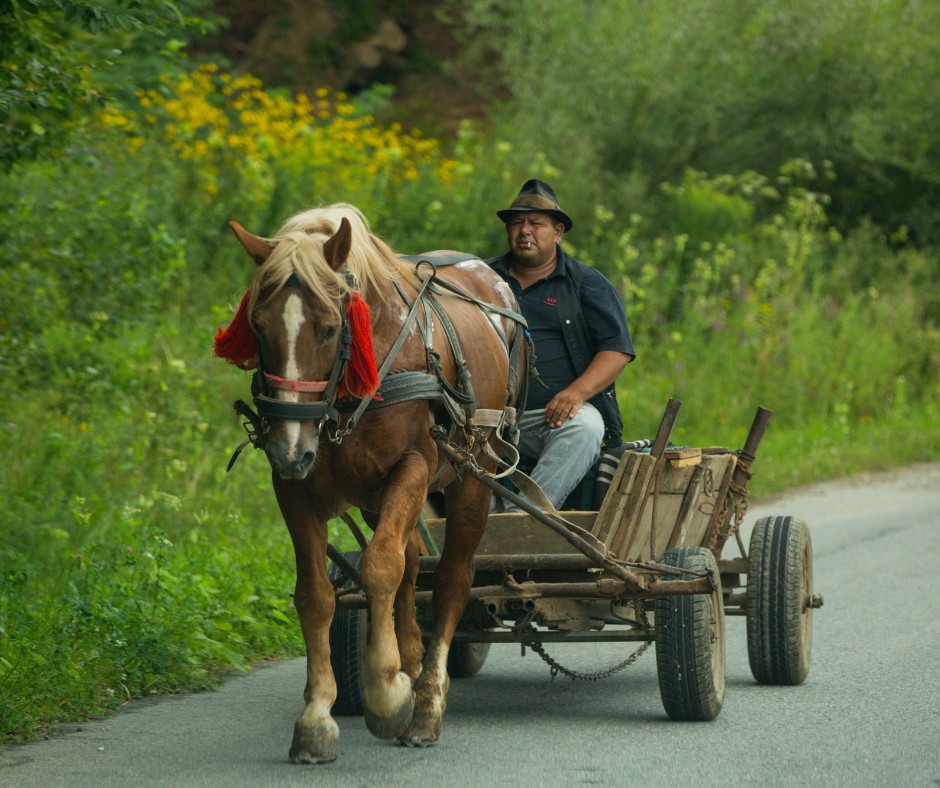
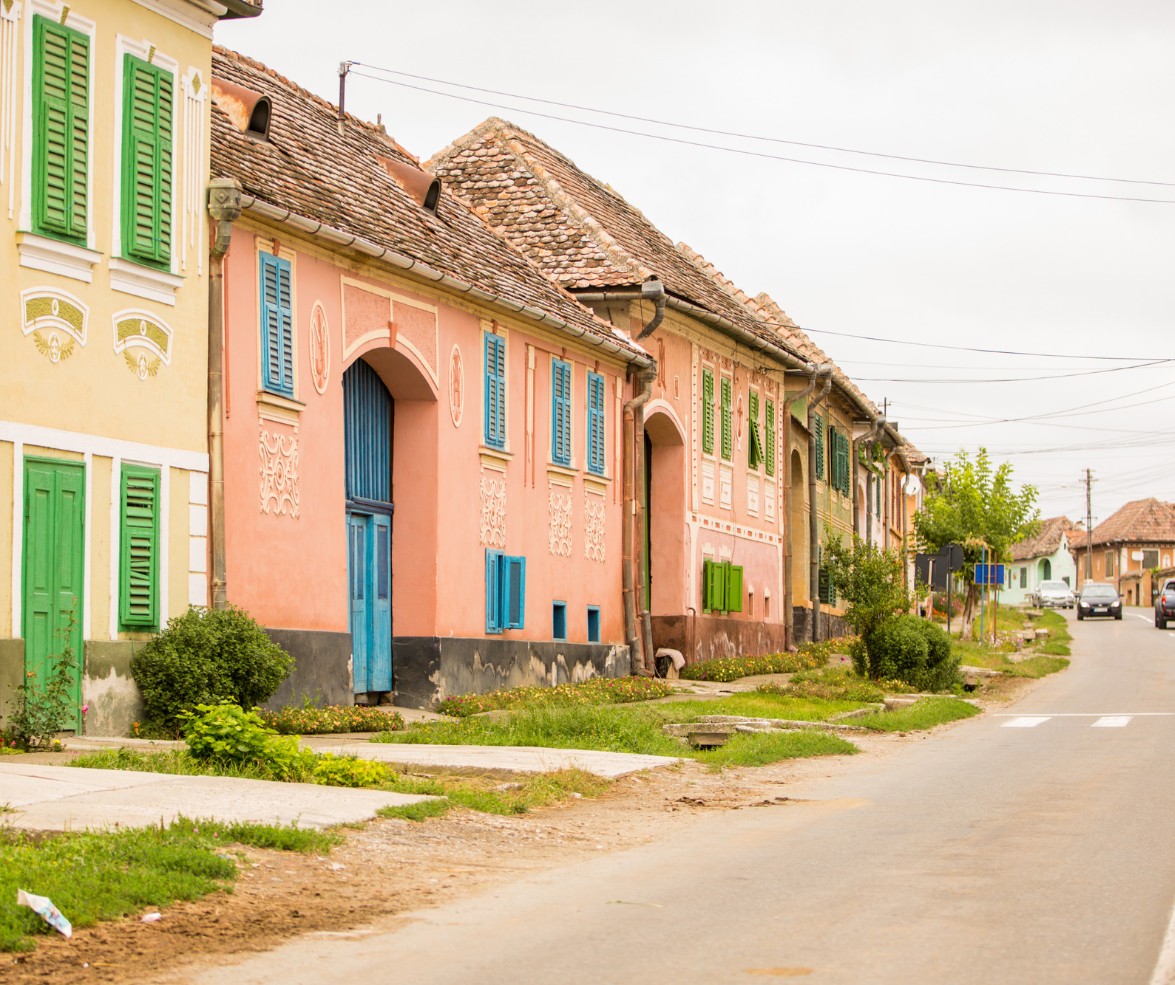
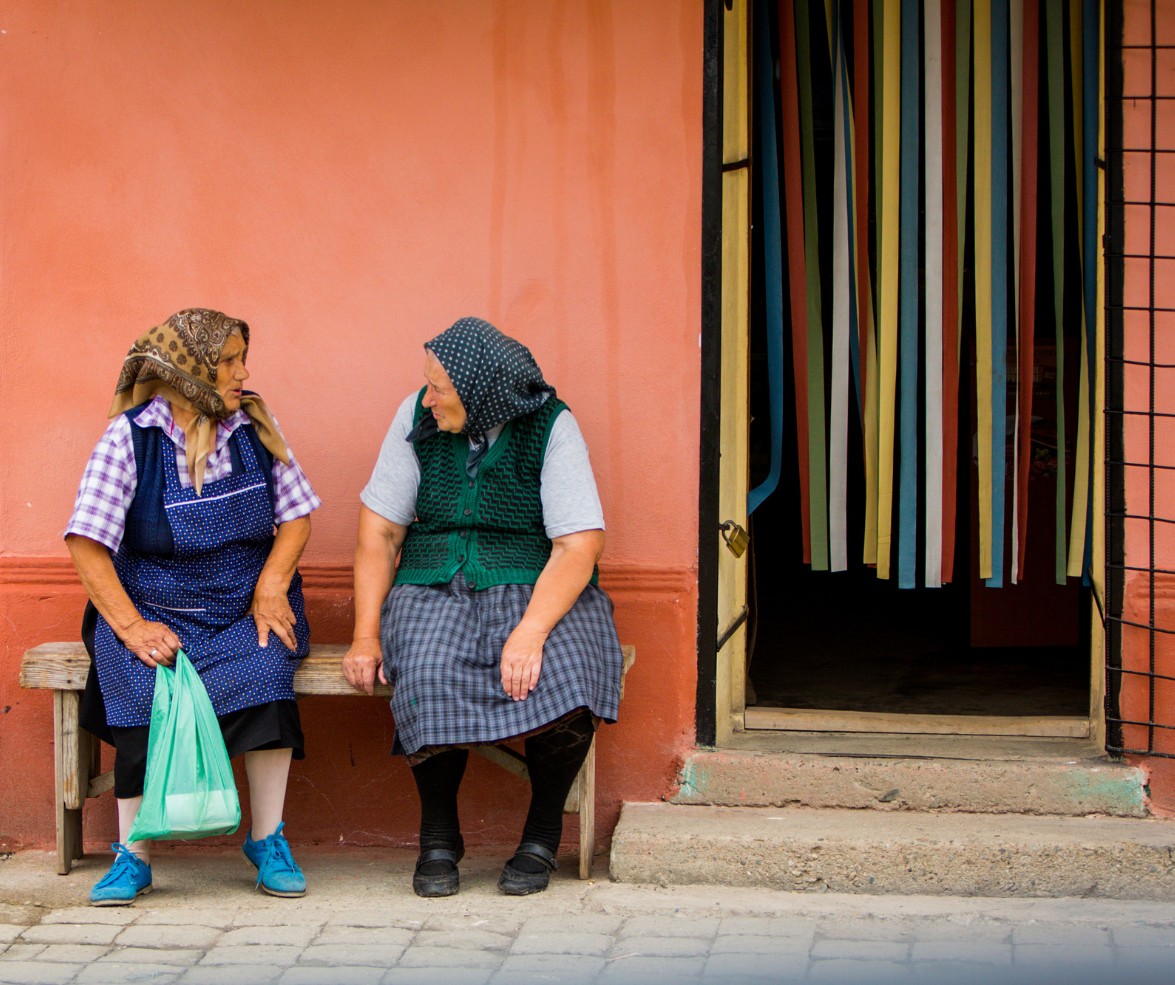
By the second day it was already time to depart Cluj and make our way to our next destination: Sibiu — but not before a stop-off in Alba Iulia along the way. I know I mentioned the scenery already, but there really is nothing quite like the backdrop of a drive through Transylvania. You soon understand why so many folklore stories are conjured from the inspiration this part of the world instils within a person. Our route took us through several rural villages and along single-carriageway roads. It was slow-going in parts, but endlessly interesting — passing by traditional horse-drawn carts, rows of vibrantly coloured houses, and a way of life that felt far removed from anywhere I had previously been. If I’m being honest, it also made me realise that, for a trip like this, having the freedom to travel by car or private van (the latter being the mode of transport offered by Accessible Romania by Sano Touring) gives you access to things you may never otherwise get to see, due to inaccessible infrastructure. You can move at your own pace, stop wherever you like, and sidestep much of the accessibility lottery that a traveler using public transport may have to deal with. Speaking of keeping up the pace, the beautiful views had made me forget about pacing altogether.
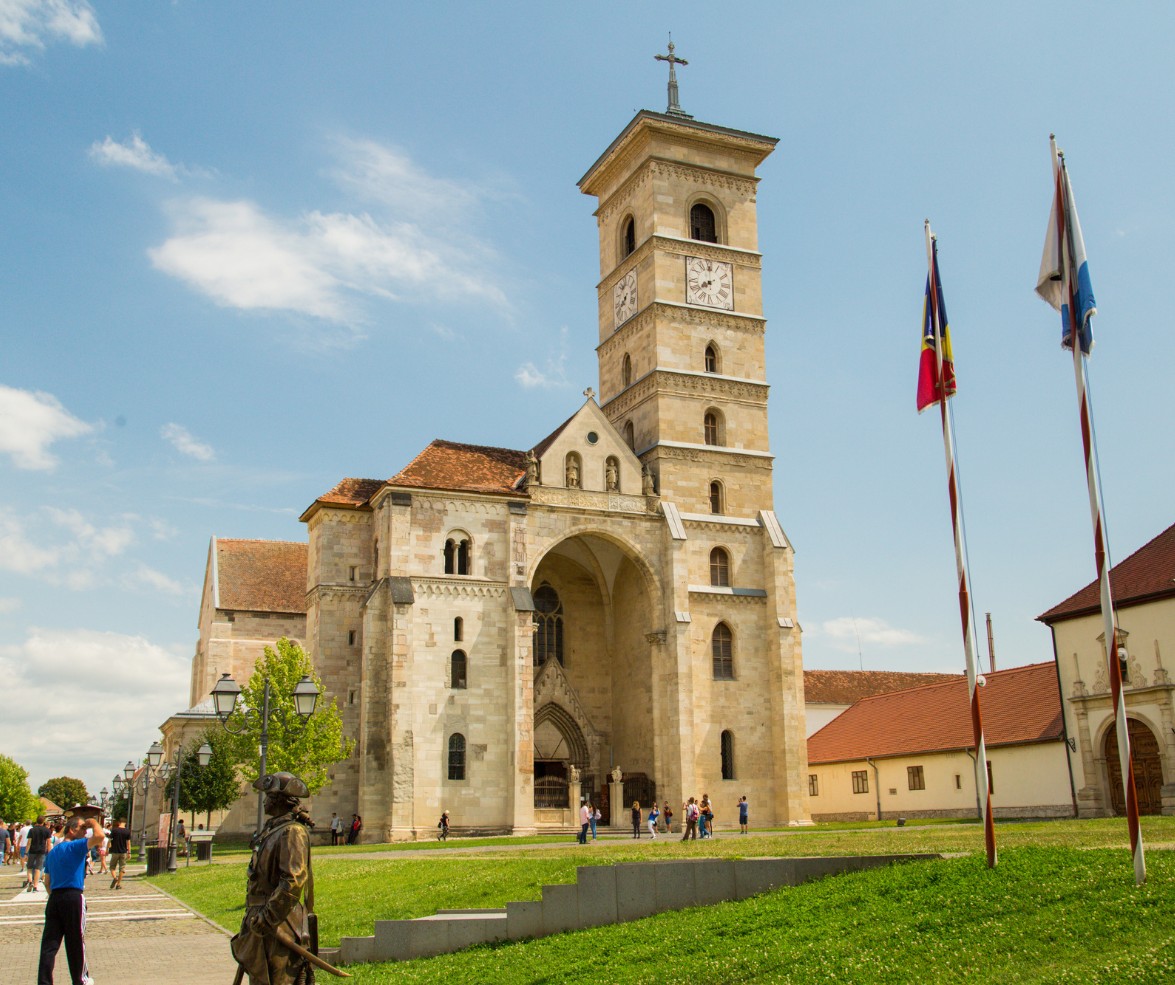
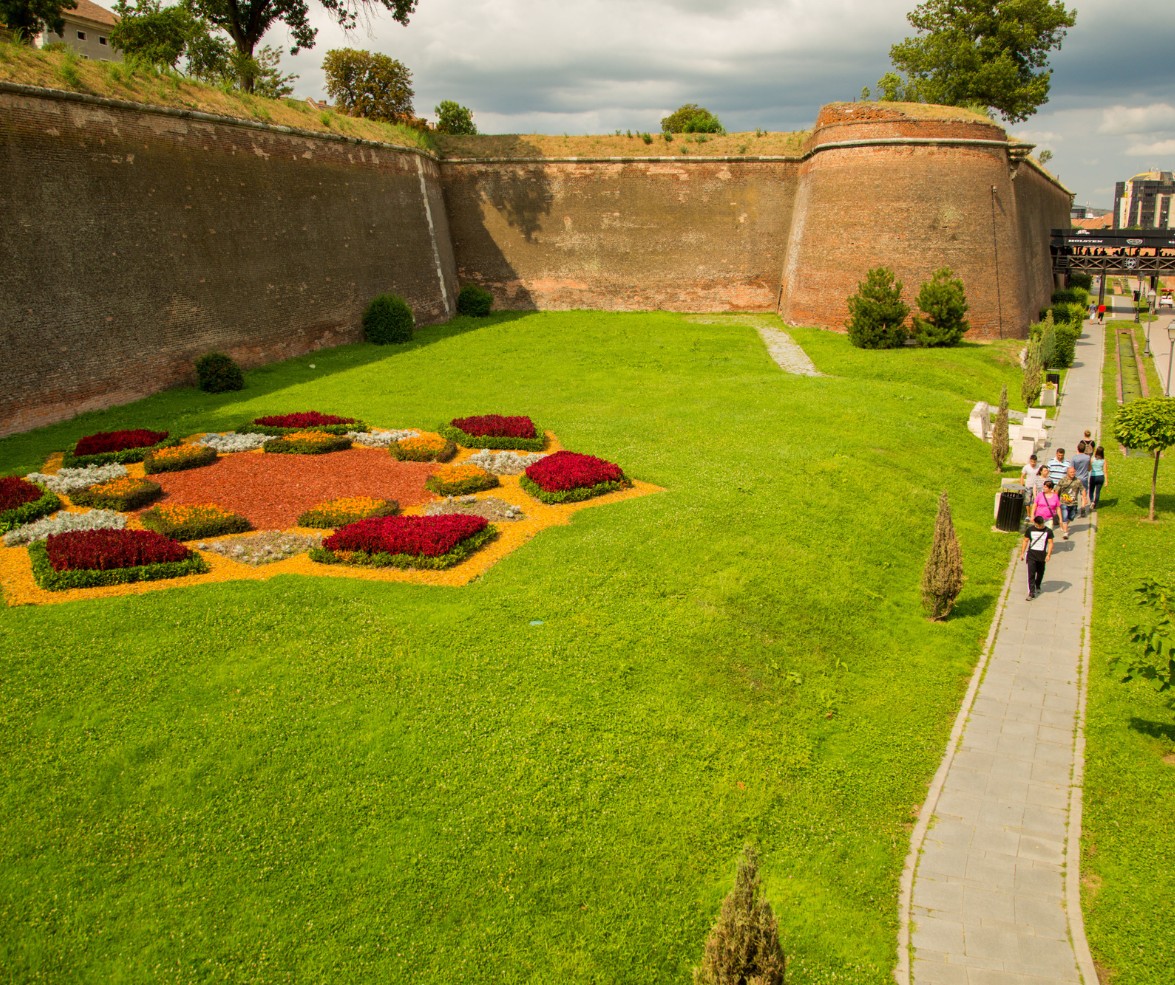
We arrived and parked up in Alba Iulia, with Andrei leading the way around the central area and continuing his excellent commentary. This part of the city had recently been restored to its former glory, and with much of the restoration work including smoothed and navigable pathways, it made for a wonderful place to explore as a wheelchair user. We were surrounded by thick, fortified walls, cobblestone courtyards (but with the aforementioned smooth options, too), and sweeping archways. On reflection, it’s remarkable to know that modern architects still have it within them to create the kind of beautiful work we see from centuries past. What makes Alba Iulia particularly worth including on a Romanian road trip is how unexpectedly rewarding it is. The city played a pivotal role in Romanian national identity — the 1918 unification of Transylvania with Romania was declared here — and yet it remains largely off the radar for most international travellers.
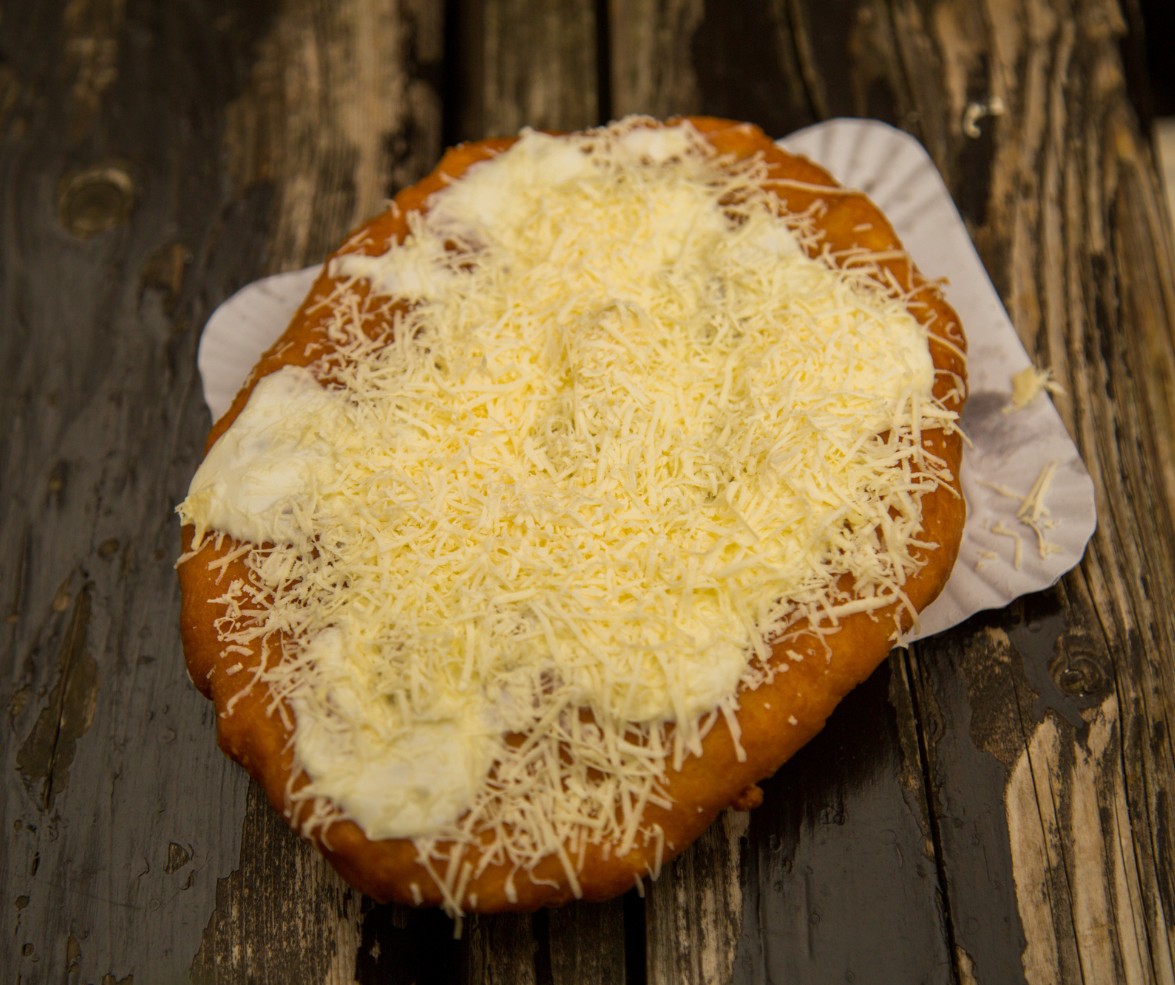
There were stalls selling local food and various arts and crafts, giving you a chance to not only see and feel history, but taste it too. Speaking of which, if you visit, make sure you try lángos — a fried dough snack somewhere between a doughnut and a flatbread, with origins in Hungary that has since spread across Eastern Europe in various forms. Topped with sour cream and cheese, it is absolutely heavenly and not to be missed.
At some point during our time there, I let Andrei know that I needed to find an accessible restroom. I didn’t know what to expect, and worried it was possible we wouldn’t find one — but then, much to my surprise, there was a functioning platform lift for wheelchair users that took you down to an underground concourse housing plenty of restrooms, including accessible ones. It’s something that makes accessible travel in this part of Eastern Europe so pleasantly surprising. Sometimes the locations that aren’t on everyone’s hit list are the ones that go out of their way to cater for all who might want to come.
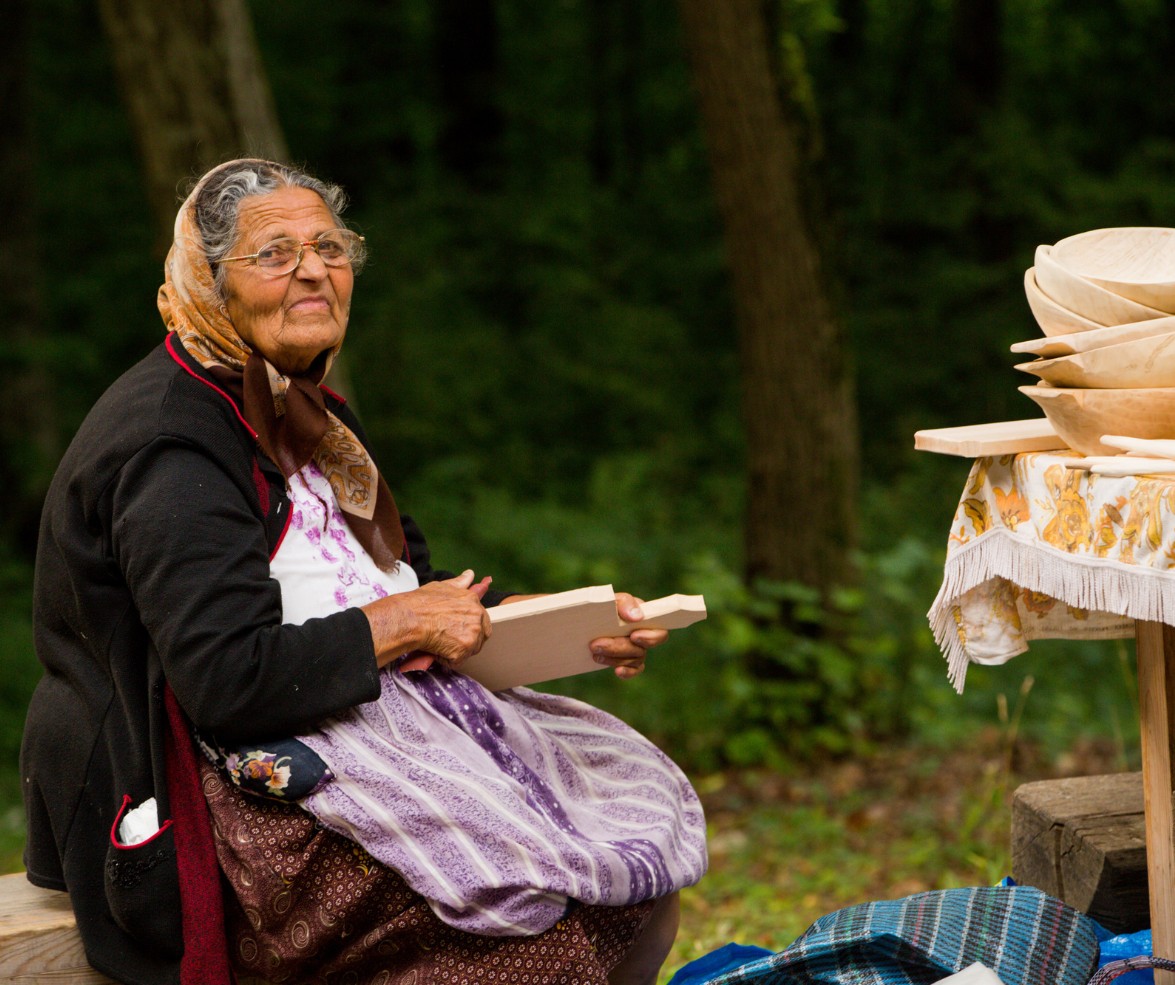
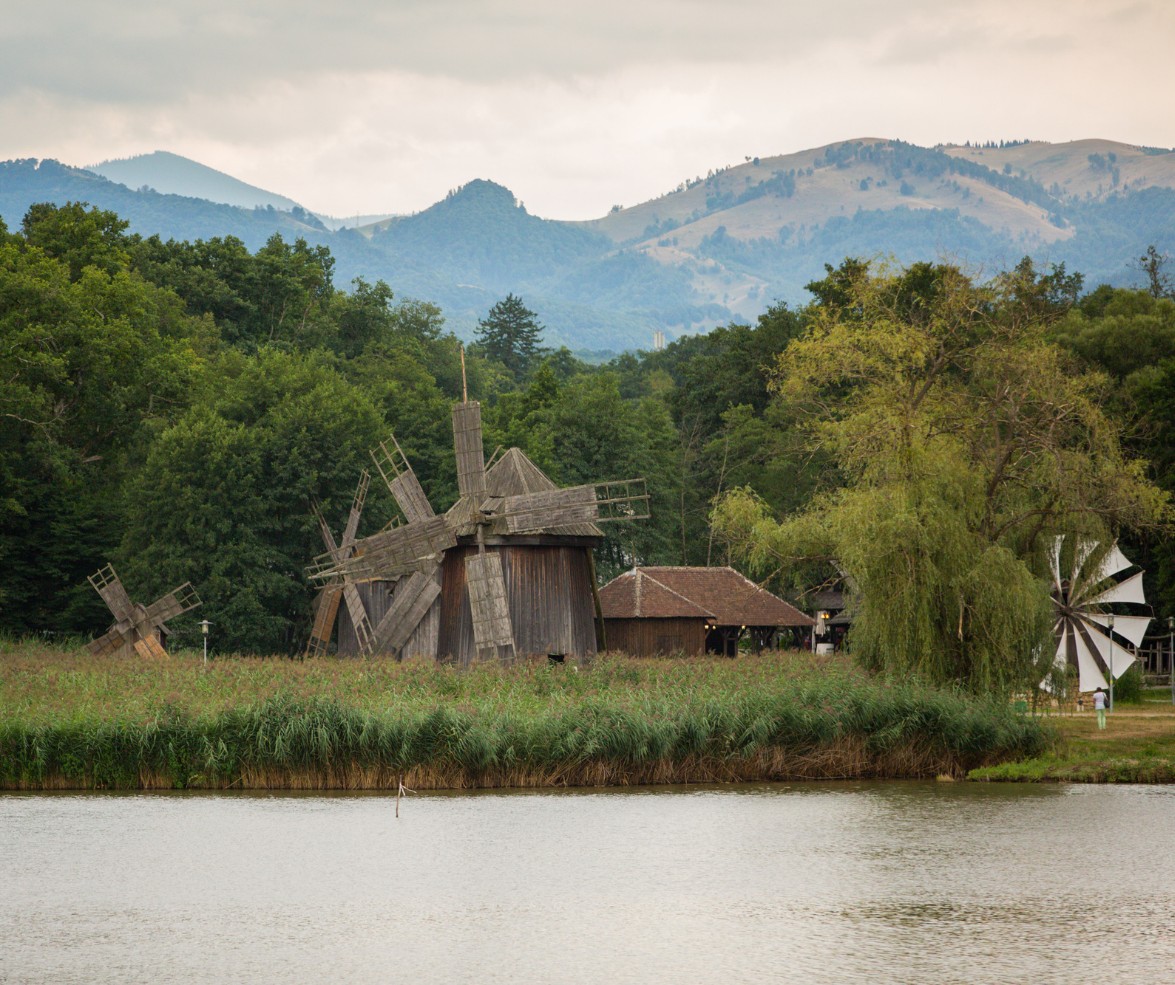
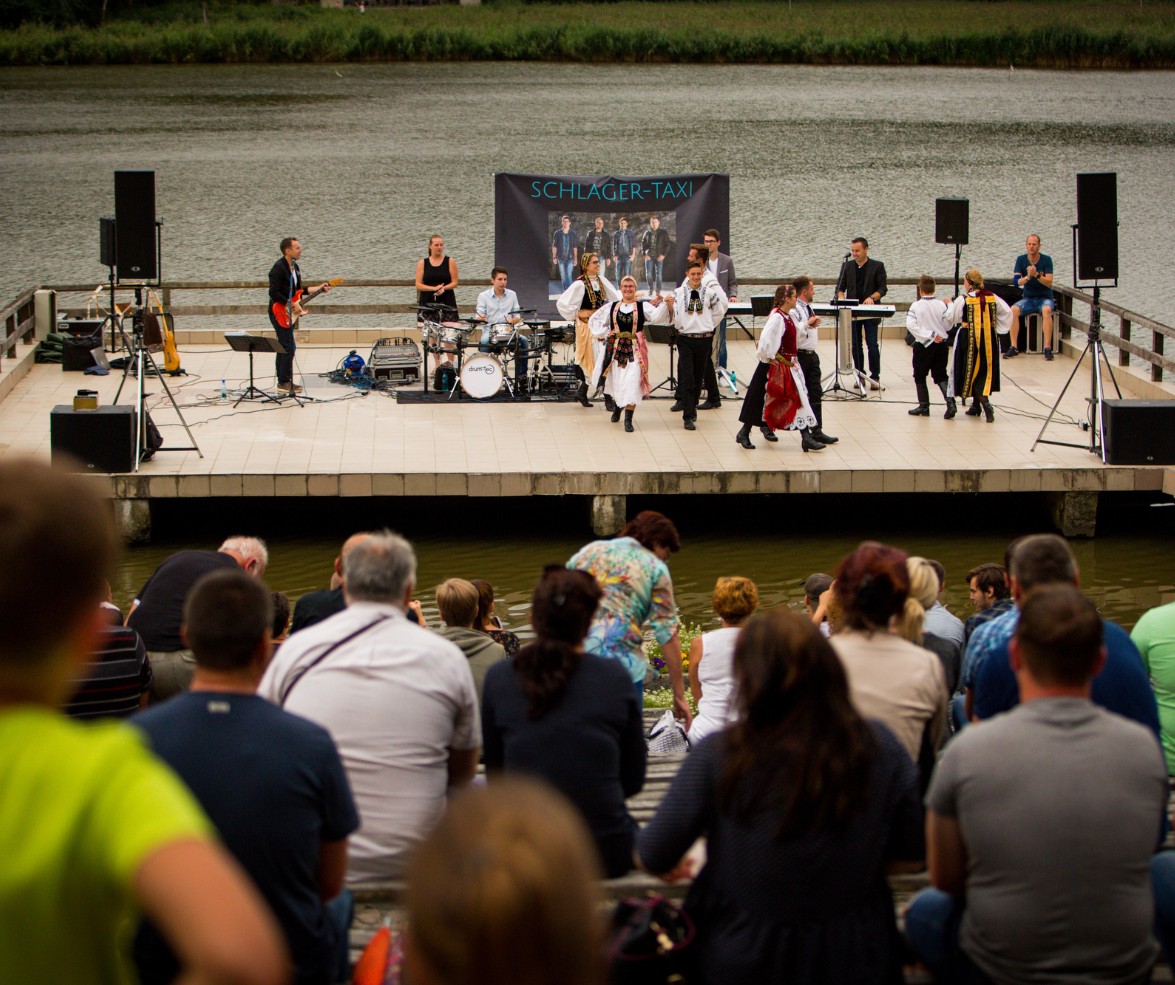
In the afternoon we pressed on to Sibiu for a tour of the Astra Open Air Museum, which was one of the most unusual (but also awesome) places I’ve visited anywhere. Everything within the park has been relocated from various locations across Romania, curating multiple aspects of traditional village life — windmills, farmhouses, water mills, workshops, and much more. The vast majority of the park is wheelchair accessible, though it’s not possible to enter any of the buildings if you are unable to walk or navigate steps. The paths, on the other hand, are smooth, wide, and easy to get around. Overall, I’d say it’s one of the most accessible outdoor attractions of its kind in Eastern Europe. During our visit there was also a traditional fair running alongside the permanent exhibits — dozens of locals selling handmade goods, trinkets, and most interestingly, delicately painted eggs, including ostrich eggs. Each one hand-painted and carefully pierced to drain the contents, leaving a pristine decorated shell. They’re the exact same type of intricately painted eggs you find right across Eastern Europe at Easter time.
We felt honoured, during our time there, to have not only Andrei as our guide, but also one of the museum’s employees, Mikki, who offered a wealth of knowledge about the history of the region and each of the buildings, tradespeople, and products we encountered on our guided tour. I cannot stress enough how having guides like Andrei and Mikki serves to elevate the entire experience. Furthermore, for those who are blind or visually impaired, a guide can mean the difference between a very negative experience and an incredibly insightful and enjoyable one.
That evening, Kathryn, Andrei, Mikki, and I ate dinner at one of the park’s traditional inns — freshly made polenta, superb local beer, and above all, good company.
We stayed that night at the Hilton Sibiu, which had excellent accessibility and the kind of open-balcony atrium layout you usually only see in films. Both the hotel and the evening came highly recommended.
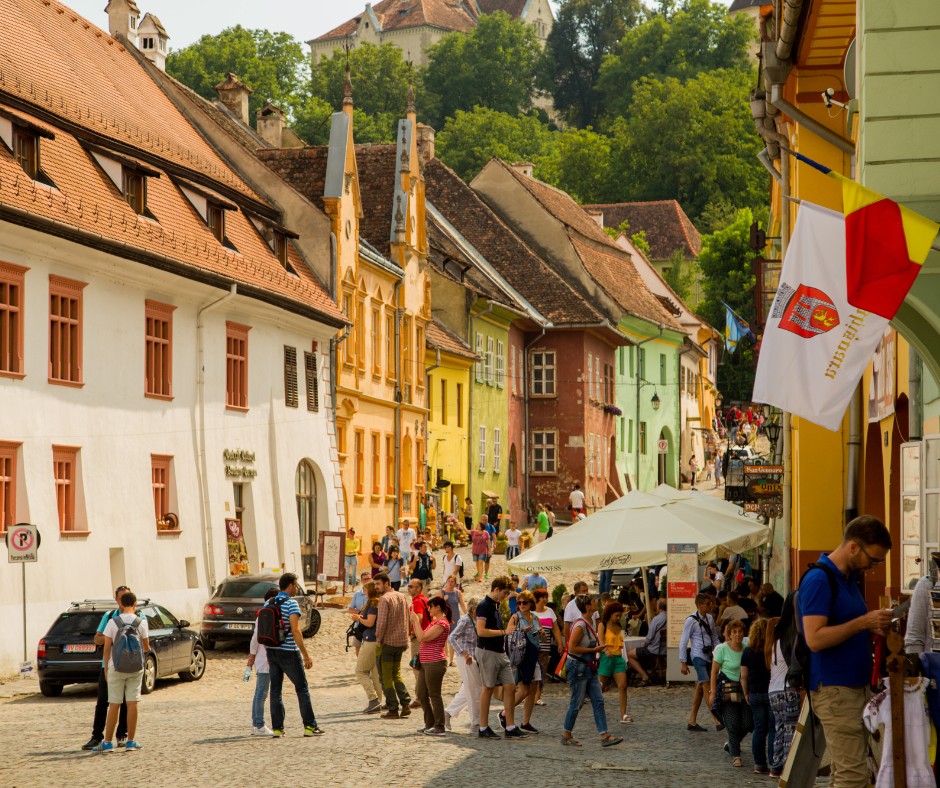
I considered glossing over Sighișoara because, if I’m being honest, it was the least accessible place we visited on the tour. But the reality is, whilst it was fairly inaccessible, it was also one of the coolest places we visited — given the history and, to put it simply, the lore of the Sighișoara citadel is just too good to skip.
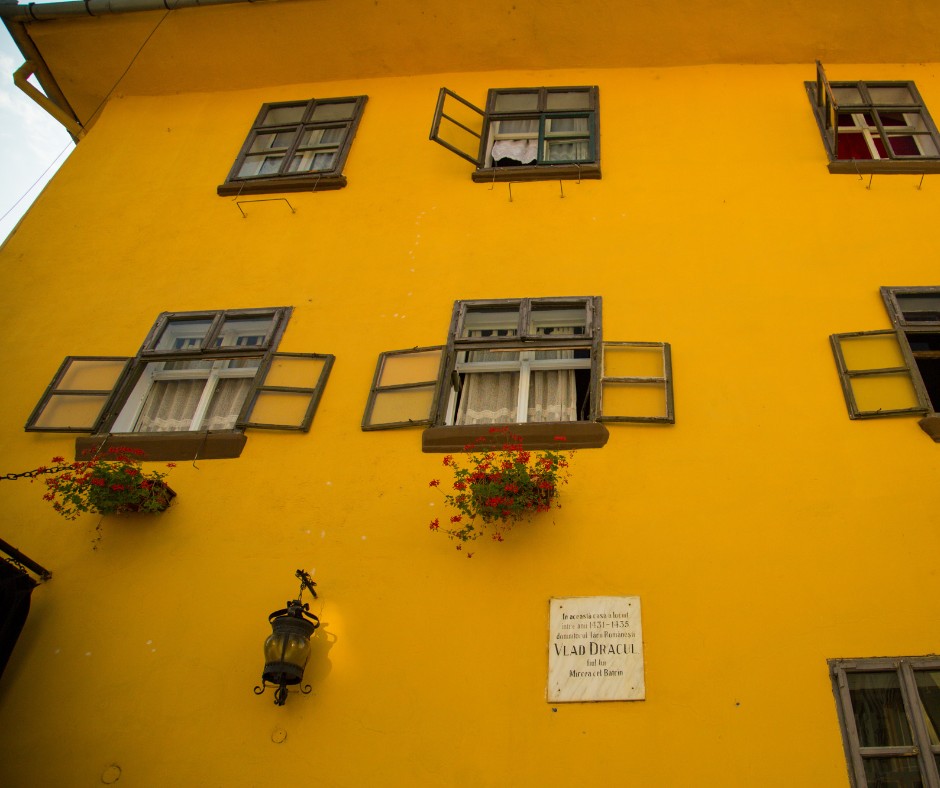
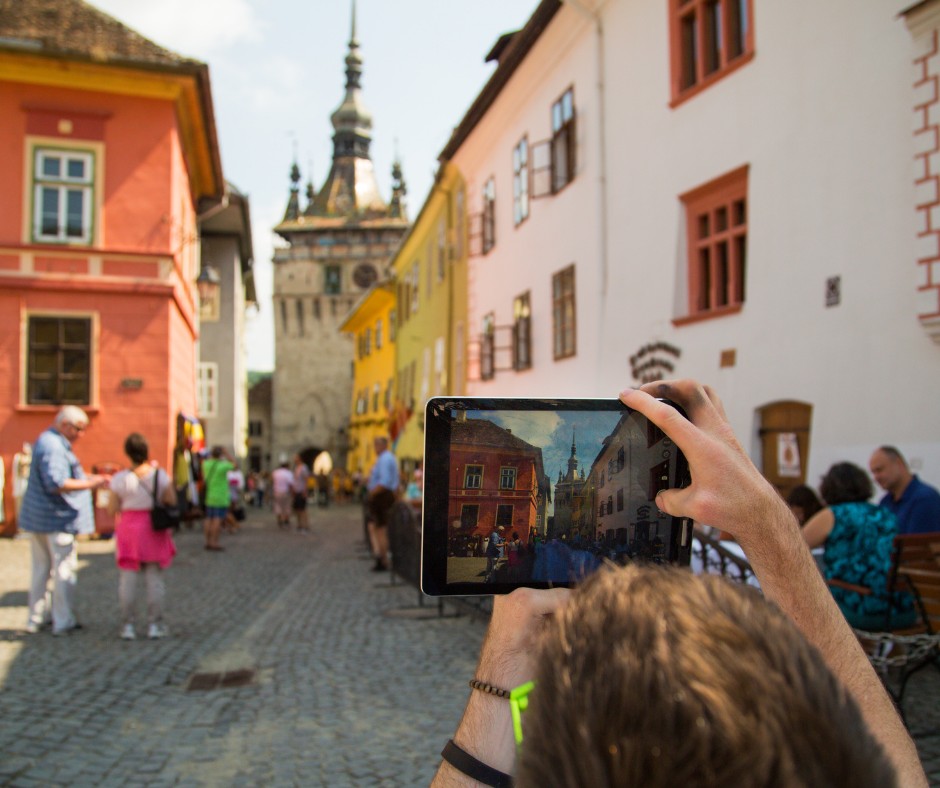
Sighișoara is the birthplace of Vlad the Impaler — though you may know him better by his other title… Count Dracula! In fact, you can visit the very house where he is said to have been born, and if you are able to manage steps, you can even go inside. For me, however, it was good enough just to sit outside the house’s bright orange walls and snap some photos as keepsakes.
That area, where the orange house looms tall, was bustling with tourists when we visited, every building in the vicinity looking truly ancient. A gothic church sits adjacent to Dracula’s first home, and behind it, sweeping views of the city and countryside below. Andrei explained that fortified communities atop tall hills — often consisting of little more than a church and a few homes — were common during the Middle Ages, offering the people of the city below safe refuge when pillaging armies came roaming through.
We didn’t spend long in Sighișoara because the streets were paved with large cobblestones, making it very difficult for me to get around independently. Still, it was absolutely worth stopping off to have a look — especially as we were able to drive up the hill and inside the fortified walls.
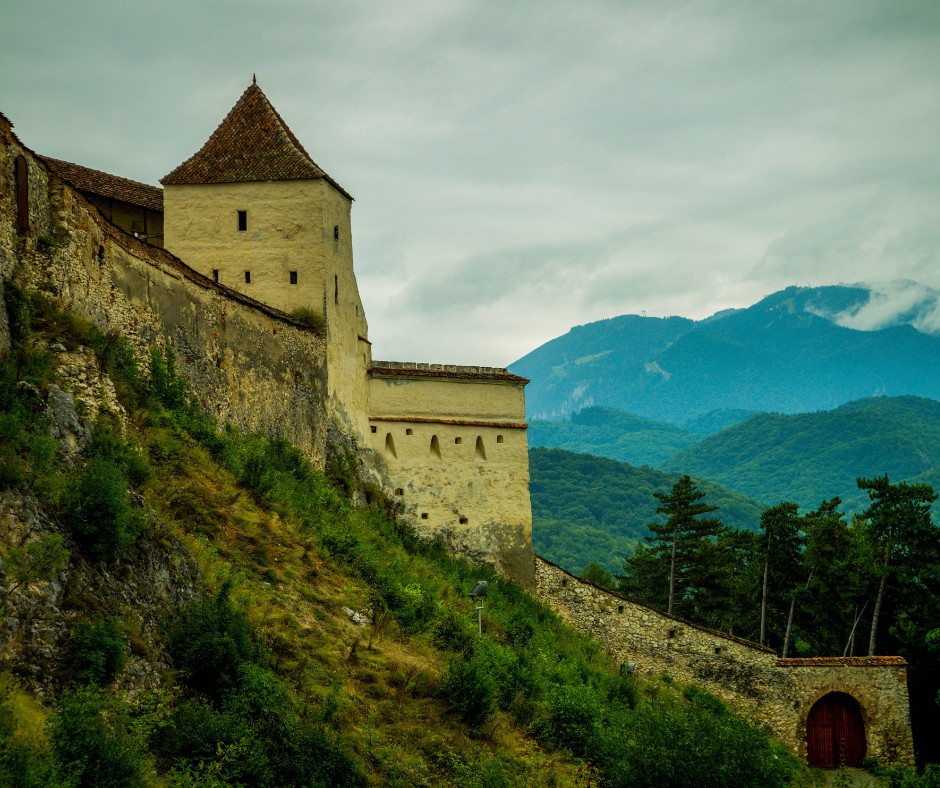
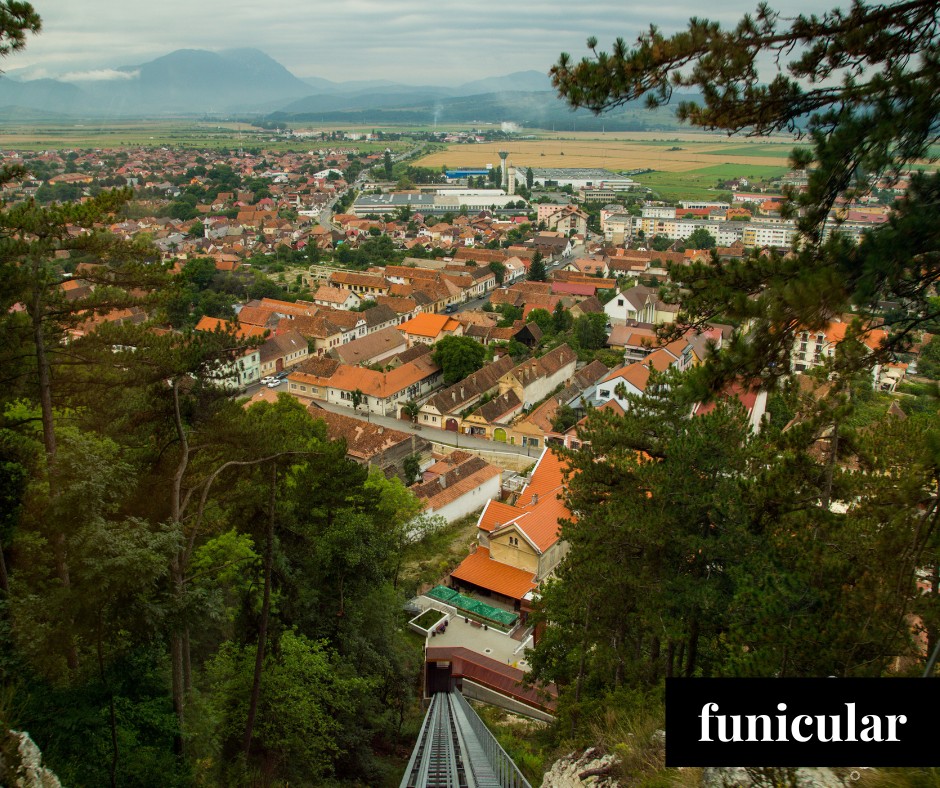
We then pressed on toward Râșnov Citadel, which was one of the most pleasant surprises of the whole trip. Unlike many of Romania’s fortified sites, Râșnov was historically used as a place of refuge for the surrounding population rather than as a military stronghold — which gives it a slightly different atmosphere to the typical castle setting. The citadel itself crowns a wooded hill above the town, its weathered stone walls and towers rising up against a backdrop of the Carpathian mountains. Inside, the courtyard opens up into a surprisingly spacious and well-preserved complex, with old stone buildings lining the perimeter and the kind of sweeping views that make you feel as though you’ve genuinely stepped back in time.
The main draw, for me, was the views from the various lookout points dotted around the compound walls. You get a true sense of just how high up you are, and it’s easy to daydream about what life must have been like for the families who sheltered here, peering down at the city below and bracing for whatever was coming their way. Getting up to the citadel is straightforward: there’s a funicular that is wheelchair accessible and delivers you to jaw-dropping views of the township below and the mountains stretching away in the distance. It was also just a really cool way to enter a tourist site, you know? We need more funicular travel, if you ask me!
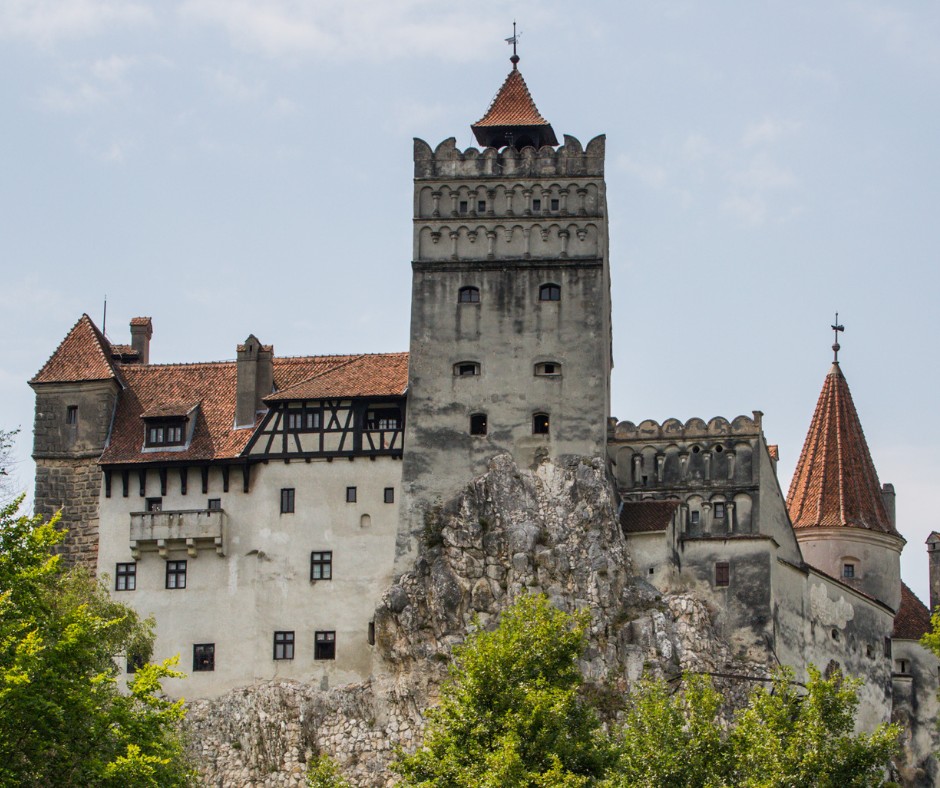
From Râșnov it’s a short drive to Bran, home of Dracula’s Castle — though popular legend somewhat overstates Vlad the Impaler’s actual connection to the place. When we arrived it was extraordinarily busy, and the traffic was at a standstill. We inched past slowly, took a shot of the castle from the car window, and accepted that it wasn’t going to be our day. Some things you have to take on the chin. As it happens, Bran Castle is not wheelchair accessible anyway, so we would have only been able to enjoy the views from the grounds surrounding this magnificent structure.
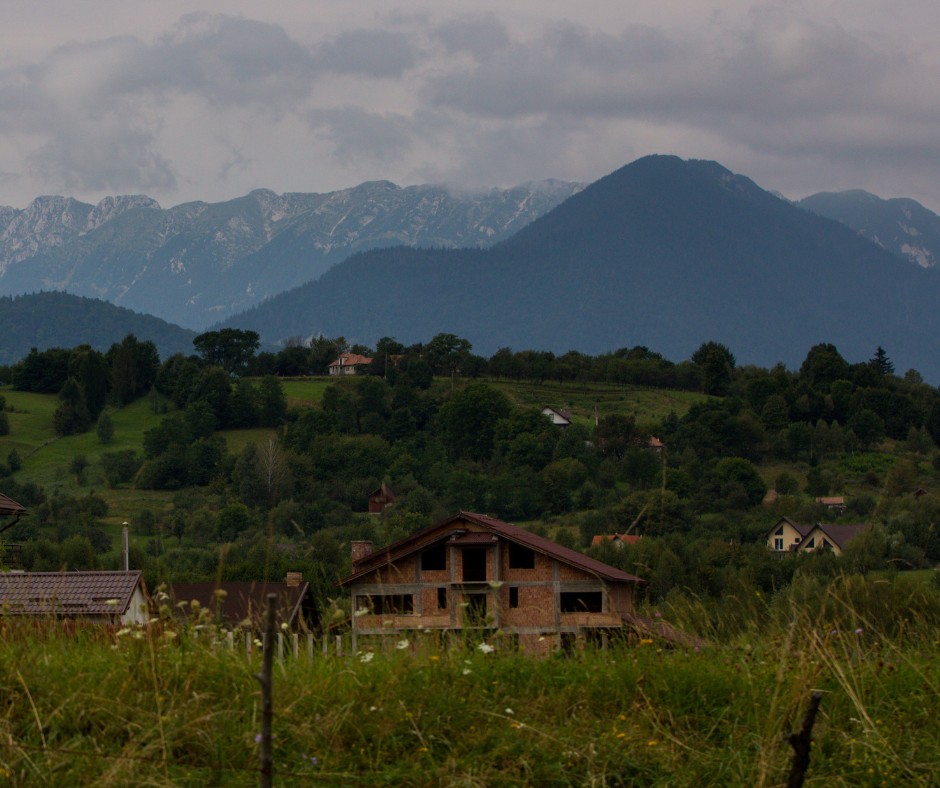
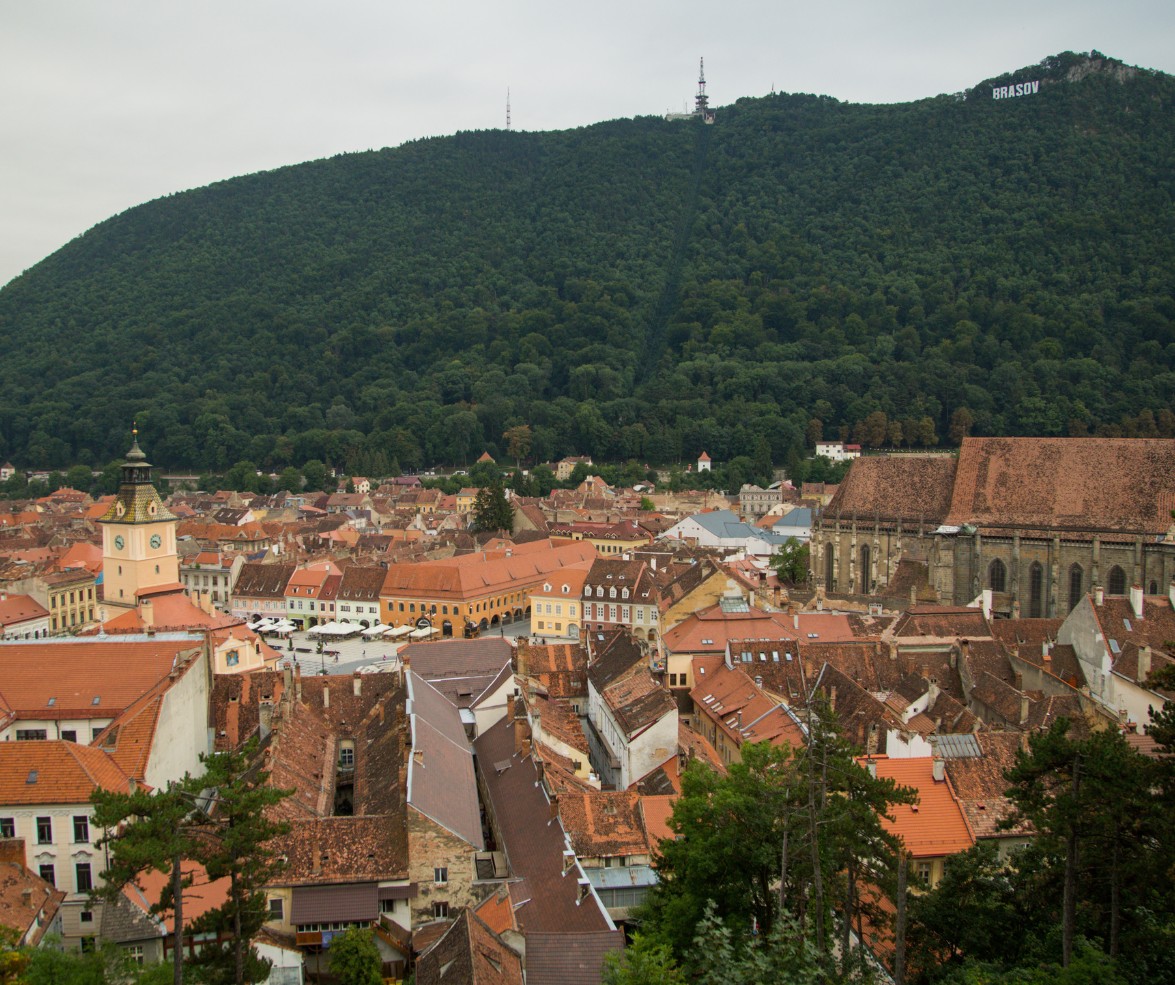
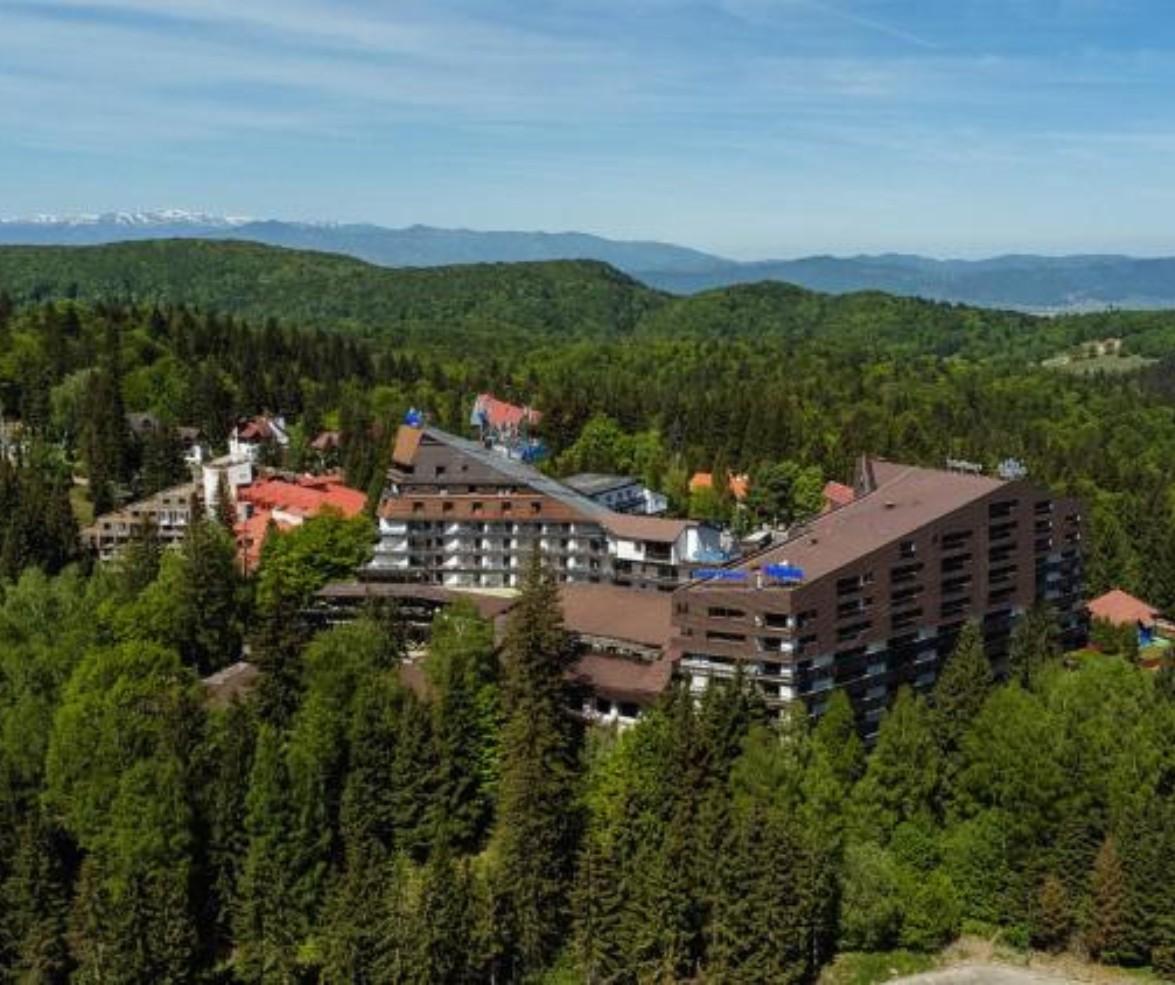
Later that day we drove up into the Carpathian Mountains, climbing over 1,000 metres on roads that genuinely felt Alpine in character — pine tree forests, switchbacks, and crisp mountain air. We spent the night at the Alpin Hotel, which is widely regarded as one of Romania’s best spa resorts. It’s a beautiful property with an impressive array of facilities, though I have to be honest and say that the accessibility was not as up to scratch as it could, and perhaps should, have been. Thankfully, Andrei was on hand to help me negotiate ramps that were far too steep to be considered safe, and the room itself was fairly good and met my needs. I was too tired to even consider any of the spa treatments — which was probably just as well, as the spa facilities were on a floor below ground level and, at the time, there was no lift to speak of (though this may well have changed since).
I wish I could offer more specifics about the room itself, but I don’t have that information to hand. What I can say with confidence is that if you use the services of Accessible Romania, they will ensure that all your needs are met — I was personally just a little lax in communicating what I did and didn’t need, hence the oversight at the Alpin Hotel.
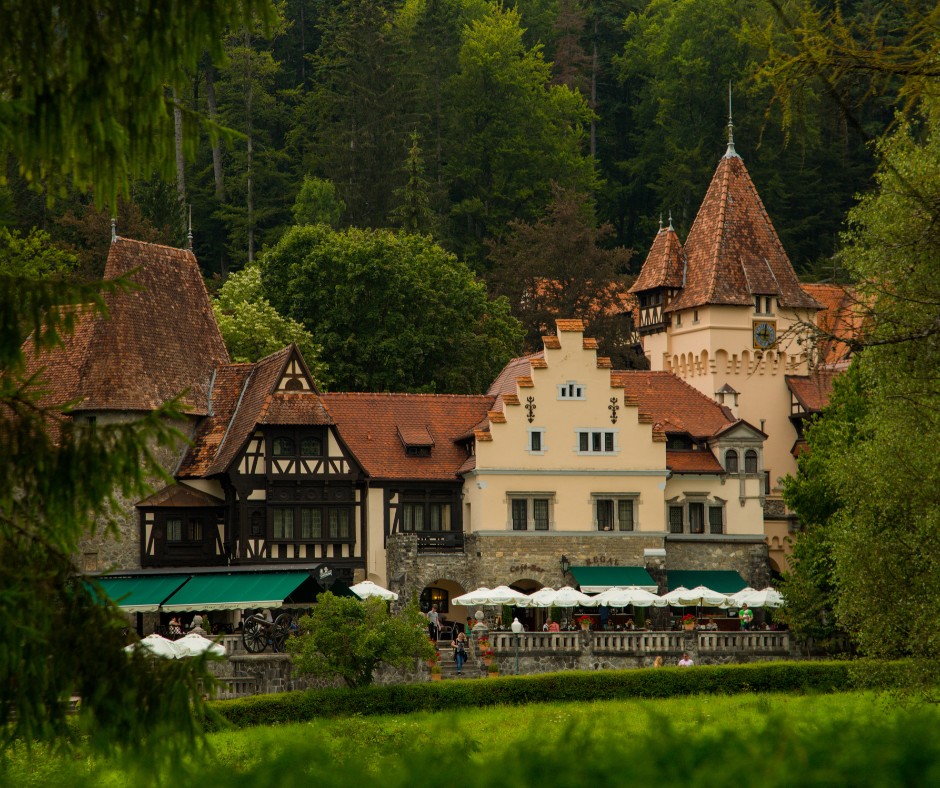
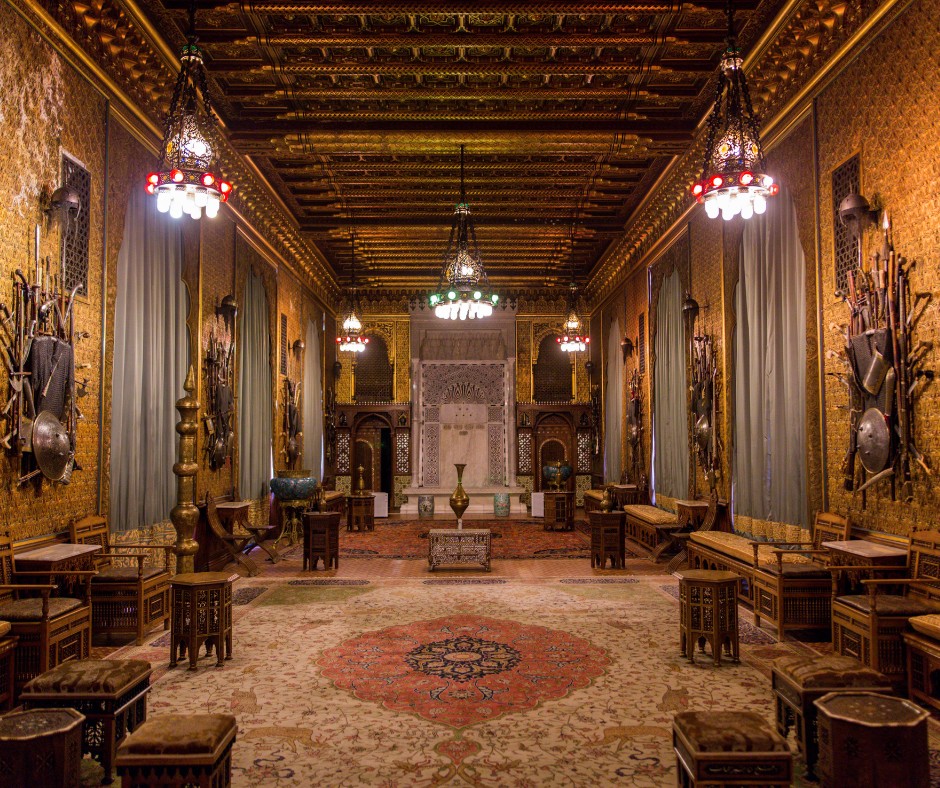
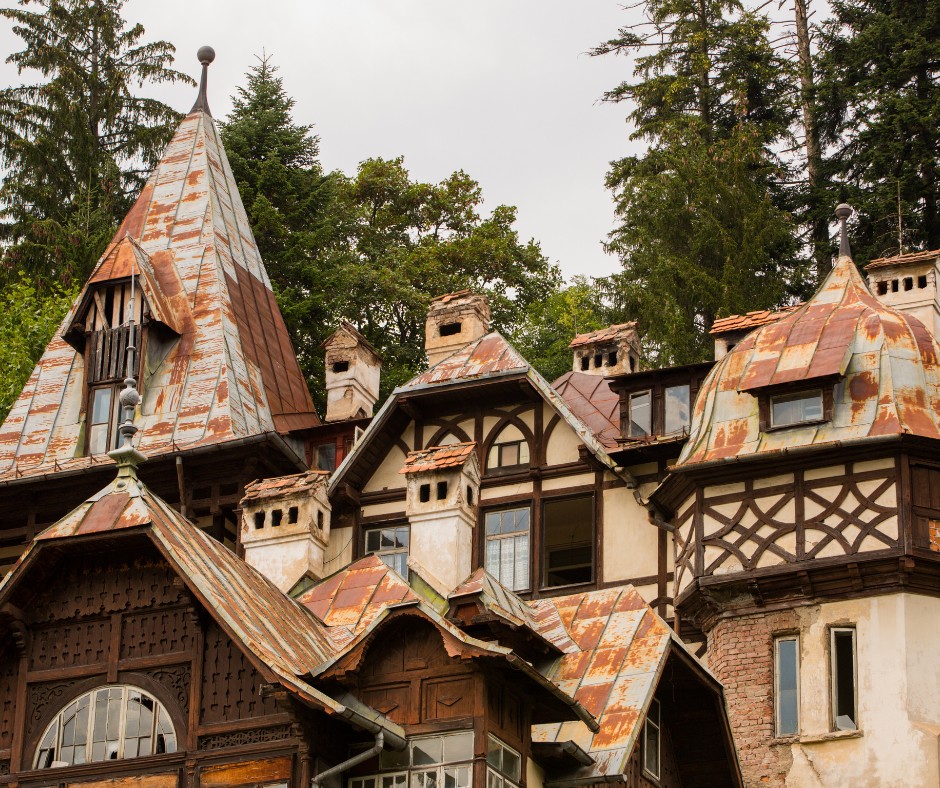
Peleș Castle, near Sinaia, more than compensated for the previous evening’s minor frustrations. Found in the Carpathian Mountains and built under King Carol I — who fell in love with the region on a visit in 1866 — it is, quite simply, one of the most striking buildings I have ever seen. Renaissance in character, with strong Swiss and German architectural influences, it looks less like something you’d stumble upon in rural Romania and more like something conjured from the pages of a fairytale — which perhaps explains why it was chosen as the primary filming location for the Netflix romantic comedy A Christmas Prince and its two sequels. When you first catch sight of it through the treeline, it genuinely takes a moment to process. The scale of it, the detail, the sheer improbability of it sitting there in a mountain forest — it’s a lot to take in all at once.
From an accessibility standpoint, it was handled far better than I expected. We were permitted to park on the private estate at the rear, which saved what would otherwise have been a near-kilometre walk from the public car park. Staff were on hand with a ramp at the back entrance, giving full access to the ground floor, and I came away having seen as much of the castle as most other visitors. For a site of this age and grandeur, that’s no small thing.
The final section of our prearranged tour had us continue on with our road trip and make our way to the capital city, Bucharest. I think I’ll leave writing about Bucharest for a future post and I will create an entire accessible travel guide, much like previous guides such as the Los Angeles accessible travel guide and the one on Madrid.
I’d like to take a moment to talk about the tour operator behind the trip — Accessible Romania by Sano Touring. Traveling with them genuinely opened my eyes to what accessible travel can feel like when you don’t need to worry about every detail and can simply relax and soak up a new culture. Having a guide with us for virtually the entire trip was something I found incredibly eye-opening — someone who could fill us in with local knowledge and the kind of detail and color that you simply don’t get when you’re traveling independently.
But what matters most to disabled travelers reading this is straightforward: having a pre-arranged accessible tour and a dedicated guide meant that accessibility concerns never entered our heads. Not once. It was genuinely reassuring to know that at every stage of the trip, the access had already been taken care of. No nasty surprises arriving at a hotel late at night. No scrambling to find an accessible restaurant. No awkward moments when nature calls mid-sightseeing and you need to locate an accessible bathroom in a hurry. Everything was cool, calm, and collected — exactly as it should be.

And seeing Romania by road is an absolute must. We chose to bring our own car, with our guide meeting us in Cluj and joining us for the drive all the way down to Bucharest. However, if you prefer nto to drive, they do have accessible transportation — which can even be used across the border and into neighboring countries.
Having a local in the car added another layer entirely — explaining road customs, pointing out things we’d never have noticed, and steering us exactly where we needed to be each day. One moment in particular has stayed with me. We were deep in the countryside, winding through a remote village so far off the beaten track that I’m fairly sure it hadn’t made it onto Google Maps yet, when a pack of dogs came tearing out from behind a dilapidated fence and launched a full-scale assault on our tires. My instinct was to brake — which, as it turns out, is exactly the wrong call. Our guide Andrei, entirely unruffled, calmly advised us to do the opposite: speed up a little, keep moving, and they’d soon lose interest and stand down. He was right. Crisis averted, tires intact. It’s a piece of road wisdom I’ve since had occasion to use more than once since relocating to Brazil, where dogs and moving vehicles maintain a similarly complicated relationship — and every time it happens, I think of Andrei and that village somewhere in the Transylvanian backroads.
Overall — and I don’t say this lightly — Romania humbled me almost as much as it inspired me. In fact, it was on returning from this trip that I created The World is Accessible, so for that, along with many other things, I owe Romania and the wonderful team at Sano Touring a debt of gratitude. Stay tuned for the Bucharest accessible travel guide, coming soon.
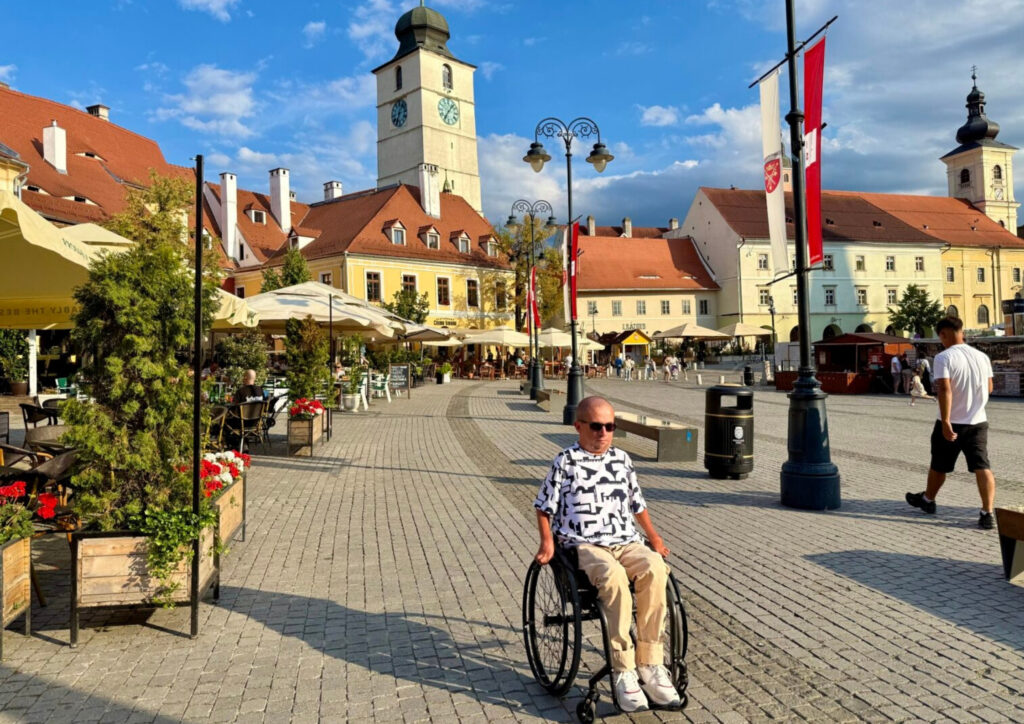
If you’d like to see more of Romania from the perspective of another disabled traveller, check out ‘Exploring Romania by car: Routes and interesting cities in Transylvania’ by Konrad Zaborowski. The article is written in Polish, so you’ll need a browser with a translation feature. Konrad shares a wealth of information about Sibiu and other areas of Transylvania, as well as some wonderful photos that offer further insight into what to expect when travelling through Romania.

One Response
The line “Romania smashed it out the park” — I felt that. I spent a week driving through Transylvania a few years back (not a wheelchair user myself, but travelling with someone who was), and the gap between expectation and reality was genuinely striking.
One thing worth flagging for anyone planning a similar route: the stretch between Sinaia and Brașov along the DN1 has improved considerably in terms of road surface, but the parking situation at Peleș is still chaotic and the accessible drop-off point isn’t always respected by other drivers. Early morning arrival — before 9am — makes a real difference.
Something I’ve been thinking about lately, tangentially related: Romania’s infrastructure investment has quietly accelerated over the last few years, and there’s an interesting parallel between how a country manages its public finances and what actually gets built on the ground. Nations carrying lighter debt burdens tend to channel more into practical upgrades — roads, ramps, lifts in historic sites — rather than servicing obligations. Whether Romania’s current fiscal position translates into sustained accessibility improvements is a genuinely open question.
Did you notice any regional variation in accessibility? My impression was that Cluj felt noticeably more prepared than some of the smaller stops on your route — curious whether your experience matched that.