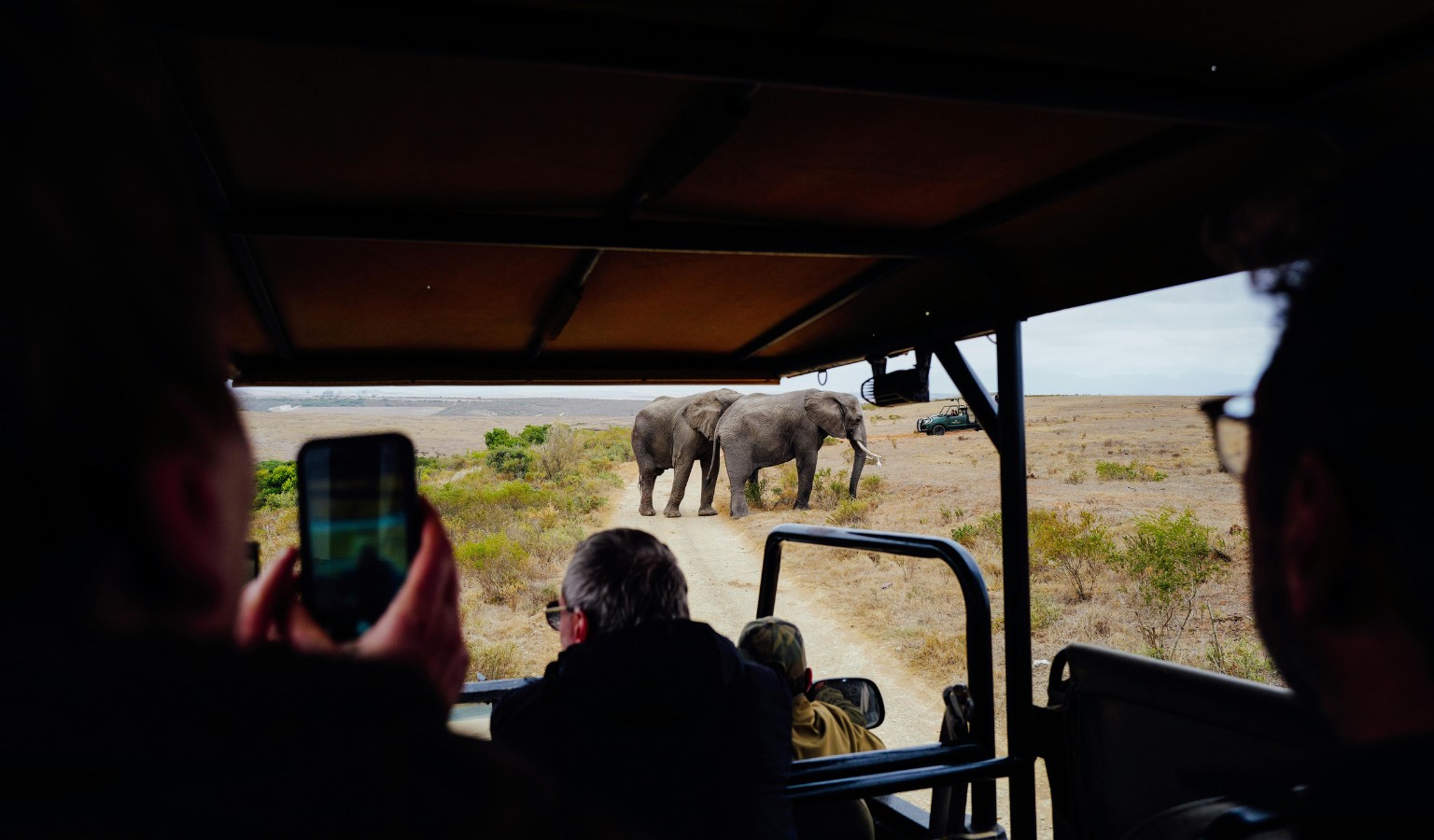
When I ask people where they would like to visit in South Africa, the answers are often the same. Cape Town, Kruger, and so on. But, somewhat disappointingly, KwaZulu-Natal (or KZN for short) isn’t mentioned nearly as often. In this article, I want to shine a light on this region of South Africa and explain why it should be higher on many people’s travel lists. After all, this is the province where you can watch white rhinos graze before lunch and be swimming in the Indian Ocean by mid-afternoon, marveling as humpback whales migrate past. Then there’s the gorgeous beachfront in Durban, Africa’s oldest proclaimed reserve, and an amazing estuary full of hippos, all within a few hours’ drive of each other. What’s more, a surprising amount of KZN is accessible for travelers with disabilities.
I want to be upfront, as I always am. I have not personally visited South Africa, though it has been a long-standing desire of mine. Everything that follows is built on connections we have in the country and on clients of ours who operate tours in the KZN region.
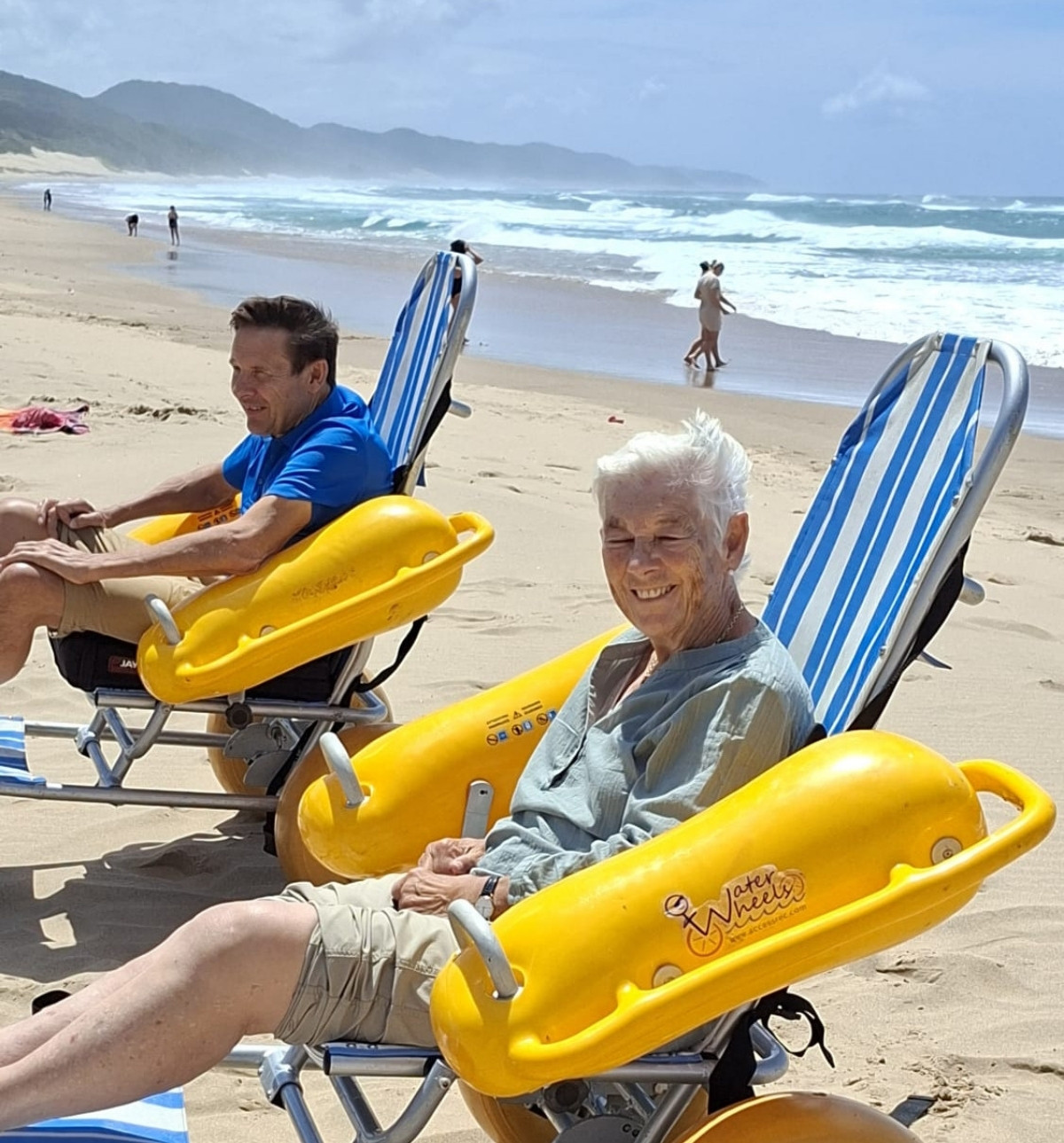
The answer is yes, but only with the right support. A little bit of help goes a long way here. There are the beach wheelchairs and access mats that make the beach in Durban a breeze, the adapted vehicle that lets you explore Hluhluwe-iMfolozi without leaving your wheelchair, and the ramp access onto the boat in St Lucia.
Away from the likes of Durban, things get a lot more rural. Yes, you may find the odd steep ramp, a grassy path, or a public bathroom without an accessible stall, but that isn’t to say an adventure like this isn’t doable. The most realistic way to do it is to work with trained service providers such as Access2Africa Safaris, who have adapted vehicles and do all of the checking ahead of your visit to ensure that your needs are met.
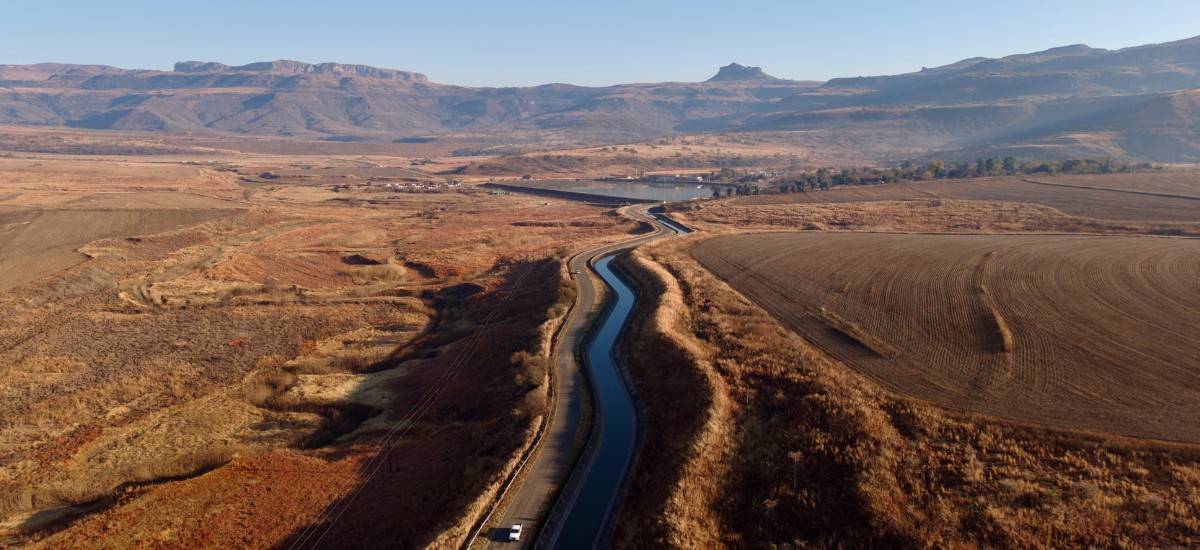
You fly into King Shaka International Airport in Durban. From there, Hluhluwe-iMfolozi is about two and a half hours north on the N2 highway. St Lucia and the iSimangaliso Wetland Park lie in the same direction, roughly 235 km (146 miles) from the city.
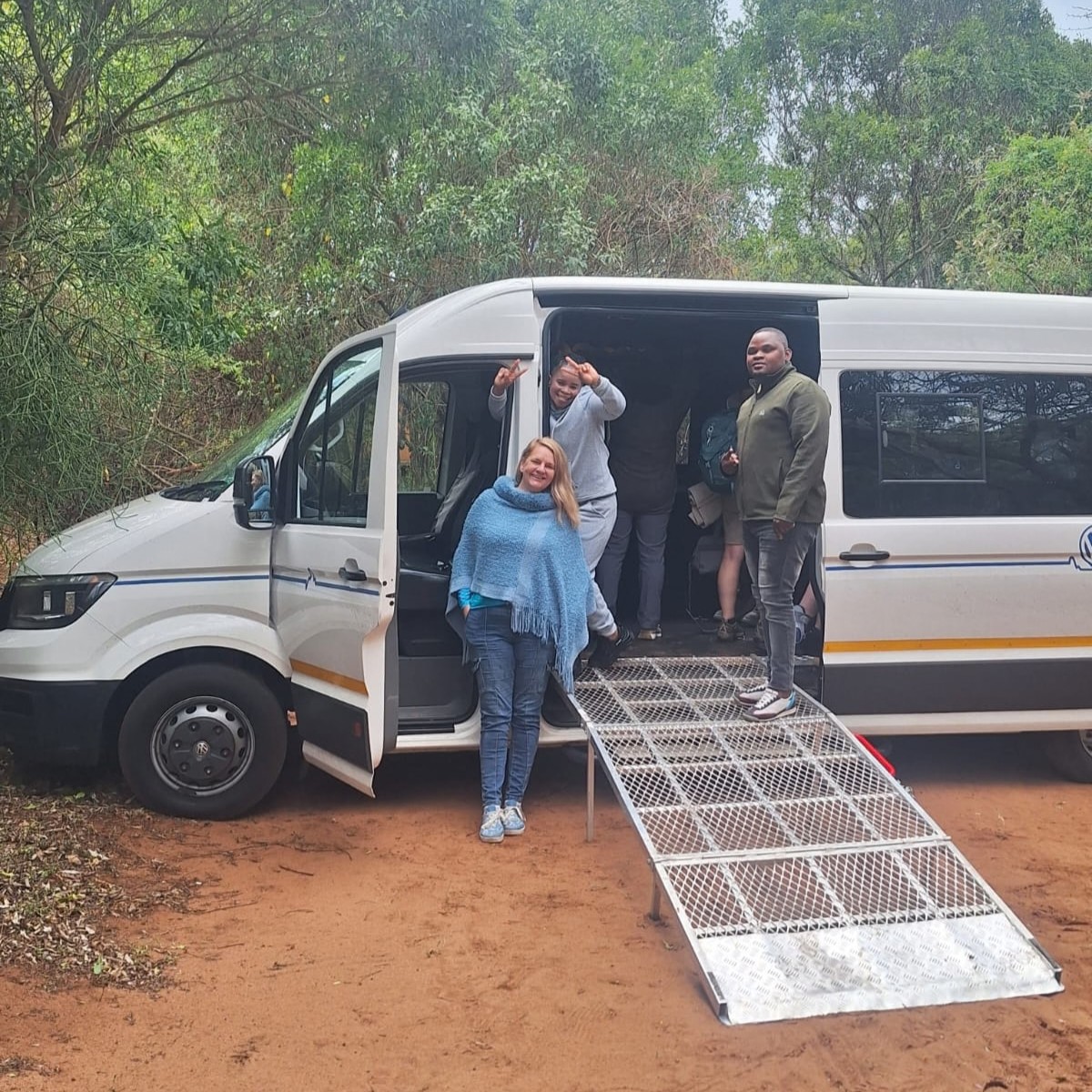
Getting around is the part that requires some planning. When you travel with Access2Africa Safaris, they meet you at the airport, help you into one of their adapted vehicles, and safely transport you to your accommodation. Their transport is also perfect for reserve drives, meaning nobody needs to lift you into a high safari truck. And with wheelchair tie-downs, you don’t even need to leave the comfort of your own chair. The company also keeps one guide with you for the whole trip, which may sound like a small thing until you’ve spent a vacation explaining your needs to a new person every morning.
The beachfront in Durban is an obvious choice and an easy win for access, with ramps and mats in some areas. Right beside the beach is uShaka Marine World, Durban’s big aquarium and marine park. If you visit with Access2Africa, they can arrange for you to try accessible snorkeling as an optional extra. Their 10-day itinerary includes two nights at a hotel in Umhlanga, which is just a short drive up the coast. It’s a gentle start after a long flight, giving you time to adjust and reset your body clock before heading into the bush, where the real adventure begins!
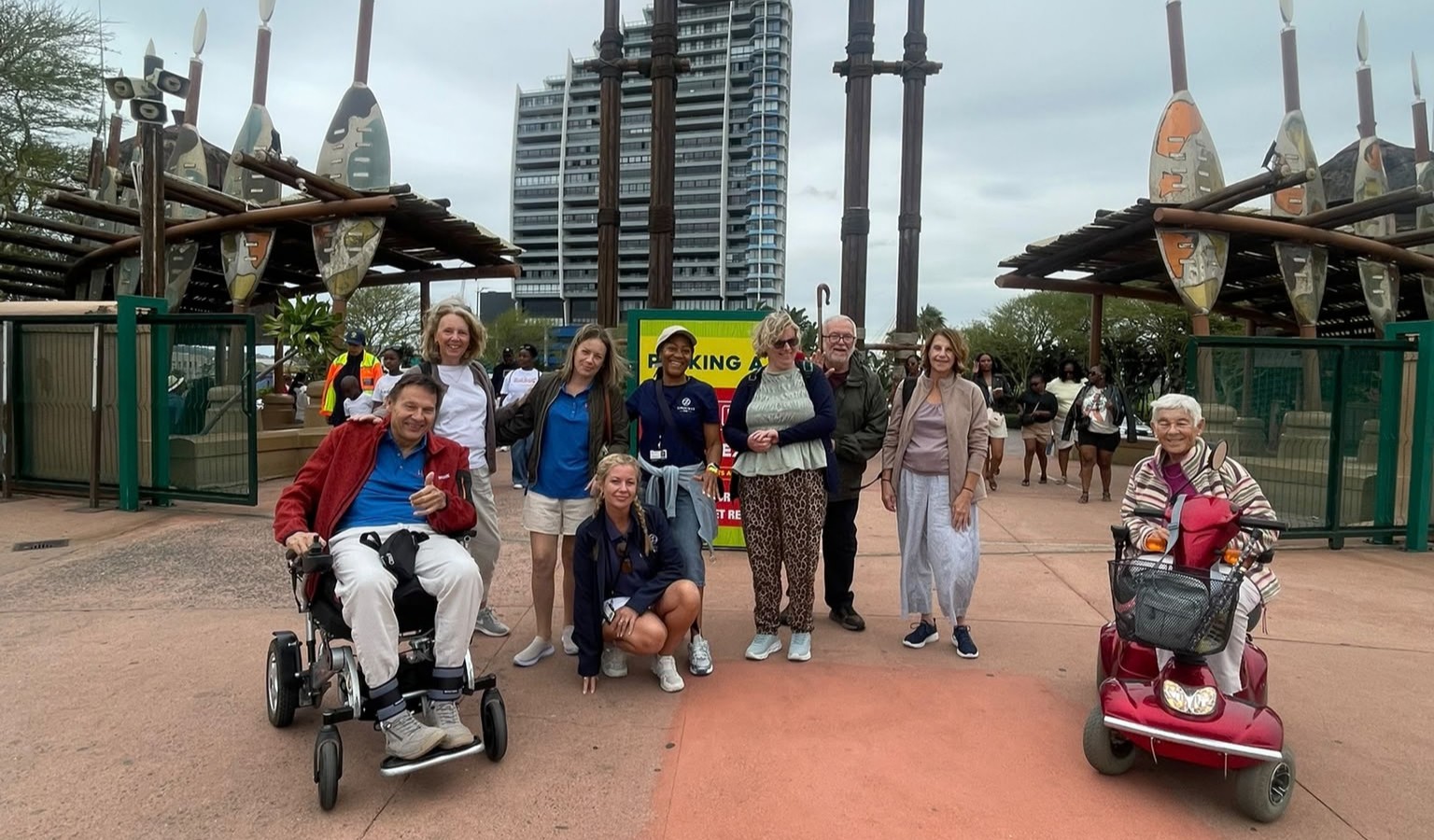
Yes, absolutely. Game viewing here is done from a vehicle, so the real question is whether the vehicle works for you. With Access2Africa, it does; their vehicles are set up so that you ride in your own chair for the whole drive.
As for the reserve itself, Hluhluwe-iMfolozi is Africa’s oldest proclaimed game reserve, dating back to 1895. It covers about 96,000 hectares (roughly 237,000 acres) and is home to the Big Five. It is also the park that saved the southern white rhino. By the 1890s, fewer than a hundred were thought to be left, and all of them were here. Then, in the 1960s, rangers moved hundreds of them to other parks and countries, and most white rhinos alive today are considered descendants of that group.
To give you an idea of what a drive looks like, the team from Rolling Inspiration magazine spotted elephants, buffalo, rhinos, lion, zebras, and warthogs on a late afternoon drive of about two hours. They also stopped at Hilltop Camp, which looks out over the reserve, and found its ramps relatively easy to manage and its bathrooms accessible.
Don’t be surprised if many of the rhinos you see have no horns. It might look a little odd at first, but there’s a good reason for it. The park dehorned more than 1,000 of them in 2024 to deter poachers, and poaching incidents in the park have since fallen from 198 that year to 63 in 2025, according to government figures.
The base for Access2Africa Safaris is the wonderful Leopard Walk Lodge, next to the iSimangaliso Wetland Park. Access consultant Mandy Latimore, a wheelchair user, reviewed it for Rolling Inspiration in June 2026. The notes she made about her stay were some of the most detailed I have read for Leopard Walk Lodge.
In terms of what works, the lodge has five suites, each with glass sliding doors, a private veranda, and an outdoor jacuzzi bath. Suites also feature an accessible wet room, and there are ramps to all rooms. There are also portable ramps for the few areas of the lodge that have a small step. Leopard Walk Lodge also has paved paths that lead to all suites, with pebbles set into the concrete which double up as tactile markers for blind and low-vision guests.
See our Leopard Walk Lodge listing for more details and images >

There is quite a lot to do in Hluhluwe, and the accessibility of it all is a fairly mixed bag (another reason why traveling with an accessible tour provider like Access2Africa helps to remove some of that guesswork). Once again, based on what we found from Rolling Inspiration, here are some of the highlights that they mentioned:
A visit to the Zululand Cat Conservation Project offers the chance to see rescued African wildcats, servals, caracals and cheetahs up close while learning about the work involved in their care and conservation. The team at Rolling Inspiration described this as a highlight of their trip. Accessibility varies across the site. For example, the waiting area is paved, but the paths between enclosures are grassy and uneven, so manual wheelchair users may need some assistance getting around.
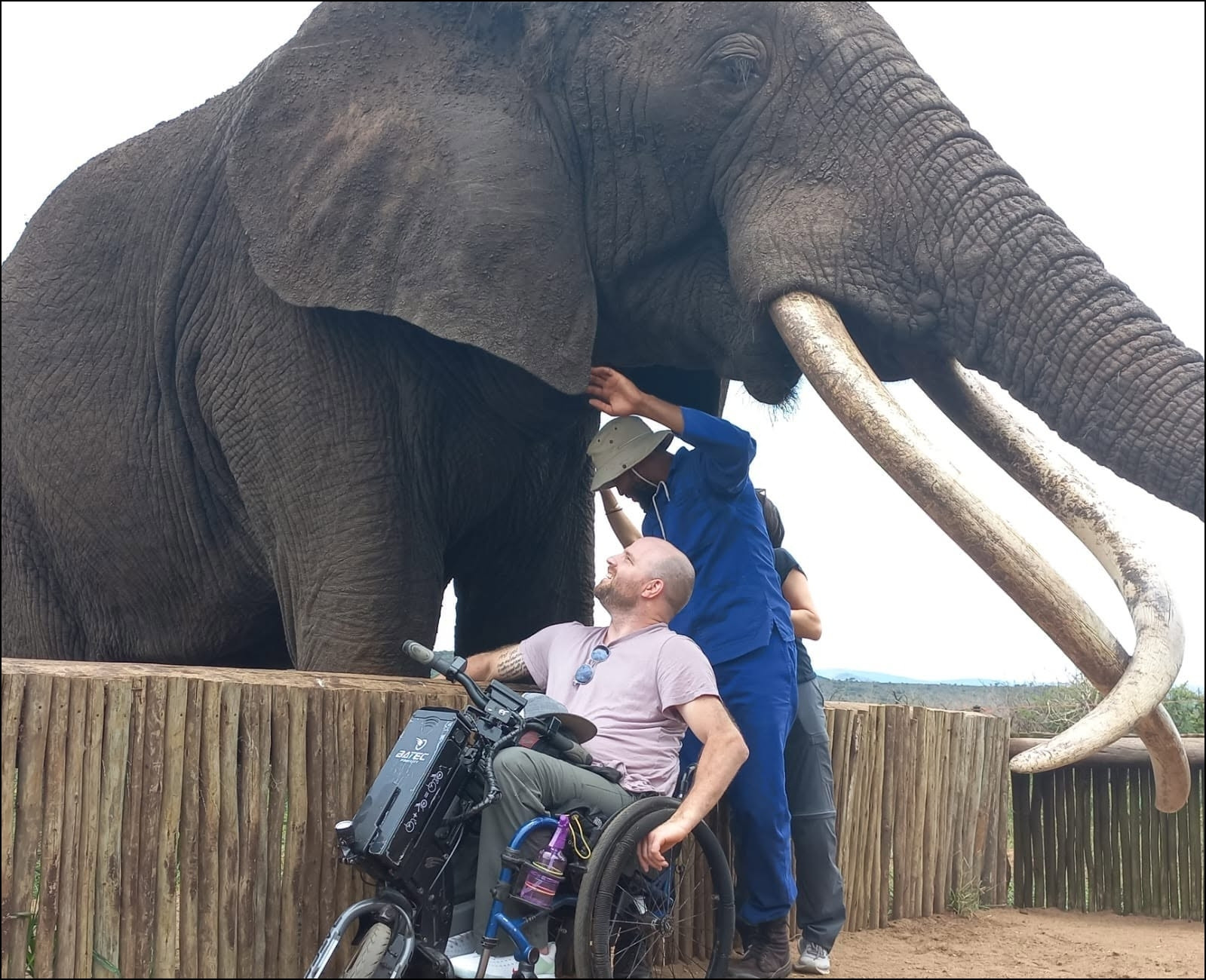
For an experience sure to last long in the memory, visit the private reserve where two orphaned, hand-reared elephants roam. Each morning, the elephants make their way to a viewing area, giving visitors an opportunity to see them up close and, on occasion, interact with them. One recent Access2Africa guest who uses a power wheelchair was even able to feed an elephant, making this a particularly special experience.
Zulu Croc is home to crocodiles and snakes, and brings an opportunity to discover some of the region’s fascinating reptiles. The site has several wheelchair-friendly features, including an accessible shop, restaurant and bathrooms. Many of the snake displays are positioned behind large viewing windows, making them easy to see from a seated position. However, viewing the larger crocodiles can be more challenging, as the surrounding walls are too high for a clear view from a wheelchair. One of the smaller rooms also has a step, which may limit access.
Ilala Weavers is a lovely place to browse locally made baskets, crafts, and other traditional Zulu creations, with a restaurant where visitors can stop for a meal. It’s a good opportunity to support local artisans and take home something handmade. While the site has ramps, some may be too steep for wheelchair users to manage independently, so assistance could be helpful when moving between areas.
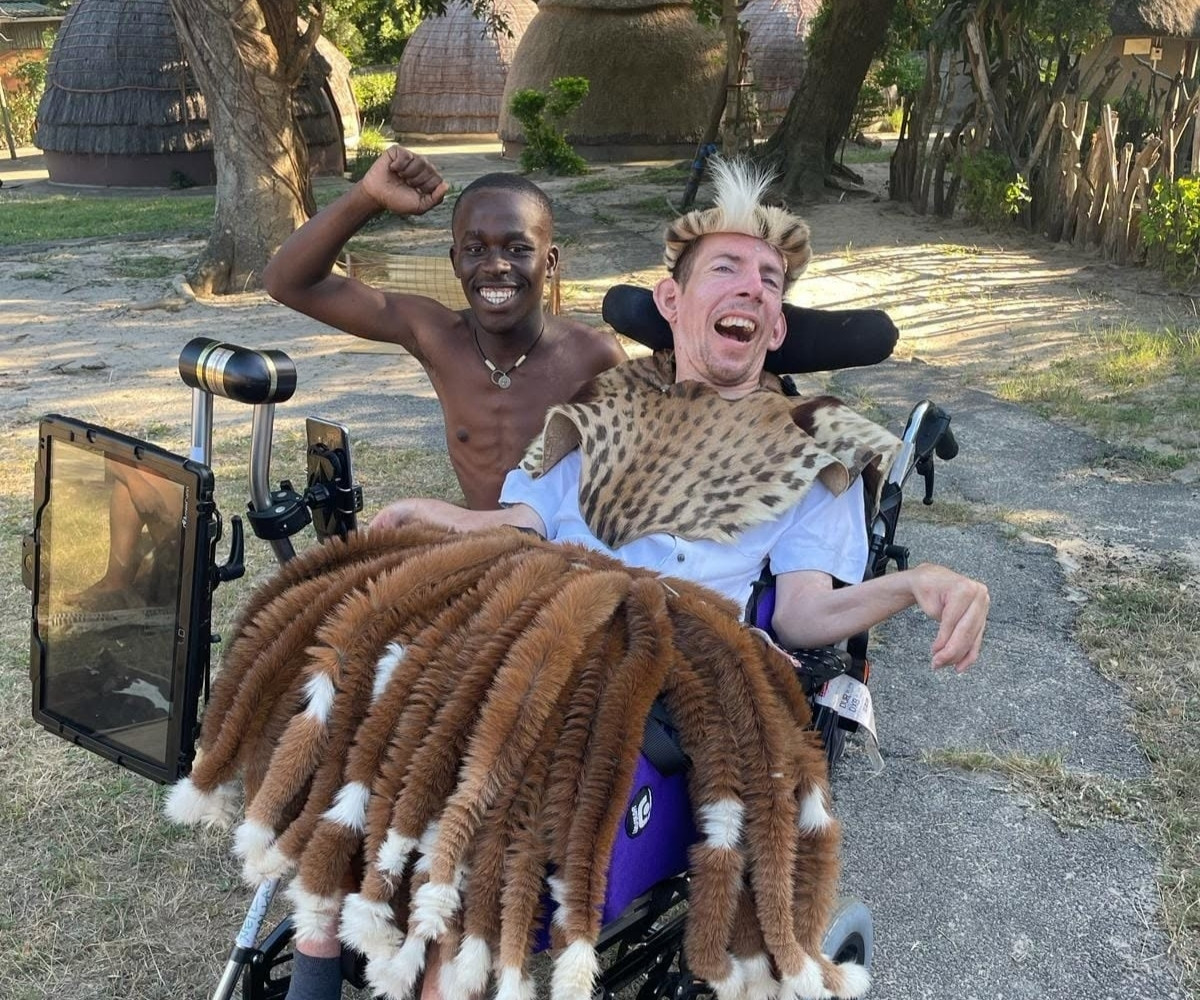
A visit to a Zulu cultural village is a great opportunity to experience local traditions, watch traditional dancing and learn more about everyday life in a Zulu homestead. It can be a rewarding addition to a Zululand itinerary, bringing the area’s cultural heritage to life. However, independent information about wheelchair accessibility is limited, so it’s best to contact the village before visiting to ask about paths, entrances, seating and the accessibility of the performance areas. Visiting a Zulu Cultural Village is part of the Access2Africa Safaris itinerary.
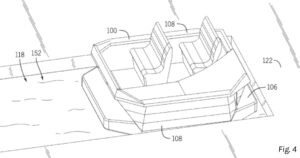
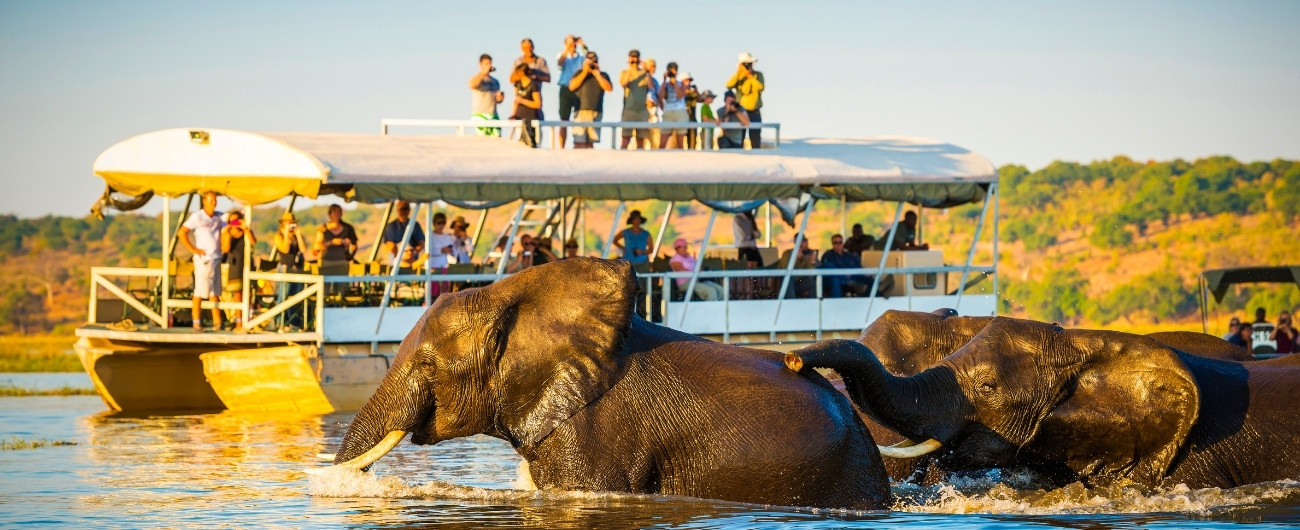
The highlight of St Lucia is the hippo and crocodile boat cruise along the estuary. Access2Africa includes these boat trips in its itineraries, with cruises for wheelchair users arranged around the tides to make boarding easier. One operator has a boat fitted with a ramp, making it possible for wheelchair users to join the experience.
St Lucia lies within iSimangaliso Wetland Park, South Africa’s first UNESCO World Heritage Site, listed in 1999. The park is home to large populations of hippos and Nile crocodiles, and you’re likely to spot both on the water.
Back on land, a boardwalk winds beneath the mangroves from the Ski Boat Club towards the main beach. The Rolling Inspiration team enjoyed the walk, describing it as an easy and pleasant outing, though they did note a couple of drawbacks. Some sections of the boardwalk were missing when they visited, and the path ends at a grassy, sandy area still some distance from the water.
Beach wheelchairs are available in St Lucia, but the public bathrooms near the boardwalk are not fully accessible, so it’s worth planning ahead.
Access2Africa says Cape Vidal is an option for wheelchair users. This stretch of wild coastline lies within iSimangaliso Wetland Park, a short drive from St Lucia, and combines beautiful beaches with opportunities for wildlife spotting. Access2Africa uses a floating beach wheelchair here, allowing guests to get closer to the water and, conditions permitting, enjoy the Indian Ocean surf after a morning game drive. Accessible snorkelling is also possible at low tide.
There is one caveat: the Rolling Inspiration team didn’t visit Cape Vidal, so I haven’t been able to find an independent account of how the beach wheelchair works on the sand or how easy it is to get in and out of. If you’re planning a visit, ask Access2Africa for photos or video of the setup and details of how transfers into the chair are handled.
Visit between June and November and you may also spot humpback whales migrating along the coast. Researchers have been counting them from the dunes at Cape Vidal since 1988, and the latest published figures put the migration at more than 10,000 whales per season. Sightings tend to peak in late July and early August. Access2Africa has a useful write-up of the whale research if you’d like to learn more.
Whale-watching boat trips also operate from St Lucia, but I couldn’t confirm how accessible the boats are. If a trip out to sea is on your wish list, check boarding arrangements and wheelchair access before booking.
May to September is generally the best time to visit. It’s the dry winter season, when vegetation thins out and animals gather around water sources, making wildlife easier to spot. Days are usually warm and dry, although mornings can be chilly between June and August, so it’s worth packing a few extra layers.
Summer, from roughly October to April, brings hotter, more humid weather and frequent rain. If you find it difficult to regulate your body temperature, this is worth bearing in mind when planning your trip. The cooler, drier winter months are likely to be more comfortable.
There are also two seasonal highlights to look out for: