Apumayo Expediciones: Getting to Machu Picchu When the Mountain Won't Meet You Halfway
Machu Picchu is one of the most iconic landmarks in the world. A place where a fascinating civilization from centuries ago left its legacy, partly intact, for us to marvel at in sheer wonder. The problem with this monumental landscape is that it is simply not accessible. Not getting there, not getting around once you arrive, nothing. The citadel itself is a maze of stone stairs and narrow passageways, built long before anyone imagined a wheelchair.
Yet despite this, disabled travelers are making their way to Machu Picchu every year, thanks to companies like Apumayo Expediciones, which has operated in the region since the 1990s.
Apumayo is a local operator based in Cusco. Alongside rafting, trekking and community tourism in the Sacred Valley, it has spent the better part of three decades running trips for wheelchair users and other disabled guests. Its general manager, Pepe López, started what he calls “experimental trips” in the ’90s, long before accessibility was even on people’s radar in Peru. We spoke with him by email about how it all works, and this is what he had to say.
Who runs Apumayo’s accessible tours?
Every tour is run directly by Apumayo. Its own team operates each trip on the ground, and nothing is handed off to a third party. That’s good news for travelers, since it can mean fewer people taking a cut and inflating the final price.
Pepe personally trains the guides and assistants who support disabled guests. His own grounding comes from attending international accessible travel workshops and conferences, including those run by the Society for Accessible Travel & Hospitality (SATH), and from familiarization trips to Peru with international accessibility advisors who have disabilities. Because, let’s face it, on a trip like this to Machu Picchu, the assistants are the accessibility feature. Their training is essentially the entire product.
How does a wheelchair user or a person with a mobility device get to Machu Picchu?
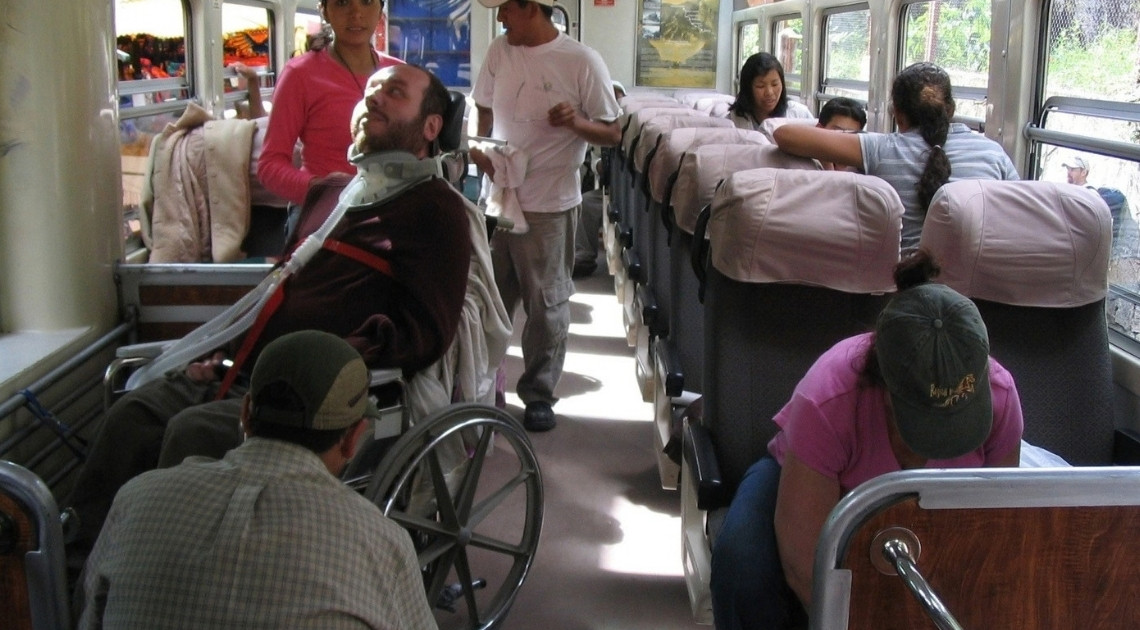
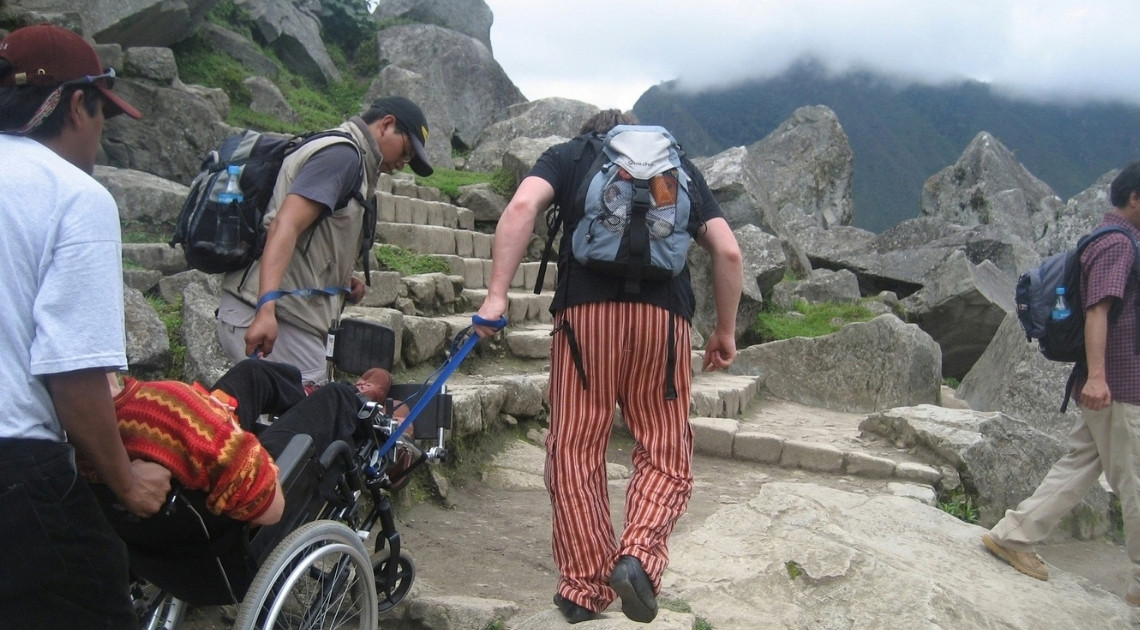
The answer is: with a lot of help, and Pepe doesn’t sugarcoat it. Travelers use a regular manual wheelchair and are strapped in for safety. The team traveling with them, put together and trained by Pepe, then lifts each guest, still in their wheelchair, onto the train that takes them closer to Machu Picchu. From there, they lift the guest onto the bus that climbs the rest of the way to the citadel, which sits at 2,430 meters (7,972 feet) above sea level. Some guests transfer into a regular seat on the train and bus, but most stay in their chairs. Apumayo’s assistants work as porters for the entire trip.
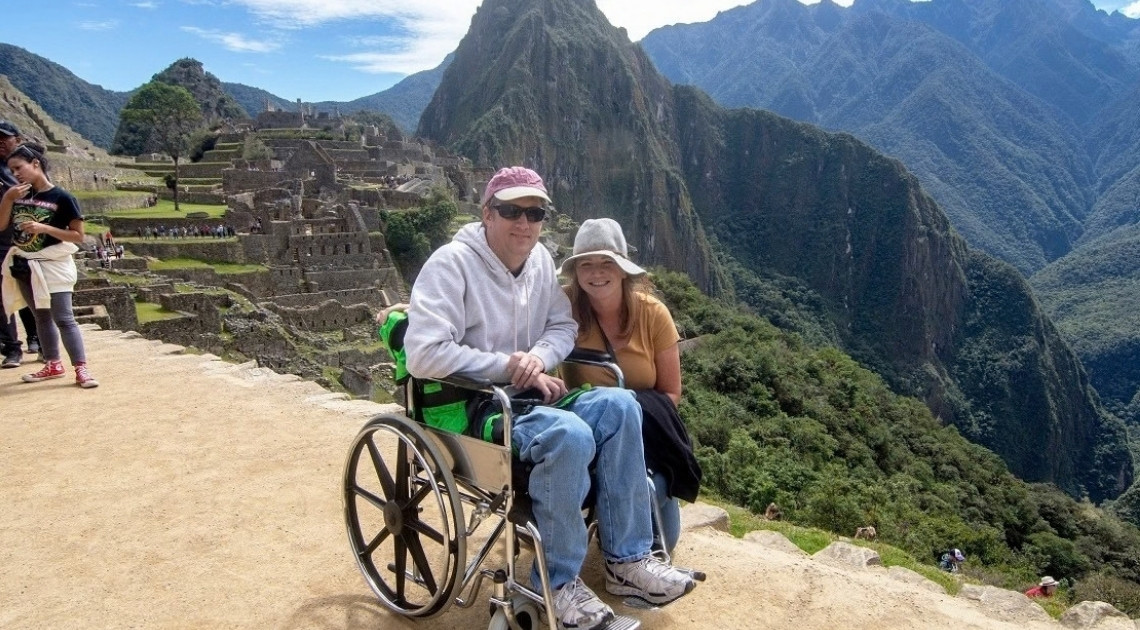
Once they reach the site, things get a little more structured. Machu Picchu is visited through set circuits, each covering a different zone. After many years of trial and error, Apumayo settled on Circuit 2 as the route that offers the best views while staying as safe as possible. It’s also the route that gives guests that classic panoramic view over the citadel and rolls past some of the Andean terraces in the middle of the city.
It’s worth being clear about who this suits. If you’re comfortable being handled and moved in a manual chair by a team of Peruvians, this is doable. If that level of physical assistance isn’t for you, it’s better to know now.
Power chair users should also think carefully. Pepe says electric chairs are hard to manage on tour outside of hotels, and battery rules for flights add another layer of planning. For many power chair users, that means transferring into a manual chair (again, securely strapped in) to see Machu Picchu with their own eyes.
One past client brought their own TrailRider, a single-track wheelchair developed in British Columbia for taking people with paraplegia onto forest trails. If you have access to adaptive equipment like this, it’s worth raising when you plan.
What is Cusco like for wheelchair users?
Cusco is easier than the mountain, that’s for sure, but it still has its limits. The city has wide plazas and colonial streets that you can roll through, but the main archaeological sites are a different story; much like Machu Picchu, you’ll need helpers there too.
Pepe describes Cusco as a destination for travelers who are up for a bit of adventure, or who have strong family support traveling with them. When it comes to hotels, he says most properties up to four stars can accommodate wheelchair users, although some are far better adapted than others, and there are a handful of accessible restaurants too. We’d always recommend asking very specific questions about the room and bathroom before committing to anything, because “accessible” can mean very different things depending on who you ask.
If you want an idea of what a full trip looks like, Apumayo’s published itineraries are a good place to start. Its eight-day program includes a city tour of Cusco, taking in the Cathedral, Saqsaywaman and Tambomachay, a day in the Sacred Valley visiting Pisac, its local market and the town of Ollantaytambo, and then the Vistadome train to Machu Picchu. There’s also a longer Peru program that adds Lima into the mix.
How do you book an accessible trip with Apumayo?
Every trip Apumayo runs is custom built. The team looks at your disability, the level of support you need and how many people are in your group, and then designs the trip around that. Most past guests have gone for a full package, while others on a tighter budget have simply booked a day trip to Machu Picchu. Any date works, and right now Apumayo prefers to run private trips, so there’s no set public price; everything is quoted based on your plans. You can get in touch with them through their website at apumayo.com.
If you’re thinking about Peru but aren’t sure where to start, my wife and I also help travelers plan accessible trips through Accessibility Atlas. Drop us a line at hello@theworldisaccessible.com and we’ll be happy to talk it through with you.
Is Apumayo right for you?
What really stood out to us is the honesty. Apumayo doesn’t pretend that Machu Picchu is accessible; it tells you exactly where the barriers are and how its team gets you past them. Reviews from past guests also talk about dedicated helper guides who stayed with them for the entire trip, which says a lot.
If you want to see one of the wonders of the world and you’re comfortable with hands-on assistance, Apumayo has been making that happen since the 1990s.