Some weeks the accessible travel news writes itself, and not in a good way. This was one of those weeks. Virgin Australia broke another wheelchair, this time one belonging to a six-year-old girl. Ryanair told a disabled woman there was no room for her on the ambulift.
If you’ve been part of this community for any length of time, none of that will shock you. But there was more to the week than broken chairs and airline apologies.
Researchers put a 426-pound power wheelchair through the same crash tests as an airplane seat, and it held. Canada’s regulator made another airline change the way it treats power wheelchair users. Spain used one of the biggest stages in travel to push accessible tourism, and Kenya’s national parks authority publicly thanked an accessible safari operator.
Here are the six stories from the past week that we think matter most, what happened, and what we make of them.
The answer is, it’s closer than ever, but we’re not quite there yet. On November 3, All Wheels Up, the US nonprofit that has spent more than a decade pushing for a wheelchair space on commercial aircraft, announced that its crash-test research has been peer reviewed and published. The study appears in the October issue of Aerospace Medicine and Human Performance.
The testing was done with the National Institute for Aviation Research (NIAR) at Wichita State University. Researchers took a 426-pound Quantum Edge 3 power wheelchair, secured it with a Q’STRAINT One restraint system and put a crash test dummy in it. Then they ran it through the two dynamic crash conditions US rules set for aircraft seats: a 16G forward impact and a 14G downward impact.
Neither the wheelchair nor the restraint failed structurally in either test. The chair stayed inside its restraint footprint, and permanent deformation stayed within limits comparable to regular airline seating.
What makes this paper different is the angle. The authors frame staying in your own seating as a medical issue, not a comfort one. Losing specialized seating for a flight can contribute to pressure injuries, breathing problems, pain and postural instability. Co-author and rehabilitation physician Dr. Sheyna Gifford called it “fundamentally a health and safety issue” for some people.
Our take: This is the kind of evidence regulators keep saying they need. It also lands in the same year Airbus had an employee, Dirk Thalheim, sit in his own wheelchair during the cruise phase of a test flight. But we should be honest about the distance left. The study’s authors list what still needs work themselves: evacuation, batteries, security screening, boarding and whether airlines can make the numbers add up. Airbus is talking about a first delivery in 2032. No airline has committed. The engineering is catching up; what’s missing is an airline willing to go first.

Not if this week is anything to go by.
The Tuimalealiifano family flew Virgin Australia from Townsville to Brisbane so their six-year-old daughter could get to medical appointments. She has a rare genetic condition that affects the bones in her wrists and ankles. She can walk short distances, but she relies on a specialized wheelchair worth $33,000 (AUD).
When they landed in Brisbane, a bracket on the chair had been twisted and it couldn’t be used. Her dad ended up carrying her through the Queensland Children’s Hospital, and the family eventually fixed the chair themselves after buying tools. Virgin Australia apologized more than once and said it gave the family immediate support and is working to improve its processes. ABC News, which reported the story, didn’t mention any repair or compensation from the airline.
Her mom, Amanda, made the point that should worry anyone who flies with a wheelchair. If her daughter were an adult traveling alone, she’d have been stranded at the airport.
The ABC also laid out the airline’s record: a broken wheelchair in 2017, two incidents in 2023 (including former Queensland Australian of the Year Dr. Dinesh Palipana being tipped out of his chair by ground crew), two more in 2024, and in August, disability advocate Shane Hryhorec being removed from a flight in the Whitsundays over his wheelchair motor. We covered Shane’s story [here].
Our take: People With Disability Australia wants airlines to be forced to report damaged and lost mobility equipment, and we’re fully behind that. US airlines have had to report mishandled wheelchairs and scooters to the Department of Transportation since December 2018, and the numbers are published every month. It hasn’t solved the problem, but nobody can pretend there isn’t one. Australia is building its first aviation disability standards right now, and public consultation closed in October. If those standards don’t include mandatory reporting with real consequences, the next family will get the same apology.
Ryanair says it does.
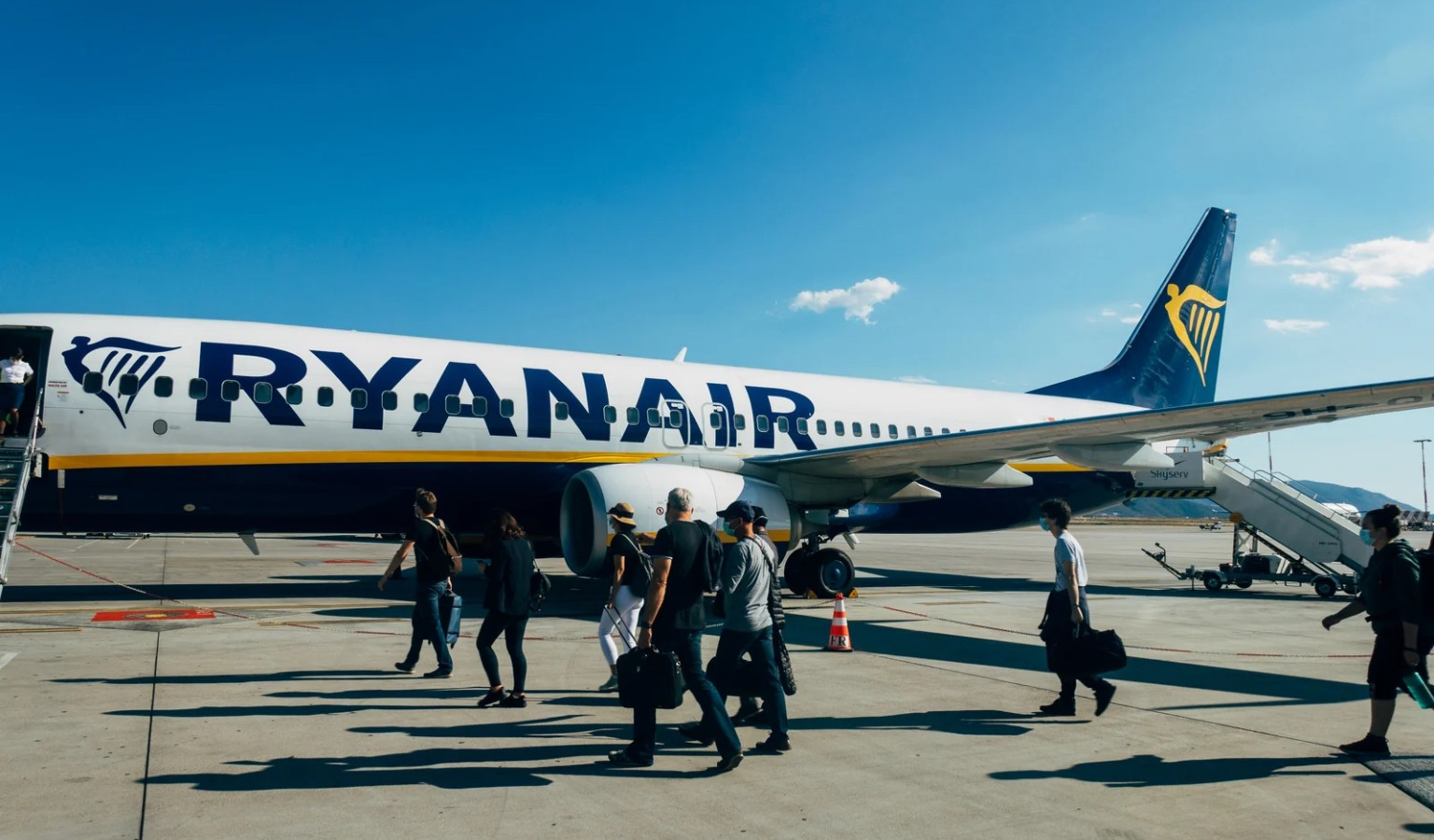
Nicola Le Cornu, from Poulton on England’s Fylde coast, booked a package holiday to Paphos, Cyprus, flying Ryanair out of Manchester on November 20. She can walk to her seat, but she can’t manage the aircraft steps, so she needs an ambulift. On November 6, two weeks before departure, she contacted Ryanair to add assistance. She was told the ambulift was full. Her options were to fly two days later or take a refund. She’s written about it herself on her Substack.
Ryanair’s statement to the Blackpool Gazette was blunt. Assistance at Manchester is provided by the airport’s contractor, not Ryanair, and she booked back in May without asking for help. Then came this line: Ryanair “implements a restriction on the number of passengers with restricted mobility” it accepts on each flight. Manchester Airport passed the question straight back to the airline.
So is it the airport’s ambulift that’s full, or Ryanair’s cap? Two answers, and neither one tells her why there’s no room.
Our take: UK rules, carried over from EU Regulation 1107/2006, set 48 hours before departure as the notice an airline needs for assistance. Nicola gave two weeks. The same rules only let an airline refuse a disabled passenger to meet safety requirements set in law or by its regulator, or when the aircraft or its doors make it physically impossible.
Some limits on the number of passengers needing help can have a genuine safety basis, so we’re not calling Ryanair’s cap unlawful. We are saying it should be explained and shown at the point of booking. The rules already expect that: airlines have to publish these safety restrictions, and tour operators have to make them available for flights sold as part of a package. If you fly a low-cost carrier, add assistance the moment you book. You shouldn’t have to. Right now, you do.
If your chair is too tall for WestJet’s planes, the airline now has to do something about it.
Back in July 2023, Noa Fleischer, who uses a power wheelchair, tried to book a WestJet trip to a resort and found almost none of the airline’s fleet could take her chair. It wouldn’t fit through the cargo door of WestJet’s Boeing 737s. She took it to the Canadian Transportation Agency (CTA), and in a decision released on October 30 and reported this week, the regulator found she faced an “ongoing undue barrier.”
Here’s what WestJet now has to do. If you book at least 21 days before departure and tell WestJet in writing that you’ll travel with a medically necessary mobility aid that can’t be collapsed below 35 inches, it has to fly you, rebook you or refund you. If it puts you on another airline because its own plane can’t take your chair, it pays any fare difference in the same class of service.
This builds on the Tim Rose case against Air Canada, where the CTA ordered the same kind of accommodation in 2023, a decision the Federal Court of Appeal upheld in March 2025. It also comes after a separate CTA decision this year ordering WestJet to drop its 300-pound weight cap on power wheelchairs by mid-2027.
Our take: Two things. First, the weak spot is the refund. A refund isn’t a trip, and the ruling doesn’t guarantee you a seat. Second, look south. In the US, the Department of Transportation has pushed enforcement of key parts of its own wheelchair rule, including airline liability for mishandled wheelchairs, back to April 30, 2027. Canada’s regulator keeps making airlines move. That’s what enforcement looks like.
Because it’s decided accessibility is a selling point, and it’s putting money and time behind that.
At World Travel Market London, which ran from November 3 to 5, the Spanish Tourist Office was the event’s first ever official accessibility partner. Turespaña used the stage to launch a new international campaign, Spain, a Country for All. It runs for four weeks across England, the US, Canada, Germany, Australia, the Netherlands and Portugal, and it’s built around experiencing Spain through sound, smell and texture. US content creators Matthew and Paul, one of whom has a visual disability, explore Madrid and Altea, and Spanish Paralympic fencer Gema Hassen-Bey features too.
Behind the campaign is a section on Spain.info with close to 100 accessible experiences across all 17 autonomous communities, plus Ceuta and Melilla. It was developed with ONCE, Spain’s national organization of blind people, and certified by Ilunion Accesibilidad. The Spanish Tourist Office also launched a guide for hotels on how to communicate their accessibility to guests. One of the speakers, Miguel Carrasco, put it simply: accessible tourism is “what better tourism looks like.”
Two days later, the Association of Canadian Travel Agencies (ACTA) announced a training partnership with the Tourist Office of Spain, IMPULSA IGUALDAD and TUR4ALL. Canadian travel advisors can join webinars on November 25, December 9 and February 4, and those who complete the program can be considered for a trip to accessible Spanish destinations in 2027.
Our take: Campaigns are the easy part. The hotel guide is the bit we care about. A lot of what goes wrong for our community starts with a hotel description that turned out to be wrong, and Spain is going after that problem directly. Training travel advisors is smart too, because advisors are often the ones turning a vague room description into a yes or no for a client. Spain has been building this through its Spain for All program for about three years. It shows.
Yes, and the people who run Kenya’s national parks just went out of their way to say so.
The Kenya Wildlife Service (KWS) gave Accessible Travel Kenya a Certificate of Appreciation at its Travel Trade Partnership Breakfast Meeting. The award recognizes the operator’s work opening up national parks, reserves and safaris to disabled travelers, their families and companions.
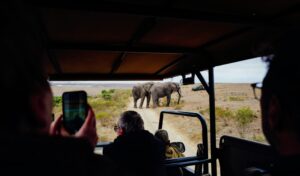
The operator runs purpose-built safari vehicles with rear ramps, wheelchair docking bays and swivel seating. It provides certified sign language interpreters on game drives and briefings for Deaf and hard of hearing guests, and it works with Kenya Airways and Safarilink to reach more remote airstrips.
It also handled logistics for Kenya Beyond Sight, a five-day coastal trip for a 22-person group. The group reported 100% participation in planned excursions, including a sandbank visit at Malindi Marine National Park with support from KWS rangers. On top of that, KWS offers free park entry to Kenyan persons with disabilities, which matters for local families as much as for visitors.
Our take: A national wildlife authority publicly backing an accessible operator says more than the certificate itself. It tells you the parks see disabled visitors as part of their market, not an afterthought. We’ve watched accessible safari options grow across East and Southern Africa over the past few years, and it’s a big part of why we’re planning our own small-group South Africa trip for 2027. If you’ve registered interest in that trip, keep an eye on Kenya too.
Got a story we missed? Send it to hello@theworldisaccessible.com or share it in our Facebook community. And if this week’s news has you rethinking a trip, Accessibility Atlas can help you plan around the gaps.
Not on any commercial flight today. Wheelchair users still have to transfer to an airline seat, and their wheelchair travels in the cargo hold. Research published in October 2026 showed a secured power wheelchair can pass the same crash tests as an aircraft seat, and Airbus has tested a wheelchair space in flight, but no airline has committed to installing one.
Under UK and EU rules (Regulation 1107/2006), tell the airline, its agent or your tour operator at least 48 hours before the published departure time. Adding it when you book is safer, especially with low-cost airlines that limit how many passengers needing assistance they take on each flight.
In the UK and EU, only in limited cases: to meet safety requirements set by law or by the airline’s regulator, or when the aircraft or its doors make it physically impossible. Airlines have to publish those safety rules, and if you’re refused, you’re entitled to a refund or re-routing.
Under an October 30, 2026 decision by the Canadian Transportation Agency, if you book at least 21 days ahead and tell WestJet in writing that your medically necessary mobility aid can’t collapse below 35 inches, WestJet has to fly you, rebook you or refund you. If it rebooks you on another airline, it covers the fare difference in the same class.