Accessible Travel News Roundup: 817 Mishandled Wheelchairs, a WestJet Ruling and Boeing's Wheelchair Box
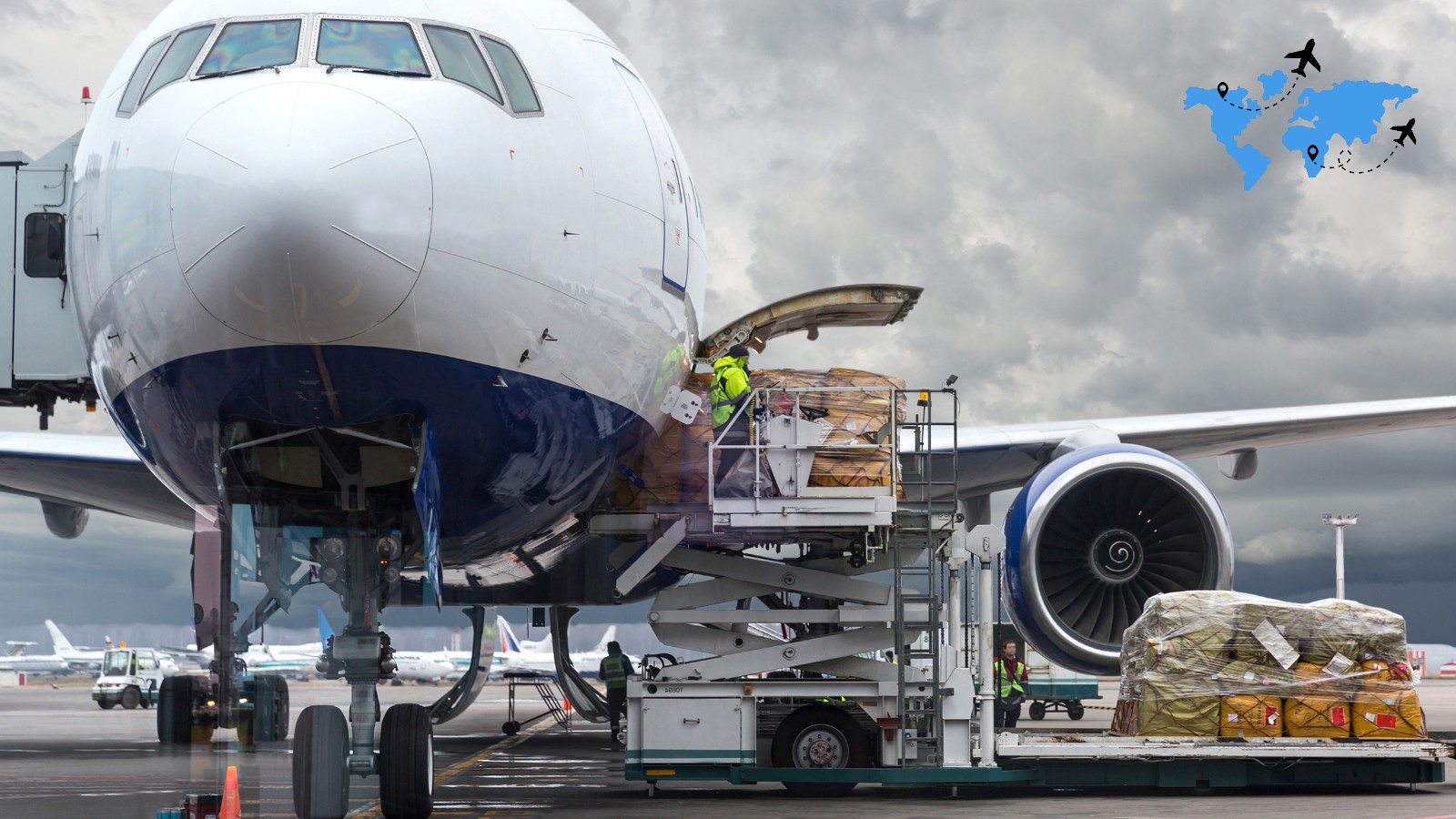
US airlines mishandled 817 wheelchairs and scooters in September. The figure came out on Thursday, a week before Thanksgiving and one of the busiest stretches of the year for American airports, and it's where this week's accessible travel news starts.
There is better news further down. Canada's transport regulator has told WestJet it can't keep turning away people whose power chairs are too tall for its cargo doors. And Boeing has shown off a box designed to stop chairs getting wrecked in the hold of a 737; whether that box ever actually flies is another question.
We've also got this year's TravelAbility award winners (with the press release taken out), step-free access on the way at a busy Glasgow station, and an update, of sorts, on Nicola Le Cornu.
How many wheelchairs did US airlines mishandle in September?
817. That's how many wheelchairs and scooters US airlines mishandled in September, out of 77,096 they carried. Roughly one in every hundred.
The figures come from the Department of Transportation's latest Air Travel Consumer Report, released on November 19. "Mishandled" covers chairs that were damaged, lost, delayed or stolen. And the gap between airlines is hard to ignore. Delta mishandled 0.25 chairs for every 100 it carried. Alaska mishandled 1.48, with Frontier (1.38) and JetBlue (1.29) not far behind. Same country, same month, and one airline did about six times worse than another.
The year-to-date picture isn't much kinder. According to InsideFlyer's breakdown of the data, United and Delta carried a similar number of chairs between January and September, but United mishandled 1,269 of them and Delta mishandled 373.
For context, US airlines reported 9,910 mishandled wheelchairs and scooters across the whole of 2025, a rate of 1.09 per 100. So September's 1.06 isn't a breakthrough. It's more or less where things have been sitting for a while.
Our take: One in a hundred sounds small. It isn't small when it's your chair, and you're stuck at the gate in an aisle chair waiting to find out whether you'll be leaving the airport on your own. We'd really like to know what Delta is doing differently, because whatever it is, it's working; the rest of the industry should be paying attention. It doesn't help that the DOT has pushed back enforcement of the part of its wheelchair rule that makes airlines more liable for mishandled chairs until April 30, 2027. If it's happened to you, our guide on what to do when an airline damages your wheelchair walks you through your rights.
Sources: Karmactive, InsideFlyer, US Department of Transportation
Could a Boeing box stop wheelchairs getting wrecked in the hold?
If you've ever flown on a 737 and got your chair back with a bent footplate or a snapped joystick, part of the problem is the plane itself. The 737's cargo doors open inward, which eats into the space in the hold, and Boeing admits that can mean a passenger has to leave their wheelchair behind or can't travel at all.
Boeing's answer is something it calls the High-Value Cargo Container. Because the 737 hold doesn't take standard cargo containers, engineers built a custom structure that holds a folded wheelchair and protects its most fragile parts. Boeing has a US patent for it, and the details were first reported by Brazilian aviation site Passageiro de Primeira on November 17.
The catch is that Boeing says the container is still being refined, and no airline has said it will use one, or when.
Our take: A patent isn't a product. We're genuinely glad someone at Boeing is looking at the hold, because that's where so much of the damage happens. But until an airline orders these and puts them on real flights, this changes nothing for anyone flying next month. We'll be watching for the first carrier to sign up.
Source: Passageiro de Primeira (in Portuguese)
Can WestJet still turn you away because your power chair is too tall?
If your power chair doesn't fold down below 35 inches, most of WestJet's planes have been off the table, because the chair simply doesn't fit through the cargo door of its Boeing 737s. That's now changing.
On October 30, the Canadian Transportation Agency (CTA) ruled in favor of Noa Fleischer, a power wheelchair user who couldn't book a resort vacation in 2023 because her chair wouldn't fit on most of WestJet's fleet. She was represented by ARCH Disability Law Centre. Under the decision, if you give WestJet at least 21 days' notice that you're traveling with a medically necessary mobility aid that can't collapse below 35 inches, WestJet has to do one of three things:
- Fly you as booked, if your chair can safely be tilted through the cargo door.
- Rebook you on another airline on the same or a comparable route, at a comparable time, and pay any fare difference within the same class of service.
- Give you a full refund if there's no suitable alternative.
There are limits. The refund covers your flights, not hotels, tours or anything else you've prepaid, and the decision doesn't guarantee there will always be an accessible flight available. WestJet has to confirm to the CTA by December 14 that the accommodation is in place, and file new policies plus proof of staff training by March 11, 2027. The CTA says penalties for breaking accessibility orders can reach $250,000.
This is the second time in a few months the CTA has come down on WestJet over mobility aids. In August, it ordered the airline to remove its 300-pound weight limit on mobility devices by July 2027.
Our take: This is a real win, and it came from one woman refusing to accept "it won't fit" as an answer. But notice what it doesn't do. It doesn't automatically apply to any other airline; the CTA says each case is assessed on its own facts and evidence. So if you fly Air Canada or Porter, nothing here binds them yet. What it does give you is a decision you can point to. And please, if you're booking WestJet with a tall chair, get that 21 days' notice in writing.
Sources: Yahoo Finance Canada, Money.ca
Who won this year's TravelAbility awards, and what did they actually change?
The TravelAbility Summit, held in Tampa from November 9 to 11, announced its 2026 award winners this week. Award announcements are usually wall-to-wall PR, so here's what each winner actually did, as far as we can tell from the announcement:
- North Alabama (Accessible Destination of the Year): handed out 17 micro-grants of $500 each, which the region says kick-started $85,000 in accessibility improvements across its 16 counties.
- Travel Oregon (Accessible State of the Year): became the first US state to be "Accessibility Verified," working with Wheel the World to map accessibility across all seven of Oregon's tourism regions.
- Megan Kimble, United Airlines: helped create a digital wheelchair sizing tool that shows which aircraft can carry your chair, and automatically refunds the fare difference if you need a different flight. She also led a fleet-wide rollout of tactile Braille signage.
- Sophia Valdivia, Visit Huntington Beach: helped make Huntington Beach the first California destination certified sensory-inclusive by KultureCity, with more than 1,538 visitor-facing staff trained and 100 sensory bags placed around the city.
- Kim Fox, Visit Hendricks County, Indiana: built an accessibility page organized around disabled visitors' needs first, and hosts adaptive sports events.
Our take: The United sizing tool is the one that would make the biggest difference to how we actually book flights, and the Huntington Beach training numbers are concrete in a way most awards aren't. Oregon's statewide mapping is a big undertaking too, and we're looking forward to hearing how it works for travelers once they're out there using it. (Full disclosure: we contribute content to Wheel the World.) If you've tried any of them yourself, drop us a line.
When will Glasgow's Bellgrove station be step-free?
By the end of 2027, if the plan holds. Bellgrove is Glasgow's 12th busiest station, with around 750,000 passengers a year, and right now the only way to the platform from Bellgrove Street is a steep staircase. A £4.8 million upgrade through the UK's Access for All program will add a lift from Bellgrove Street down to the island platform, plus a new entrance on Sword Street. Site preparation starts this month and main construction early next year.
Source: Football Ground Guide
Did Nicola Le Cornu make it to Paphos?
Honestly, we don't know yet. Last week we said we'd be watching Nicola's Ryanair flight from Manchester to Paphos on November 20. As a reminder, Ryanair told her on November 6 that there was no space left on the ambulift for that flight, and offered her two options: fly two days later, or take a refund. Nicola can walk to her seat, but she can't manage the aircraft steps.
She has contacted several news outlets and is asking Ryanair, Manchester Airport and the UK Civil Aviation Authority for answers. We haven't seen an update since, and we'll share one as soon as we have it.
Source: Nicola Le Cornu on Substack
What are we watching next?
- November 25: The first of three live webinars from ACTA and the Tourist Office of Spain, training Canadian travel advisors to serve travelers with accessibility needs. Advisors who finish the program can be considered for an accessible fam trip to Spain in 2027.
- December 4: The European Commission's Access City Award.
- December 14: WestJet's deadline to confirm to the CTA that it can accommodate tall power chairs.
Frequently asked questions
How often do US airlines mishandle wheelchairs?
In September 2026, US airlines mishandled 817 of the 77,096 wheelchairs and scooters they carried, a rate of about 1.06 per 100. Across all of 2025, they reported 9,910 mishandled wheelchairs and scooters, a rate of 1.09 per 100.
Does WestJet have to carry power wheelchairs that don't fold below 35 inches?
Yes, under a Canadian Transportation Agency decision from October 30, 2026, as long as you give at least 21 days' notice. WestJet must fly you as booked if the chair can be tilted through the cargo door, rebook you on another airline and cover the fare difference in the same class, or give you a full refund.
Does the WestJet ruling apply to other Canadian airlines?
Not automatically. The CTA says each case is assessed on its own facts and evidence, although other airlines can use the decision to check their own policies.
Is Boeing's 737 wheelchair container in use yet?
No. Boeing has a US patent for its High-Value Cargo Container, but says it's still in development, and no airline has announced plans to use it.
Got a story we should be covering?
If something's happened to you on a trip, good or bad, or you've spotted a story we've missed, email us at hello@theworldisaccessible.com or post it in our Facebook community. And if you're planning a trip and want someone to handle the accessibility questions for you, our Accessibility Atlas team can help.
Sources
US wheelchair figures
- Karmactive: DOT November 2026 Air Travel Consumer Report
- InsideFlyer: Federal report shows uneven airline service performance
- Bureau of Transportation Statistics: September 2026 data release
- US Department of Transportation: Aviation consumer protection news
Boeing wheelchair container
WestJet ruling
- Yahoo Finance Canada: CTA says it will fine WestJet over tall wheelchair rule
- Money.ca: CTA orders WestJet to fly, rebook or refund passengers
TravelAbility awards
Bellgrove station
Nicola Le Cornu
What we're watching
A quick note on how we made this: most of what we publish at The World is Accessible is written from scratch. We're a small, two-person team, though, so for bigger curated pieces like this weekly roundup, we do use AI to help us pull everything together. The stories are checked against their sources, and the opinions are ours.