/ News & Opinion / Sunday, November 15th, 2026
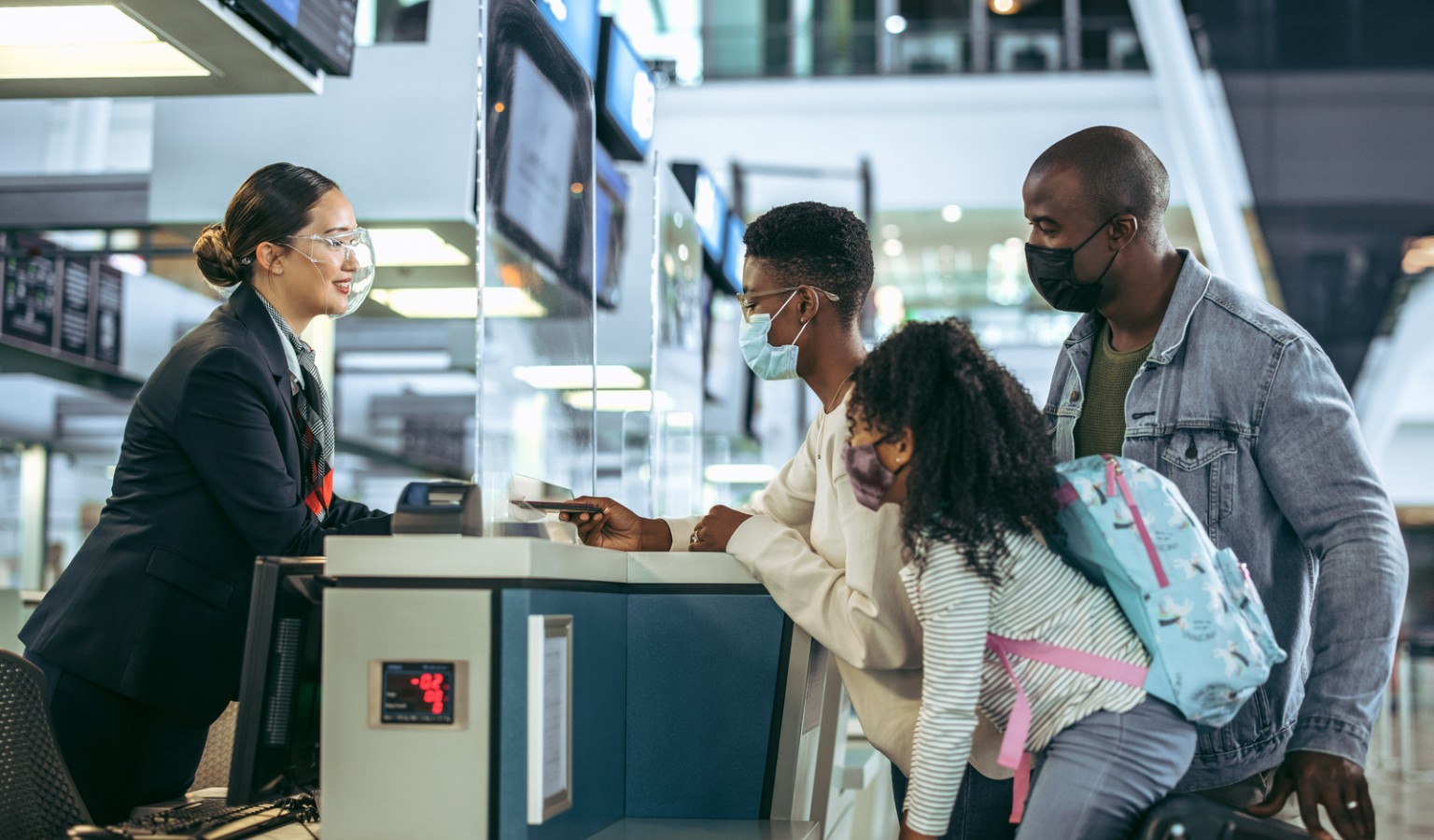
Last week we asked whether you could one day fly in your own wheelchair. This week the stories came back down to earth, and in one case, about 40 feet below it.
The US Justice Department is taking Lyft to court over drivers who leave guide dog users on the curb, including at an airport. A couple in Amsterdam did everything they were supposed to do, booked assistance, turned up in good time, and still watched their flight leave without them. And in San Antonio, a tunnel boring machine started digging under Morgan’s Wonderland.
We’ve also got level boarding coming to Chicago Union Station, a new paperwork rule for service dogs on VIA Rail that kicks in this Wednesday, a blind disability leader’s very uncomfortable flight home to Sydney, and a chance for you to tell Japan what its hotels aren’t telling you. Six stories. Let’s get into it.
No. And the US Justice Department says Lyft has known for years that some of its drivers do it anyway.
On Monday, November 9, the department sued Lyft in the US District Court for the Northern District of California, accusing the company of violating Title III of the Americans with Disabilities Act (ADA). The complaint says drivers routinely refuse riders who travel with service animals or use stowable wheelchairs, and that Lyft has then charged some of those riders cancellation fees for rides they never got. It also says drivers have refused to let passengers with mobility disabilities sit in the front seat.
The government is seeking $53 million for people who complained to Lyft or to the department. It also wants a civil penalty, a court order forcing Lyft to change its policies, and ADA training for staff and drivers.
The examples in the complaint will sound painfully familiar to anyone who travels with a guide dog. James Rath, a legally blind rider from Tennessee, says a driver turned up for an airport pickup in June, refused to take his dog and drove away without canceling the ride. Retired federal appeals judge David Tatel, who is blind, is cited for two refusals. The first, in April 2023, made headlines at the time. In the second, in September 2026, a driver allegedly saw Tatel and his guide dog coming, locked the doors and left. Reporting on the complaint says the response he got from Lyft included a $10 ride credit.
“Individuals with disabilities should be able to rely on rideshare services free of discrimination,” said Acting Assistant Attorney General Jesus A. Osete of the department’s Civil Rights Division. Lyft says it disagrees with the allegations. The company says its policies already require drivers to accommodate riders with service animals and foldable mobility devices, and that drivers who break those rules can be permanently deactivated.
None of this is new territory. Lyft settled a Justice Department case over folding wheelchairs and walkers in 2020. The department sued Uber on similar grounds in September 2025, seeking $125 million, and a judge refused to throw that case out in March.
Our take: A $10 credit isn’t accountability, and neither is a policy page. Lyft has rules on paper. The government’s argument is that nothing much happens when drivers ignore them, and that the company knows it. For a lot of disabled travelers, rideshare is the only realistic link between the airport and the hotel, and an airport curb is about the worst place in the world to be left standing. Until this gets sorted in court, our advice is simple: screenshot everything, report every refusal in the app, file a complaint with the Justice Department through ada.gov, and don’t treat a coupon as the end of the conversation. Complaints from riders are exactly what this case was built on.

Too often, you do. At least at first.
On September 11, a Dutch couple flying easyJet from Amsterdam Schiphol to Bristol did what every disabled traveler is told to do. They pre-booked special assistance and got to the airport in good time. She uses a wheelchair; her husband finds unexpected changes very hard to cope with. Schiphol’s assistance staff still didn’t get them to the gate before the aircraft doors closed.
According to the Amsterdam Times, which picked the case up from The Times’ Travel Doctor column, the couple then spent around six hours in the terminal without the support they needed, including food, drinks and help with the toilet. easyJet’s position was that airlines aren’t legally responsible for assistance inside the terminal, although a spokesperson said this wasn’t the level of service it expected for its customers. A relative, Jetske Eijgelaar, ended up transferring money so the couple could buy replacement KLM tickets at £750 each, £1,500 in total.
Schiphol eventually apologized and agreed to reimburse the replacement flights and related costs. It declined to pay anything extra for the distress. And according to the report, that only happened after journalist Julia Brookes took it up with airport management, following a string of automated replies from Schiphol’s complaints system.
Our take: easyJet is technically right, and that’s the whole problem. Under EU Regulation 1107/2006, the airport is responsible for getting disabled passengers from the terminal to their seat; the airline’s job is mostly to pass the request on. So when the airport fails, the airline points at the airport, the airport points at its contractor, and the passenger is the one standing at a closed gate with a credit card out. Nobody disputes that this couple did everything right. They still needed a newspaper columnist and a relative’s bank account to get home and get their money back. Rules about who’s responsible only mean something if the responsible party fixes it on the day: rebook the passenger, cover the cost, and argue about the invoice afterwards. In the UK, the Civil Aviation Bill would let the CAA fine airports and airlines that fail disabled passengers (we explained what’s changing in October). Stories like this one are why that kind of power matters.
Because a fellow passenger turned her lunch into a show.
Emma Bennison, chief executive of Disability Advocacy Network Australia (DANA), was flying Qantas from Honolulu to Sydney, a trip of about 10 hours and 45 minutes. Bennison, who is blind, found the butter on her meal tray too hard to spread, so she broke it into small pieces with her fingers to melt on the warm bread. A man nearby commented on it loudly enough for others to hear. Then he asked a flight attendant whether the crew had been told a blind passenger would be on board. They had. He said nobody had told him.
The account was reported by the Daily Mail and picked up by Aviation A2Z on November 12. Bennison raised it with the cabin manager, who had looked after her on the outbound flight and offered to speak to the man; Bennison accepted. He then came over and apologized, saying he’d been curious because he hadn’t come across the situation before. Bennison told him his behavior had made her feel like an animal in a zoo, and that she was a capable person who runs an organization and deserves the same respect as any other passenger.
The apology didn’t undo it. Bennison says she became reluctant to leave her seat for the rest of the flight, even to use the bathroom, because she felt he might still be watching. She praised the cabin manager for listening, giving her a choice and checking on her afterwards. She also wants airlines to move beyond basic online modules toward practical, scenario-based disability training that involves disabled people themselves, and she linked the incident to negative public debate around Australia’s National Disability Insurance Scheme (NDIS), which she believes has made people more comfortable voicing discriminatory attitudes openly.
Our take: Credit where it’s due: the Qantas crew got this right. They’d been briefed, the cabin manager asked Bennison what she wanted instead of deciding for her, and then kept checking in on her. That’s what good training looks like in practice. But look at what still happened. A blind woman held off going to the bathroom on a flight of almost 11 hours because of one curious stranger. Airlines can train their crews; nobody trains the rest of us. So here’s some free training for everyone else on board. If you’re curious about a disabled passenger, you have two good options: ask them, politely, or mind your own business. Talking about them in front of them, or checking with the crew whether anyone was warned, isn’t on the list.
In San Antonio, it might be.
On Tuesday, November 10, Morgan’s Wonderland broke ground on the Morgan’s Inclusion Tunnel, a nearly mile-long tunnel being dug by Elon Musk’s The Boring Company with its 900,000-pound Prufrock-5 machine. Morgan’s Wonderland is billed as the world’s first theme park built around accessibility and inclusion, and the tunnel will run about 30 to 40 feet beneath its campus.
The plan is two stations and two terminals, linking the theme park (with stops at Morgan’s Wonder Care and the Morgan’s Multi-Assistance Center) to Morgan’s Hotel, a new 93-room accessible hotel on the campus. Passengers will ride an autonomous, bidirectional electric shuttle designed for people with a broad range of physical, cognitive and sensory disabilities. The shuttles are still being designed, and Morgan’s Inclusion Institute is consulting with The Boring Company on accessibility. Tunneling is expected to wrap up by late 2027.
An anonymous donor is paying for the tunnel. Founder Gordon Hartman wouldn’t say what it costs, citing a confidentiality agreement. The hotel itself is now expected to open in March, three months later than planned, because trial guests who stayed in two test rooms came back with ideas and changes.
Our take: We’re interested in this one, with a couple of raised eyebrows. Honestly, the part that impressed us most has nothing to do with the tunnel. Morgan’s had real guests trial its hotel rooms before opening, listened to them, and pushed the opening back to act on what they said. More hotels should do that, and almost none do. The tunnel is harder to judge until we see the shuttles. “Designed for a broad range of disabilities” is a promise; we’d like the spec. How big a power chair will fit? Is boarding level? What happens if a shuttle breaks down halfway along an underground tunnel, and how does evacuation work for people who can’t use stairs? Those are the details that decide whether this ends up genuinely accessible or just very impressive. We’ll be asking.

Two things: one big and slow, one small and immediate.
The big one is in Chicago. Amtrak said on November 9 that construction is about to start on the first level boarding platforms at Chicago Union Station, which will let passengers roll or step straight onto trains without ramps, stairs or lifts. The $112 million project converts dormant platforms 30 through 38, originally built for mail and parcels, into ADA-compliant passenger platforms, with a climate-controlled waiting area and restrooms. It’s expected to take 30 months, with major construction beginning by the end of this year. Amtrak’s vice president of accessibility, Dr. David Handera, said more than 80 stations across the network currently have accessibility projects under construction.
The small one is in Canada, and it starts this Wednesday. From November 18, VIA Rail requires travelers with a guide dog to submit a copy of an ID card or other document, issued by a guide dog training organization or trainer, that identifies both the traveler and the dog. Travelers with a service dog have to submit VIA Rail’s “Authorization Form to Travel with a Service Dog” with supporting documents. Both need to reach VIA at least 48 hours before departure. Approval stays on file for five years, and anyone already approved doesn’t need to resubmit. Documents go to support_services@viarail.ca, by fax, or by mail to VIA Rail’s Customer Centre in Moncton.
Our take: Level boarding is the gold standard, and this one matters well beyond Illinois. Senator Tammy Duckworth put the number of riders passing through Chicago Union Station at more than 30 million a year, and a lot of long-distance journeys run through it. It’s also 30 months out, so don’t plan around it yet. The VIA Rail change is the one to act on now. We get why operators want documentation, but paperwork rules tend to land hardest on people who never caused a problem, especially anyone booking at short notice. VIA says it makes a reasonable effort when dog requests come in less than 48 hours before travel; its page doesn’t say what happens if your documents are missing. If you’re riding VIA Rail with a guide dog or service dog any time soon, send your paperwork today. Don’t find out at the platform.
It looks that way, and you can help.
Our friends at Accessible Japan are running an anonymous survey about the accessibility information hotels in Japan provide. The survey page says it’s part of a research project by the Japan Tourism Agency, and that the goal is to improve the accessibility information hotels and other accommodation give their guests. It’s aimed at people who use mobility aids, along with their family members, caregivers and companions.
It takes about 15 minutes, and results will only be published as combined totals. You need to be 18 or over, although a parent or family member can answer on behalf of a disabled person under 18. Accessible Japan shared it on November 10 with a question anyone who has stayed in Japan will recognize: have you ever booked a “barrier-free” room and still not known what you’d find when you got there?
You can take it here: Survey on accessibility information from hotels in Japan. The page doesn’t list a closing date, so sooner is better.
Our take: Last week we said Spain’s new hotel communication guide was the most important part of its accessible tourism push, because bad hotel descriptions cause so many of the problems our community tells us about. Japan seems to be looking at the same gap from the other side, by asking the people who actually use the rooms. A “barrier-free” label in Japan can mean anything from a genuinely spacious room with a roll-in shower to a slightly wider door and a grab rail, and the label on its own won’t tell you which one you’re getting. If you’ve traveled in Japan, or tried to plan a trip there and given up, this is 15 minutes well spent. Full disclosure: Accessible Japan is a TWIA partner, and we’d love to see this survey flooded with real answers.
No. Under Title III of the Americans with Disabilities Act, rideshare companies and their drivers can’t refuse to serve someone because they travel with a service animal or use a stowable mobility device such as a folding wheelchair or walker, and they can’t add charges because of a disability. If it happens to you, report it in the app straight away, keep screenshots of the trip and any messages, and file a complaint with the US Justice Department through ada.gov.
The airport. Under EU Regulation 1107/2006, which also remains part of UK law, the airport’s managing body is responsible for free assistance from designated arrival points, through the terminal and onto the aircraft. Your airline’s job is to pass your request to the airport and to provide certain help on board. Request assistance when you book, or at least 48 hours before departure.
Get help on the spot first. Ask the airline’s desk to rebook you, and ask the assistance provider to confirm in writing what went wrong and when. Keep every receipt, note the times, and complain to the airport as well as the airline, since the airport is usually the one responsible for assistance in the terminal. If you don’t get a fair answer, escalate to the national body that enforces passenger rights in the country where it happened; in the UK, that’s the Civil Aviation Authority.
From November 18, 2026, yes. Travelers with a guide dog must submit a copy of an ID card or other document from a guide dog training organization or trainer that identifies both the traveler and the dog. Travelers with a service dog must submit VIA Rail’s authorization form with supporting documents. Both have to arrive at least 48 hours before departure, approval lasts five years, and travelers who are already approved don’t need to resubmit.
That’s the week. If there’s a story we should be looking at, or something happened on a trip that other people need to hear about, email us at hello@theworldisaccessible.com or post it in our Facebook community. We read everything, and a lot of what ends up here starts with you.
And if all this has you thinking about your own next trip, the team at Accessibility Atlas can help you plan it around your actual access needs, rather than a brochure’s idea of them.

A quick note on how this roundup comes together: ordinarily, we like to make sure everything we publish is our own original writing. But The World is Accessible is a small operation, just the two of us, and the business is still growing. So for larger curated pieces like this one, we do use AI to help us put them together. Thanks for understanding, and for reading.