(Don’t forget to share your own experiences in the comments section found at the end of this article.)
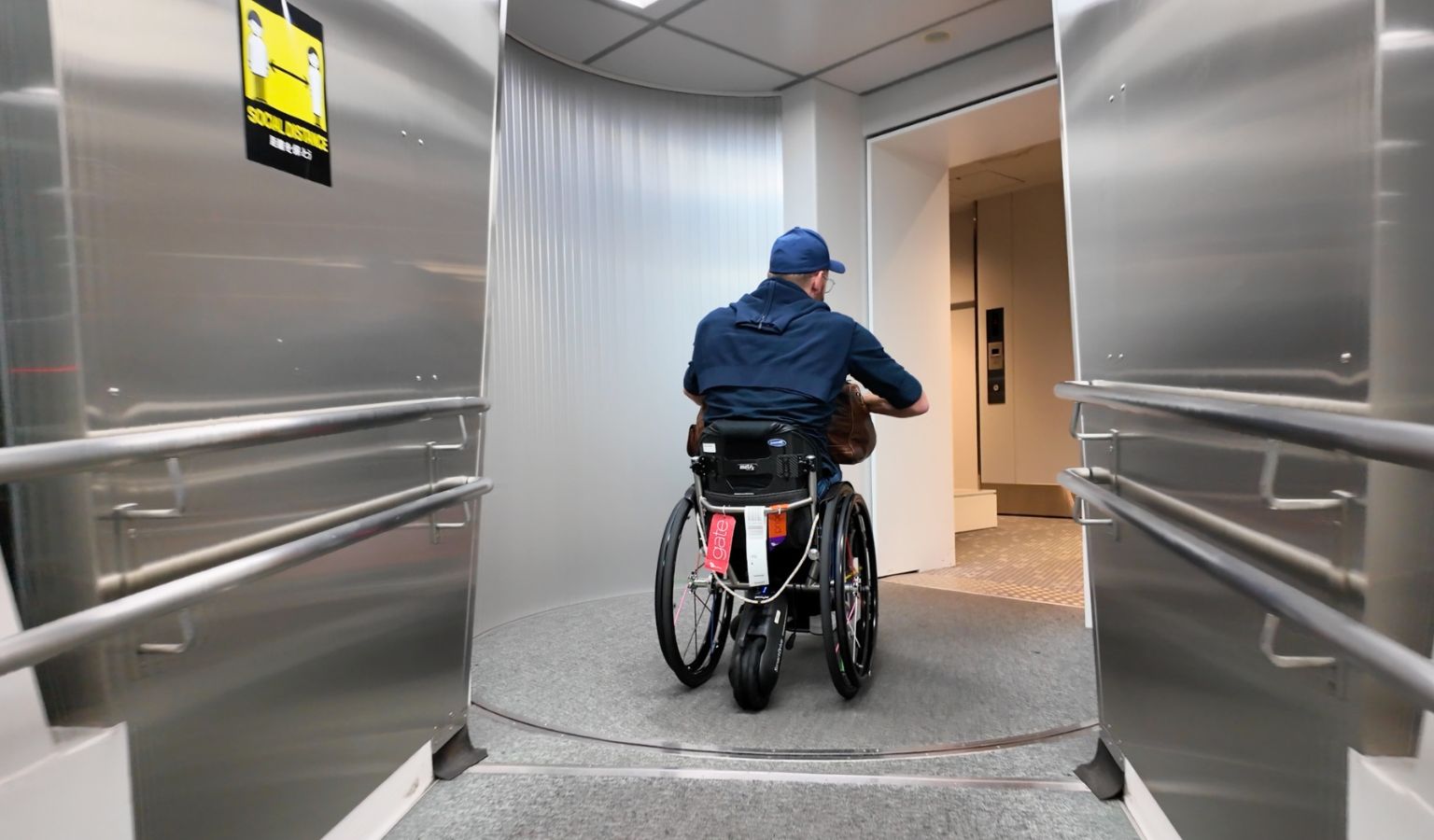
Adelaide-based disability advocate Shane Hryhorec was offloaded from a Virgin Australia flight from Sydney to Adelaide after cabin crew told him his wheelchair’s power-assist device, known as a SmartDrive, could not be stored in the overhead locker and had to fit under his seat instead. The problem: there was no room under his seat to put it.
Hryhorec, who has flown roughly 300 flights over the past 15 years and travels with his service dog Whitney, said the SmartDrive has always traveled in the overhead bin without issue, including on four flights in the seven days before this one. On this flight, he was seated at a bulkhead row with no legroom in front of him, and Whitney, who he described as a large golden retriever, filled the window seat beside him.
What Happened When the SmartDrive Wouldn’t Fit?
Hryhorec said the situation escalated quickly. When he told a crew member he had taken four flights in the previous week with the same device stowed overhead, he said the staff member’s first response was to accuse him of lying. He offered to put the device under a seat if there had been space, but the video he recorded and later posted shows there was none.
One staff member suggested moving the SmartDrive to an empty seat near the back of the plane. Hryhorec said a supervisor then overruled that option, telling him it was either under his own seat or he would not be flying. With no other option available, he was taken off the flight, transferred into an aisle chair, and rolled past roughly 200 seated passengers with Whitney at his side. Crew members had already announced over the PA system that the flight was being delayed while a passenger was offloaded.
“I was treated like a burden, a second class citizen,” Hryhorec said, adding that he felt the airline did not want people with disabilities on board that day.
After he was off the plane, a Virgin Australia customer care representative he identified as Jenna asked whether he had been filming, then asked him to delete the footage. He said he refused. The video was posted within hours and had drawn close to eight million views by the time Hryhorec spoke about the incident publicly the next morning.
Was the SmartDrive Actually a Safety Risk?
Hryhorec said the device is well within airline lithium battery limits, rated at roughly 150 watt-hours against a 300 watt-hour carry-on threshold. He pointed to what he described as a recently introduced rule around SmartDrive stowage, one that had not been enforced on any of his prior flights that week. When he raised the inconsistency with crew, he said he was told the earlier flights had simply broken the rules, a response he found difficult to accept given he had no way of knowing that in advance.
Hryhorec eventually rebooked onto a flight five hours later and was seated in a row without a bulkhead. He shared a photo showing that even with the extra space, the SmartDrive in its bag under the seat consumed the entire footwell. At six feet tall, he said losing that space caused real discomfort, including cramping and spasticity, both common concerns for wheelchair users forced to travel without adequate legroom.