Finding Out Is the Hard Part: How Eyes Japan Helps Blind and Low-Vision Travelers Visit Japan
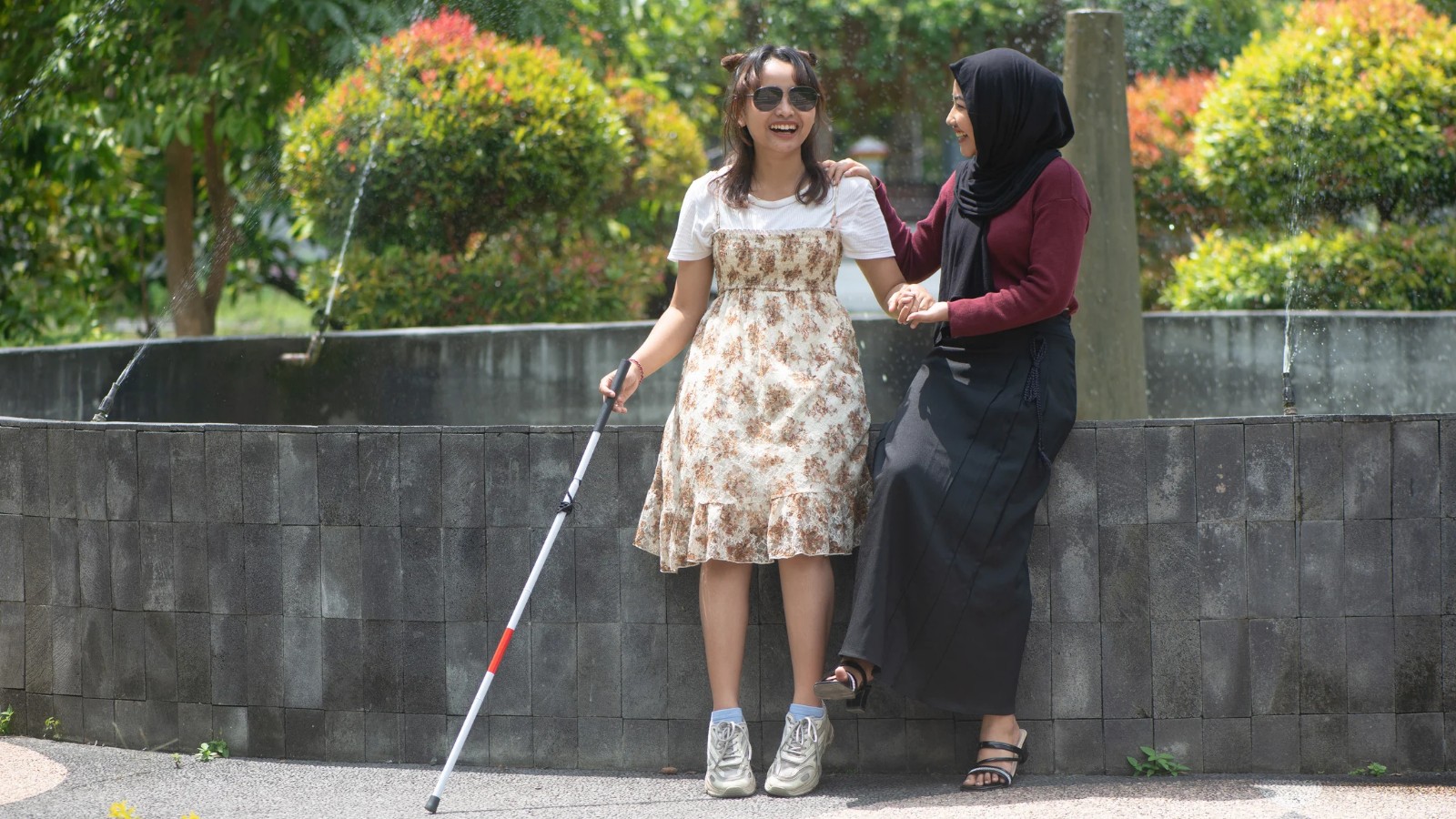
What stops a blind traveler from visiting a museum in Japan? Often it isn't the museum. It's not knowing, before leaving home, whether the museum will work for them.
On October 1, at the Travel For Every Body Awards 2026 in Manchester, the Digital Innovation shortlist included Experience Grand Rapids, FlightPath3D, Turkish Technology, tabifolk and a small volunteer project from Osaka called Eyes Japan. tabifolk took the category. Eyes Japan was Highly Commended.
Its founder, Lingyu Zhang, followed the results from home. Lingyu has retinitis pigmentosa, and Eyes Japan is his answer to a problem he lives with: a place you can't check in advance is a place you often don't go.
Eyes Japan is a free, volunteer-run website that publishes accessibility guides for blind and low-vision visitors to around 1,900 places across Japan, from national museums and castles to airports. Every guide is checked by the facility itself, and each one is published in five languages.
Most accessible travel coverage, including plenty of my own, is about ramps, elevators and bathrooms. Lingyu's work starts somewhere else. I asked him how he built it, why visual impairment gets less attention, and what the rest of the world could learn.
(Full disclosure: tabifolk was founded by Josh Grisdale of Accessible Japan, which I also write for. A companion piece with Lingyu's practical tips for visiting Japan is on Accessible Japan.)
"You Cannot Go, You Cannot See": Living With Retinitis Pigmentosa
Lingyu's eyesight was poor from childhood. He was taken to hospital after hospital before learning he has retinitis pigmentosa, a rare progressive eye disease.
He remembers clearly the conclusion he reached at 14. "Of all disabilities, the two I found hardest to accept were losing the use of one's legs and losing one's sight: the first means you cannot go, the second means you cannot see. Mine was the second."
Today he holds Japan's Physical Disability Certificate at Grade 1, the most severe grade. His visual acuity is at the level of hand motion, and his field of vision is about 5 to 10 degrees. He has severe night blindness and very limited color and contrast perception, which makes the edges of objects hard to tell apart.
The engineer
Around the same age, Lingyu became absorbed in computers. He taught himself to build websites and run servers, and kept going deeper into networking. As his sight declined, he learned to work through his computer's accessibility features and carried on. On his Mac today, that means the Zoom magnifier, inverted colors for contrast, and the VoiceOver screen reader.
Eventually he decided his skills should serve a real purpose. Since 2009, he has provided development and operations support to two large Chinese-language retinitis pigmentosa communities.
The problem
As his vision worsened, going out alone stopped being realistic. "Without family or friends I could hardly travel any distance," he said, "and my contact with the outside world kept shrinking."
He still loves exploring, usually with his family. But there are times he needs to go somewhere alone, and that's where it falls apart. If he doesn't know a building's layout, or whether staff are comfortable receiving a visually impaired visitor, he often gives up.
"There was no single moment," he said. "After enough of those occasions, I wanted to work on the problem myself." In 2023, he started collecting accessibility information on facilities in Japan. That work became Eyes Japan.
Why Japan Is Hard to Plan for Blind Travelers: The Barrier Is Information
Japan is often held up as a model for accessible infrastructure, and Lingyu agrees it has earned that. His point is that infrastructure alone isn't enough.
"Japan has world-class accessibility infrastructure, built up over many years," he said. "But the information about it is often hard to find on the facilities' own websites. Most of it is only in Japanese, search engines rarely surface it, and some of it is out of date."
Then comes the line that stuck with me most from the whole interview:
"If I cannot confirm before leaving that a place will work for me, I stay home, and the infrastructure goes unused."
That will sound familiar to disabled travelers almost anywhere. An elevator nobody knows about is, in practice, an elevator that doesn't exist. (If you're a wheelchair user planning a trip, our Accessible Tokyo guide is a good place to start.)
Information works both ways
Lingyu also sees a second effect, and it's the part I find most hopeful. When Eyes Japan contacts a facility to check its information, the facility learns something too.
"Contacting facilities makes them aware of this group of visitors, including visually impaired travelers from overseas, and that someone is actively encouraging them to come," he said. "That can lead to better cooperation from staff."
In other words, the act of asking is itself a kind of advocacy.
How Eyes Japan Works: 1,900 Places, Five Languages, All Volunteers
According to Lingyu, Eyes Japan now publishes about 30,000 free articles in Japanese, English, Chinese, Korean and Vietnamese. Around 9,600 of those are facility guides covering about 1,900 places. The rest, more than 20,000 articles, cover what visually impaired people need to know about eye health, daily life, independence, learning, money and rights.
It's run as a voluntary association. Lingyu leads it, and family, friends and colleagues help as volunteers.
Each facility guide goes through the same five steps:
- Collect everything the facility has already published: its website, barrier-free pages, access guides and PDFs.
- Reorganize it around what a blind or low-vision person needs to decide before leaving home.
- Send the facility a preview page and ask them to check it.
- Apply their corrections and confirm with them again.
- Publish in all five languages. AI assists with translation, volunteers help check it, and each language is a separate article, so readers only need to search in their own language.
Step three is the heart of it. More than 100 facilities have worked with Eyes Japan this way, including national museums, National Treasure and World Heritage sites, castles and airports.
"Not by ourselves"
I asked how a volunteer team keeps that many pages current. Lingyu's answer was refreshingly honest.
"Not by ourselves," he said. "The people who know a facility best are its own staff." Any facility can get in touch to update its information, and some have their own accounts so they can edit it directly, then ask Eyes Japan to publish it in every language. If a facility reports an error, the page comes down, gets corrected and goes back up after checking.
Transport is part of the same journey, so the team also collects and confirms information from stations and airports. Stations are harder. Japan has a huge number of them, and confirming every one is a heavy workload for a railway company.
As for how he keeps going, his answer was short. "I have done this kind of work since 2009, and I am one of the people who needs it."

The Awkward Middle: Why Low Vision Gets Overlooked in Accessible Travel
Accessible travel coverage leans heavily toward wheelchair users. I asked Lingyu why he thinks visual impairment gets less attention. He was careful to say this is only his view, but it's a sharp one.
"A white cane tells the people around a blind person what the situation is, and a wheelchair does the same," he said. "Low-vision people like me are in an awkward position."
"I am not completely blind. I still have some central vision, so people sometimes assume I can see. Yet most of the time I have no usable vision. It is very difficult to explain to a stranger what that means, or how to assist me."
That gap between what people see and what someone needs is why schemes for less visible disabilities matter. Japan has the Help Mark, a red tag that signals someone may need support. The UK has the Hidden Disabilities Sunflower. Neither explains your needs for you, but both open the door to the conversation. Read more in Accessible Japan's guide, Not All Needs Are Visible: What to Know About Japan's Help Mark.
Three things every hotel, museum and tour operator should publish
When I asked what he'd like the travel industry to understand, Lingyu didn't ask for new technology or big budgets. He asked for three pieces of information.
"Publish the route from the station to your entrance, who to contact and how, and whether staff can guide a visitor," he said. "It is inexpensive to do, and it often decides whether we come at all."
- The step-by-step route from the nearest station to your entrance
- Who to contact, and how
- Whether staff can guide a visually impaired visitor
If you run a hotel, a museum or a tour, that's a to-do list you could finish this week.
AI: Useful, Until It's Confidently Wrong
As an engineer, Lingyu is no technophobe. Eyes Japan relies on AI for part of its work.
He sees two clear wins. The first is translation: "A small group like ours could not otherwise publish in five languages." The second is help on the street, where a phone camera can read text aloud, describe a scene, or recognize elevators and stairs.
The risk, in his words, is "confident errors."
"An accessibility page that states something false is worse than no page," he said. "If it says tactile paving leads to the entrance and it doesn't, someone could be hurt. That is why our facts come from official sources and from the facilities themselves."
It's a useful test for any accessibility information, AI-written or not. Where did this fact come from, and did anyone who actually knows the place check it? At Eyes Japan, AI helps with the translating. The facts come from the facilities.
What Japan Gets Right About Accessibility (and What Comes Next)
I expected Lingyu to name a technology or a law when I asked what other countries should copy from Japan. He named people.
"However excellent Japan's accessibility infrastructure is, its most valuable asset is its people," he said. "Their friendliness, courtesy and concern for visually impaired people are the true foundation of accessibility here."
He sees it in facility staff who reply to an email from someone they've never met, check a page line by line, and send back corrections. More than 100 facilities have done exactly that for Eyes Japan.
And what does Japan get wrong? He wouldn't put it that way. "The next step is to make what already exists easier to find, in more languages, for visitors from overseas."
Building an Eyes Japan where you live
I closed by asking what he'd tell someone who wants to build something similar in their own country. His advice fits in four lines:
- Start with what already exists. "Facilities have usually published more than you would expect, but it is scattered."
- Contact facilities and ask them to check your work. "It improves the information, and it reminds them that these visitors exist."
- Put accuracy ahead of volume.
- Stay with it. "A large team is not essential. Staying with it for years is."
Closing the Loop: The Free Eyes Japan App for iPhone
Good information before a trip only gets you so far. You still have to get there. So Eyes Japan has built an iOS app, now free on the App Store, that uses spatial audio to guide people on foot to the facility, telling them what's nearby and in which direction. It can also read text aloud and recognize elevators and stairs through the phone's camera.
For Lingyu, the point isn't the technology. It's what people do with the confidence it gives them.
"My hope is that people can then go out with more courage and confidence: to the station, to the destination, and to the staff there, and ask for help," he said. "They can tell those staff: we know the effort you have made for us. So we've come, with open arms."
He's modest about his own part in it. "Eyes Japan is only a link connecting these things," he said. "I hope that link makes the world a better place."
From where I sit, it already does.
Eyes Japan: Your Questions Answered
What is Eyes Japan?
A free, volunteer-run website founded by low-vision engineer Lingyu Zhang. It publishes accessibility guides for blind and low-vision visitors to around 1,900 places in Japan, in Japanese, English, Chinese, Korean and Vietnamese.
Is Eyes Japan free?
Yes. All of its roughly 30,000 articles are free, and so is its iPhone app, which uses spatial audio to guide you on foot to a facility.
Is Japan accessible for blind and visually impaired travelers?
Japan has excellent accessibility infrastructure, but the information about it is often only in Japanese, hard to find or out of date. Eyes Japan brings that information together and has each facility check it before it's published.
Find out more
- Eyes Japan: eyesjapan.com, and the free iPhone app
- Lingyu Zhang on LinkedIn
- Planning a trip? Read Lingyu's practical tips for visiting Japan on Accessible Japan.
Are you blind or low vision? What information decides whether you visit a place? Tell us in the comments or in The World is Accessible community on Facebook.
And if you'd like help planning an accessible trip to Japan, with someone who'll check the details on your behalf, you can book with a Fora Travel Advisor.