Disney Boat Ride Patent Application Would Let Wheelchair and Scooter Users Board Without Transferring

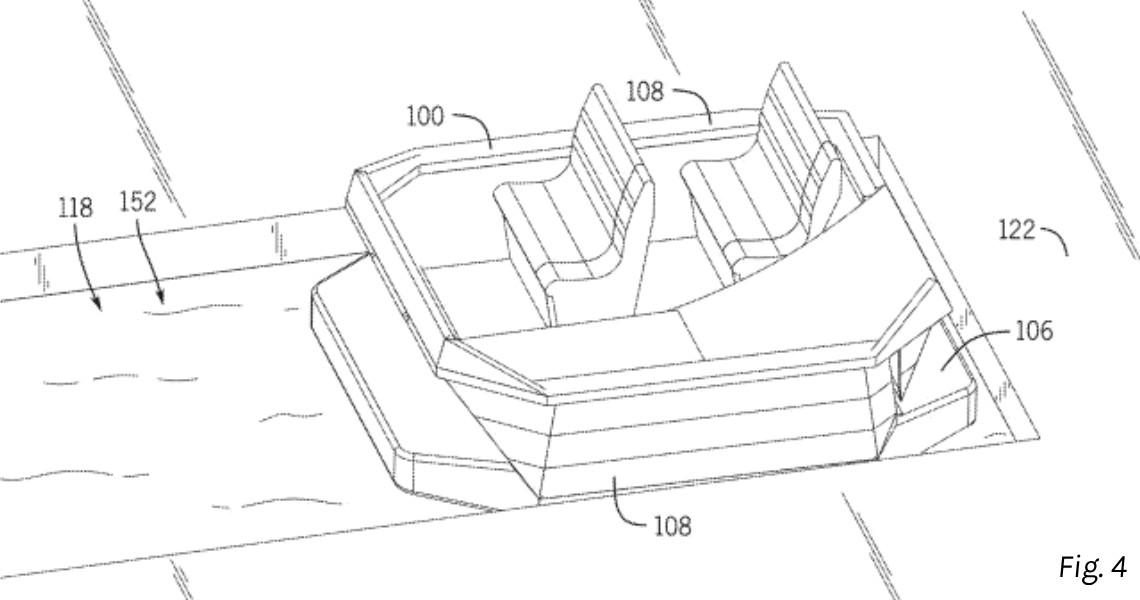
Patent drawing of a two-seat boat ride vehicle in a water channel beside a loading platform, from Disney's boat ride patent application

A newly published patent application describes a boat ride vehicle that would let guests board in their own wheelchair or scooter, with no transfer into a ride seat. The patent aims to solve one of the hardest problems in ride design; therefore, we felt it was worth a closer look.

There is one thing that needs to be said up front, though. Based on what we found during our research, this is a patent application, not a granted patent. So, we need to temper some expectations with that information. 

A note on sourcing: everything below is based on what we were able to find in the published application document itself. We are not patent attorneys, and we may have missed or misread something. If you spot an error, please tell us.

Is the new Disney accessible boat design a granted patent?

Based on what we found, no. The document we reviewed is titled “Rider Inclusive Transport Aide.” Its front page is headed “Patent Application Publication,” not “United States Patent.” It shows a publication number (US 2026/0272736 A1) and no patent number. The application number is 19/076,060. It was filed on March 11, 202,5 and published on September 17, 2026.

The “A1” at the end of the publication number is the code we understand marks a published application. Our understanding is that a granted patent gets its own patent number and a different code. 

We have seen a lot of chatter online calling this a granted patent. We could not find anything in the document to support that. All we could find is that the application was filed and published. Claims can change, narrow, or even be rejected. 

It may also help to know that applications are generally published about 18 months after filing, as we understand it, which fits the dates here. Publication looks like a routine step and not a sign of approval.

The applicant is Disney Enterprises, Inc., of Burbank, California. The inventor is Kristopher M. Laffin, of Long Beach, California.

If you want to check for yourself, you can search the publication number or application number on the USPTO’s Patent Public Search at https://ppubs.uspto.gov.

If approved, what accessibility problem would this solve at Disney?

The application explains why boat rides are hard to make accessible.

  • The sides of a boat (the gunwales) have to be tall to keep water out.
  • Boats don’t normally have doors, because doors can leak.
  • The wheelchair or scooter needs to sit low for stability and comfort.
  • So the person typically has to load from a high point, then drop a big change in height.

The usual fixes named in the document are long ramps, fall protection rails, and powered lift systems. It says most boat rides have no power onboard because running it through a hull can create leak points. According to the application, these systems end up being expensive and prone to costly downtime. The document also states that special accommodations, such as removable vehicle sections or complex platforms, add weight and hurt reliability.

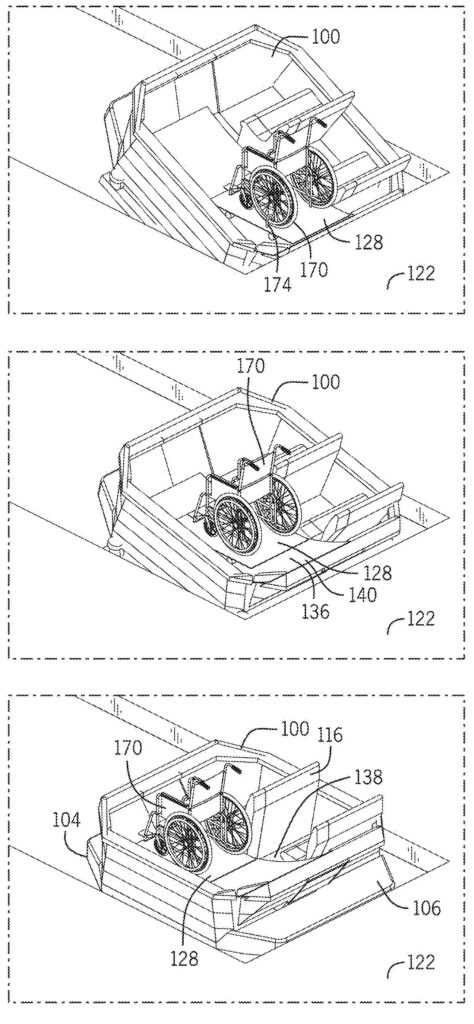
Three patent drawings of a boat ride vehicle showing a wheelchair on a movable platform, moving from the loading position to the ride position, from Disney's boat ride patent application
FIGS. 8-10 from US 2026/0272736 A1 show the sequence: the wheelchair on the platform at the loading position, the platform moving as the boat tilts, and the wheelchair in the ride position. Source: USPTO. Applicant: Disney Enterprises, Inc.

How is the patented design different? How would it work?

As we read it, the idea is a flat platform that rides on a curved ramp or track inside the boat. In the main examples, it moves by gravity, and the document also allows powered movement.

  1. Loading position. The boat tilts, dropping the stern below the loading platform. The platform rolls down to meet the dock at about the same height. You drive or roll onto it, and straps or locks secure your chair. The document also describes grooves or tracks that guide the wheels into place.
  2. Transition. The boat tilts back toward level. The platform moves forward over the boat’s side and into the ride compartment, staying flat the whole way. The document compares this to a gimbal.
  3. Ride position. The platform settles at the front of the boat. In some examples, that puts you level with the seats or at floor level. Then the boat is dispatched.

The tilt comes from load rails under the hull, moved by hydraulics, pneumatics or a motor.

Who is it for?

The claims mention wheelchairs, electric scooters and strollers. The description also lists walkers and other wheeled equipment. It goes further and names props, animatronics and maintenance carts. The drawings show a manual wheelchair, but the text says that is for illustration only. The system isn’t limited to water rides either; the document says it could apply to non-water vehicles.

What does the document not tell us?

Quite a lot. In the text we reviewed, we found no named attraction, no park and no timeline. There are no dimensions, weight limits or limits on chair size. We didn’t find tilt angles or loading times either. We also didn’t see anything on what the tilt feels like when you are seated in your own chair, or how a rider on the platform would be evacuated if the ride stopped.

Those are the questions that decide whether an idea works in real life. If a version ever gets built, we hope it is tested with the disabled guests who would use it.

What should accessible travelers take from this?

As far as we can tell, nothing changes at any park today. A patent application shows what engineers are working on. It is not a commitment to build anything.

Still, the direction matters. The document itself describes the goal as letting riders stay in their own wheelchair or scooter. Designing the ride around the rider, not asking the rider to adapt to the ride, is what we have been asking for. If anything develops, we’ll be watching.

Until then, keep planning with current information from the park itself, and verify before you go.

Featured image: FIG. 4 from US 2026/0272736 A1. Source: USPTO. Applicant: Disney Enterprises, Inc.

Leave a Reply

Your email address will not be published. Required fields are marked *

This site uses Akismet to reduce spam. Learn how your comment data is processed.