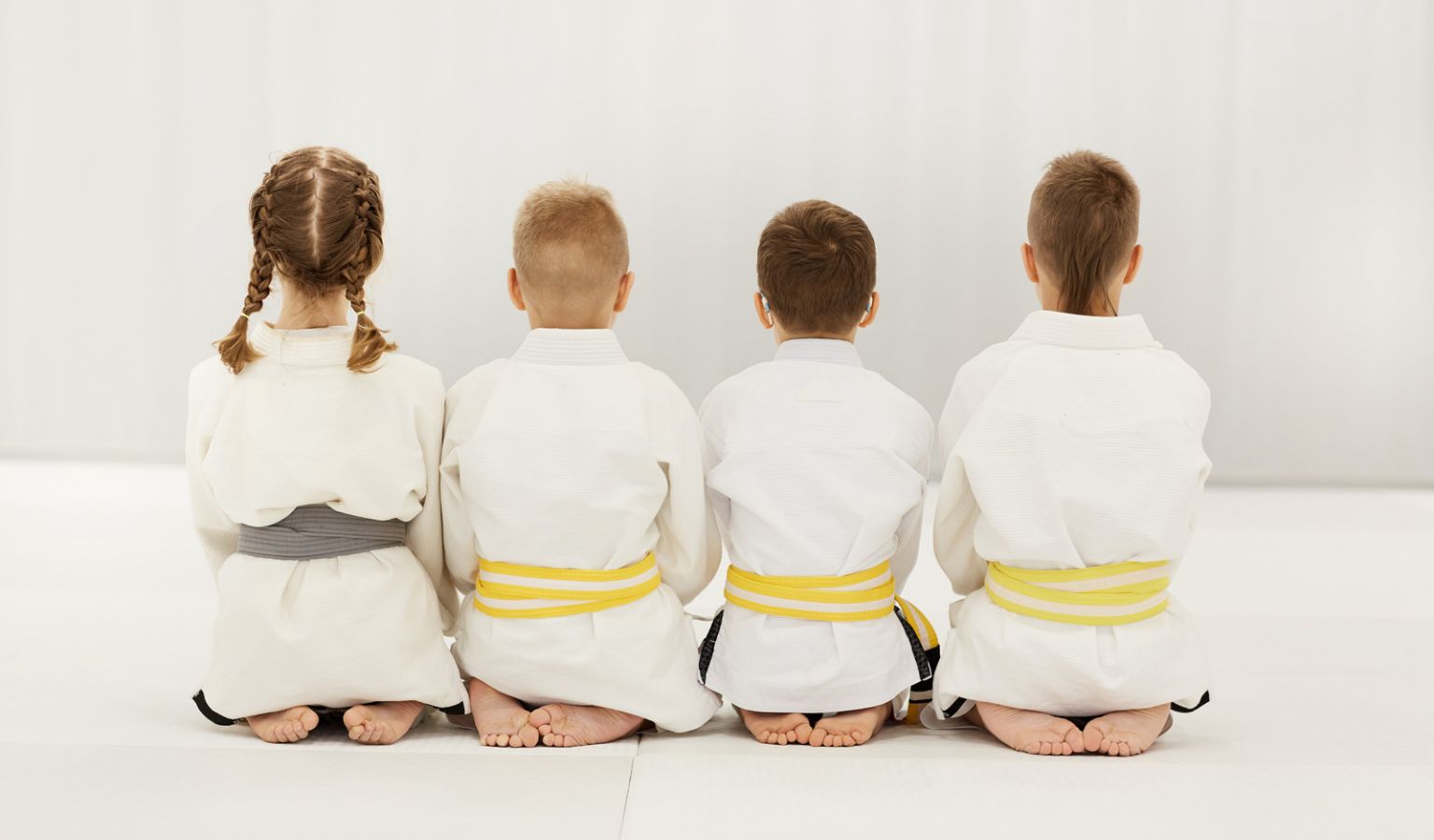
Last weekend, my seven-year-old daughter, who is autistic (level 2), took part in her second-ever judo competition. It was an early start, and we were all excited to watch her compete.
What happened that morning left my wife and me heartbroken.
Our daughter was the last girl in her age group to be called up to fight, something that happens all too often at her judo school. Her opponent, a girl who had already fought earlier, was beckoned over from the far side of the sports hall, and it quickly became clear that she had been asked to lose. The “fight” was over in under 20 seconds. The quickest of the entire morning. Our daughter was handed a gold medal, and we went home, where my wife and I tried to console each other without her seeing.
Since then, my wife has written a letter to our daughter’s sensei. It captures everything so well that I felt it needed to be shared. I’ve translated it from Portuguese, and to protect our daughter’s privacy, I’ve replaced her name with [our daughter].
“It’s hard even to know how to organise what I want to say about this situation. I’ll end up writing quite a lot, so I ask for your patience.
I was left with the feeling that she had been forgotten, as I told you, because she was the last girl to be called. And we saw you bring over the other girl, who had already fought earlier, from the far side of the hall. I had already noticed this in training at the dojo: [our daughter] is often one of the last to be called up for bouts by the senseis. I’d actually been meaning to mention it to you. Because she’s autistic, she’s already one of the last to be picked by the other children, so it would be good if the senseis tried not to repeat that pattern too, even if it happens unconsciously.
And about arranging with the other girl for her to let [our daughter] win: I wish you had talked to me about this idea first. I would have told you that if you feel [our daughter] isn’t ready for a championship yet, you should tell me so directly. We could have talked with her about training and working harder so she could take part in the next one.
I would have said that I understand the intention is good, but that this isn’t real inclusion. Involving another child and orchestrating a charade insults [our daughter]’s intelligence and perception. It also exposes her to the judgment of that little classmate and of everyone else. Everyone starts to see her as incapable. She stops being seen as a teammate and friend just like the others and becomes someone “special” who has to be “allowed to win” and put up with.
I want to reiterate that I don’t see any malice in the situation, or in you. But I also want to invite you to reflect. Do you realise that you took away her chance to have a real experience? To lose and learn from losing? Or even the chance to surprise us?
She is 7 years old, and this Sunday I saw younger children lose and walk off crying. I see children lose even in training and cry, but [our daughter] has never cried over losing. She has that maturity. At the Campo Bom championship we took my uncle to watch, and in the car he said, “I came to see you, so you have to win.” She replied, “Sometimes we win and sometimes we lose.” That day she lost twice and didn’t cry once. She wasn’t traumatised, and it didn’t put her off competing again either.
As for the fear of her being traumatised or getting hurt, everyone there faced that same risk. She can’t be denied real experiences for that reason. After all, how long are we going to keep doing that?
I was also very shocked by this decision because I didn’t expect it from you. You often talk to the children, and [our daughter] pays close attention and repeats at home what you say. She repeats that she has to be careful about what she eats, and that Sensei said you shouldn’t be watching videos on the tablet… She hears you talk about working hard and training to win. But what this Sunday taught her is that she doesn’t need to try very hard: she can treat it as a game and still take first place. I say this as one of the lessons she could take from this championship, because honestly I still don’t know how much of the situation she understood. I believe she really did notice that the other girl didn’t truly defend herself, and I don’t know how she’s going to interpret that.
[Our daughter] is autistic, and because of that her life will be harder than that of neurotypical people. We already see this, and so does she. She notices that some of the older kids aren’t interested in talking to her and treat her differently, and that some of them sometimes don’t even answer her. She notices that people sometimes expect less of her. At school she won’t accept any activity that’s different from what her classmates get. She wants everything the same, even if it’s harder for her. So protecting her with a charade does her development a disservice, and it’s also disrespectful to her.
At my first appointment with [our daughter]’s psychologist, over a year ago, she said this to me: “What you’re telling me is that since she was diagnosed, she has never again been seen as a child, only as an autistic child.” I think that’s what happened here. You didn’t see her as an ordinary child who needs to learn and experience things the way the others do.
I truly appreciate the intention to protect her, and I understand the concern. I think all that was missing was a bit of conversation and some education about autism. I know we aren’t born knowing these things. But if we always start from respect for her, we learn how to handle it as we go.
I thought about this a lot before sending it. I talked with [our daughter]’s stepfather, who was also very upset and uncomfortable on Sunday. I also talked with [our daughter]’s psychologist before sending this message. My hope is that you’ll take a few days to reflect on this before replying, and that we can work towards better inclusion in the future. I want to be able to take my daughter somewhere that looks for ways to empower her, not somewhere that sees her as incapable.”
When we take away someone’s ability to try, take risks, and learn from real experiences and genuine mistakes, we don’t just strip away their chance to grow. We take away the true essence of life. How can a child who already has the world against them ever be expected to become independent if we’ve put them in a box before they’ve even reached double digits?
As our daughter so eloquently said: sometimes we win, sometimes we lose. All she wants is the chance to find out which.