For the longest time — decades, in fact — the moment a wheelchair user reaches the door of an aircraft, an unwelcome ritual begins. Your chair gets handed over, you’re transferred into a narrow and uncomfortable aisle seat, and then you’re wheeled to wherever you’re sitting on board. Meanwhile, you hope against hope that your mobility device makes it to your destination in one piece, and that the ground staff will treat it with the respect it deserves.
For millions of people, hopping on board a flight isn’t an issue at all — but for many others, it’s less of a minor inconvenience and more of a humiliating stripping of independence from the moment you commence your journey.
Airbus wants to put an end to all of that.
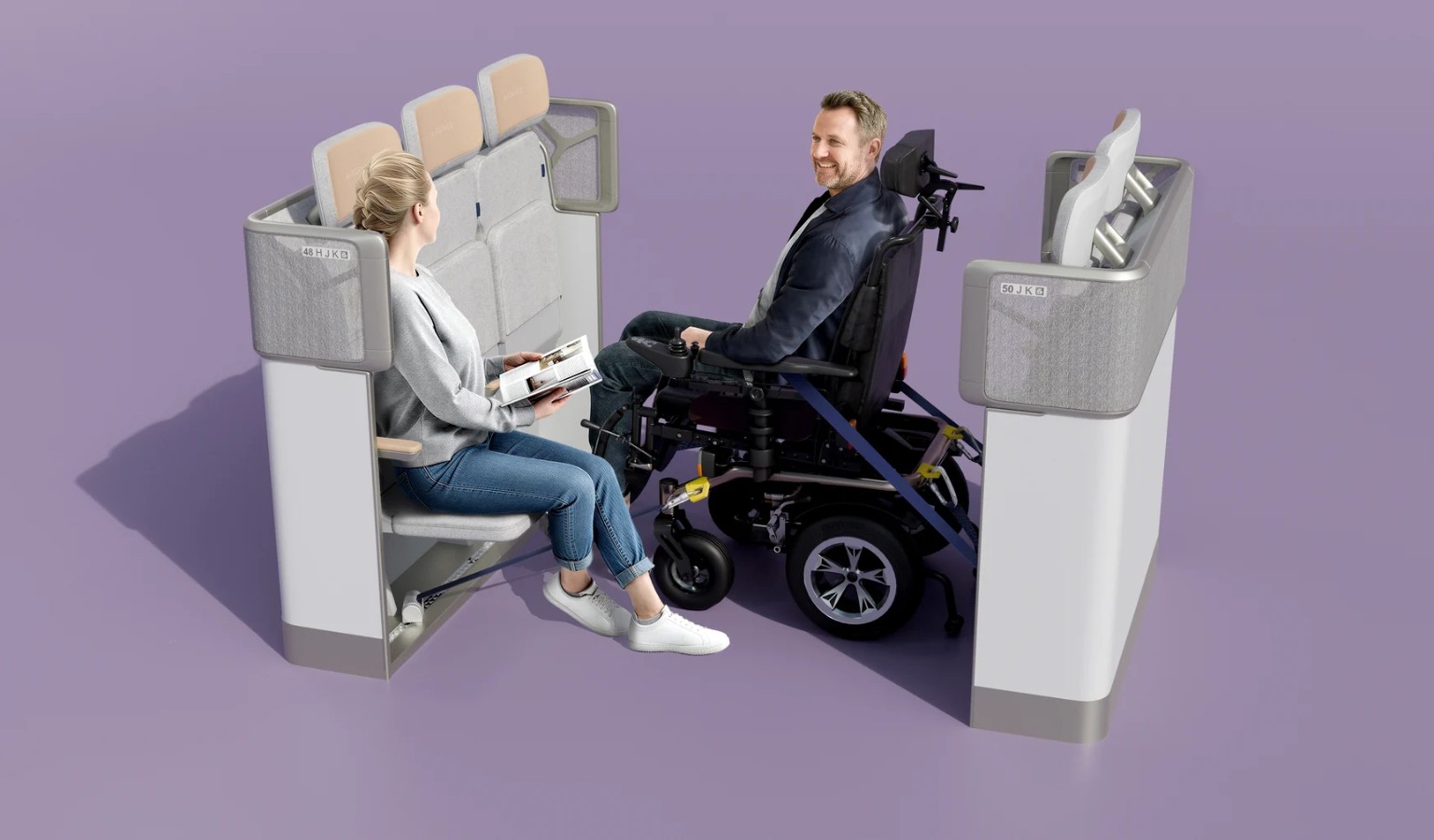
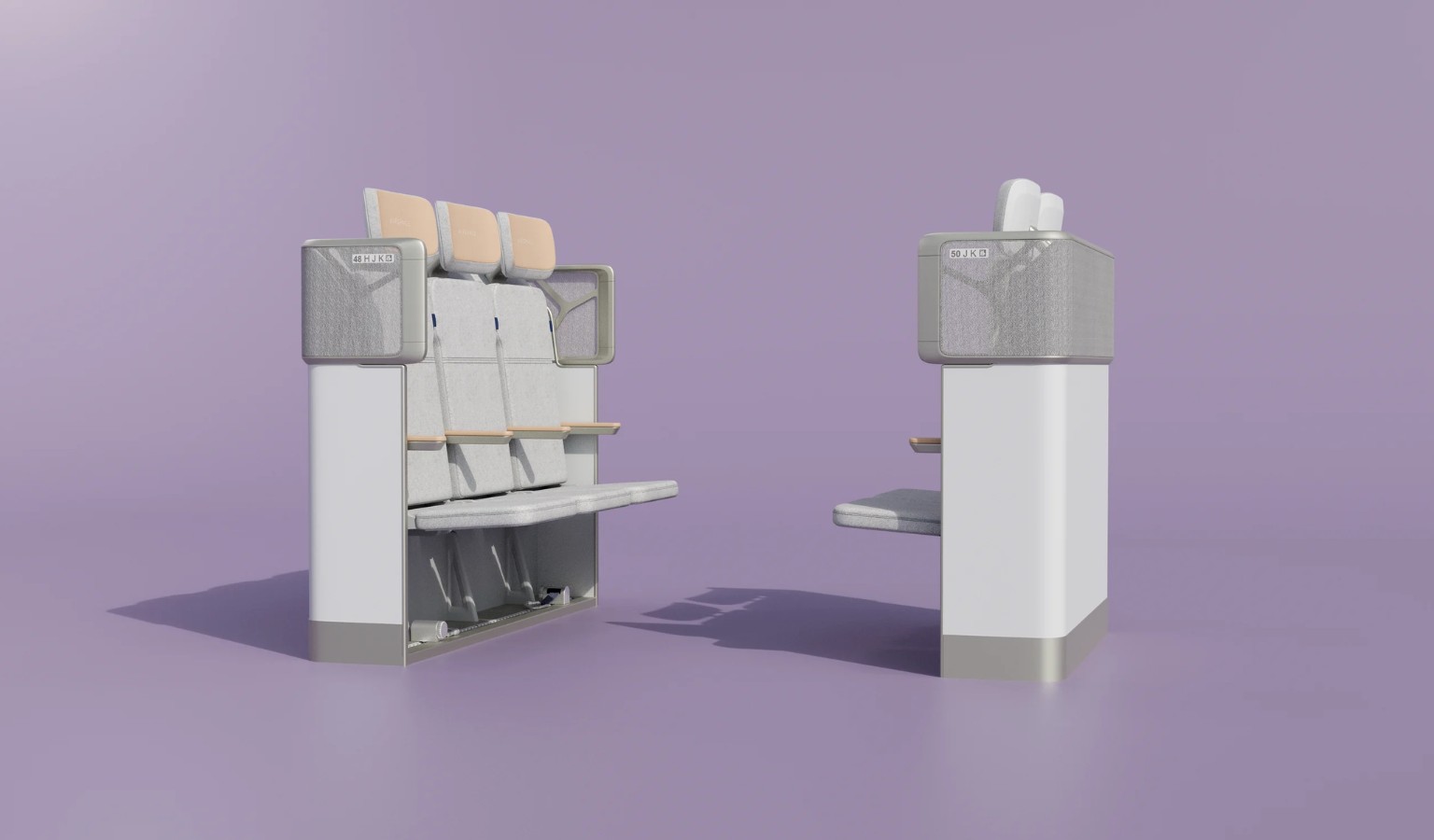
The aerospace giant recently unveiled the Airspace U Suite, a modular cabin concept that could finally allow passengers who use wheelchairs — powered or manual — to remain in their own mobility device for the entirety of a flight. The chair is secured directly to the aircraft floor using a specialized restraint system, integrated with existing cabin floor tracks. No transfers. No cargo hold. No damage risk. Just peace of mind, and the chance to actually enjoy a flight for once.
Why does this matter so much?
To understand the significance of this design, it helps to know just how broken the current system is. In the United States alone, airlines damage or destroy around 10,000 wheelchairs every year. The cost of repairing or replacing a single high-spec powered chair can reach $80,000. But beyond the financial impact, there’s something harder to quantify — when someone loses the use of their device, they’re losing something that is essentially an extension of their body.
Dirk Thalheim, an engineer in Airbus’s Design Office and a wheelchair user himself, put it plainly: having to surrender your own chair and use an airport-issued substitute is, in his words, “genuinely a terrible experience.” That lived perspective informed the U Suite’s development from the inside, which is part of what makes this concept feel different from the typical corporate accessibility announcement.
In March 2026, Thalheim became the first person to fly during the cruise phase of a real flight while seated in his own wheelchair, secured inside an early version of the U Suite. The test validated the restraint system’s integration with the aircraft structure — a critical milestone on the path toward certification.
This goes far beyond just another accessibility feature
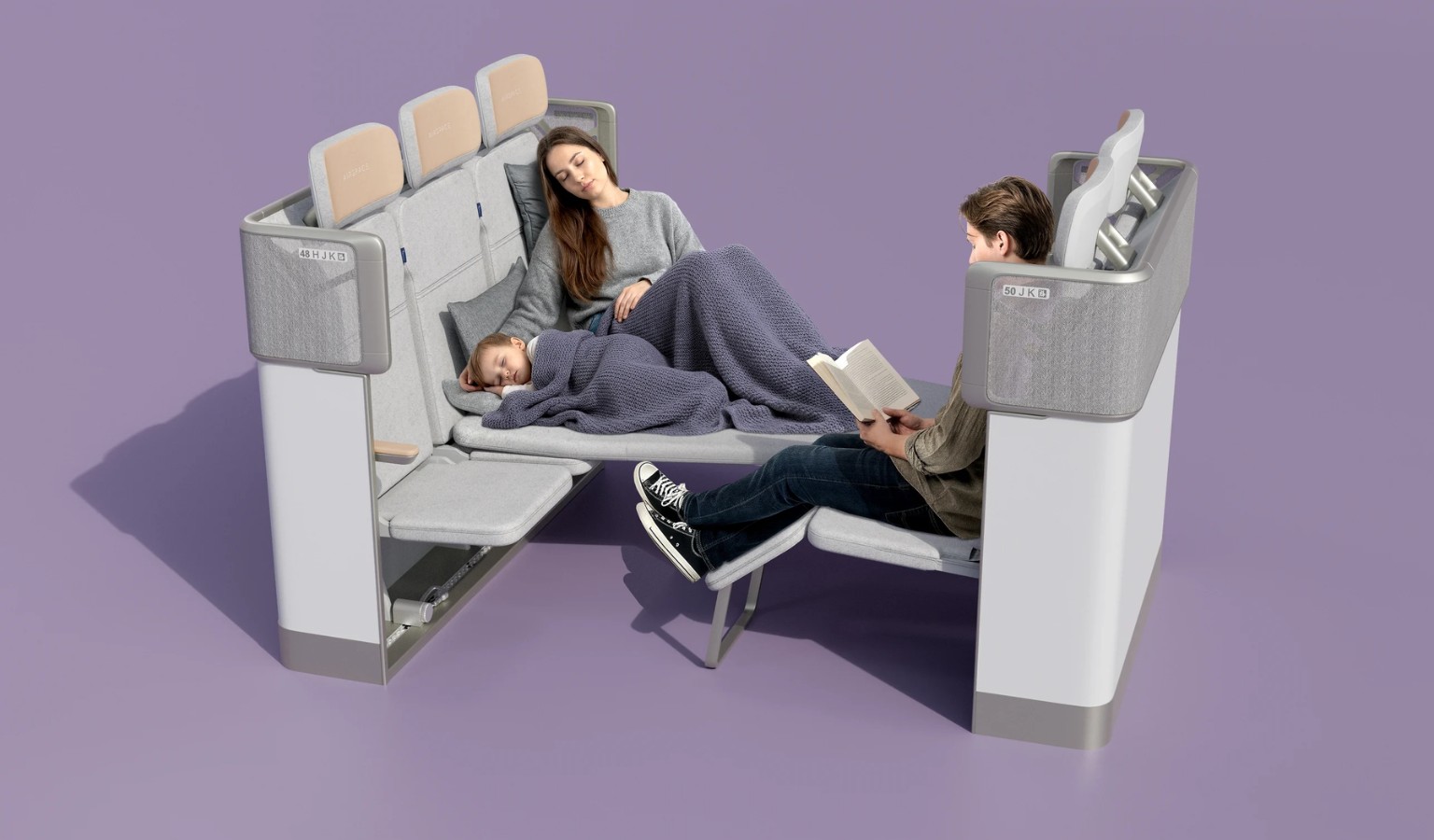
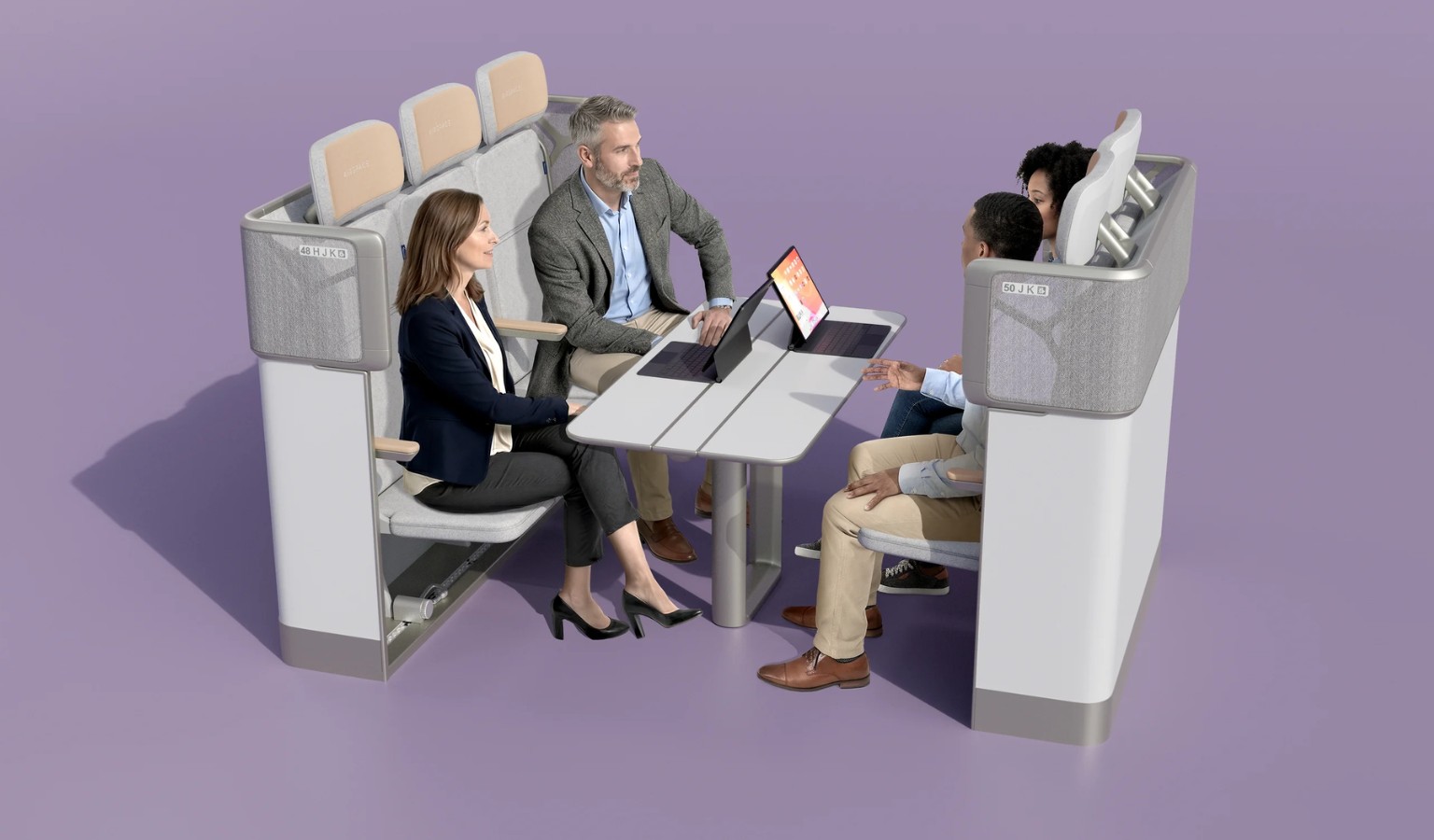
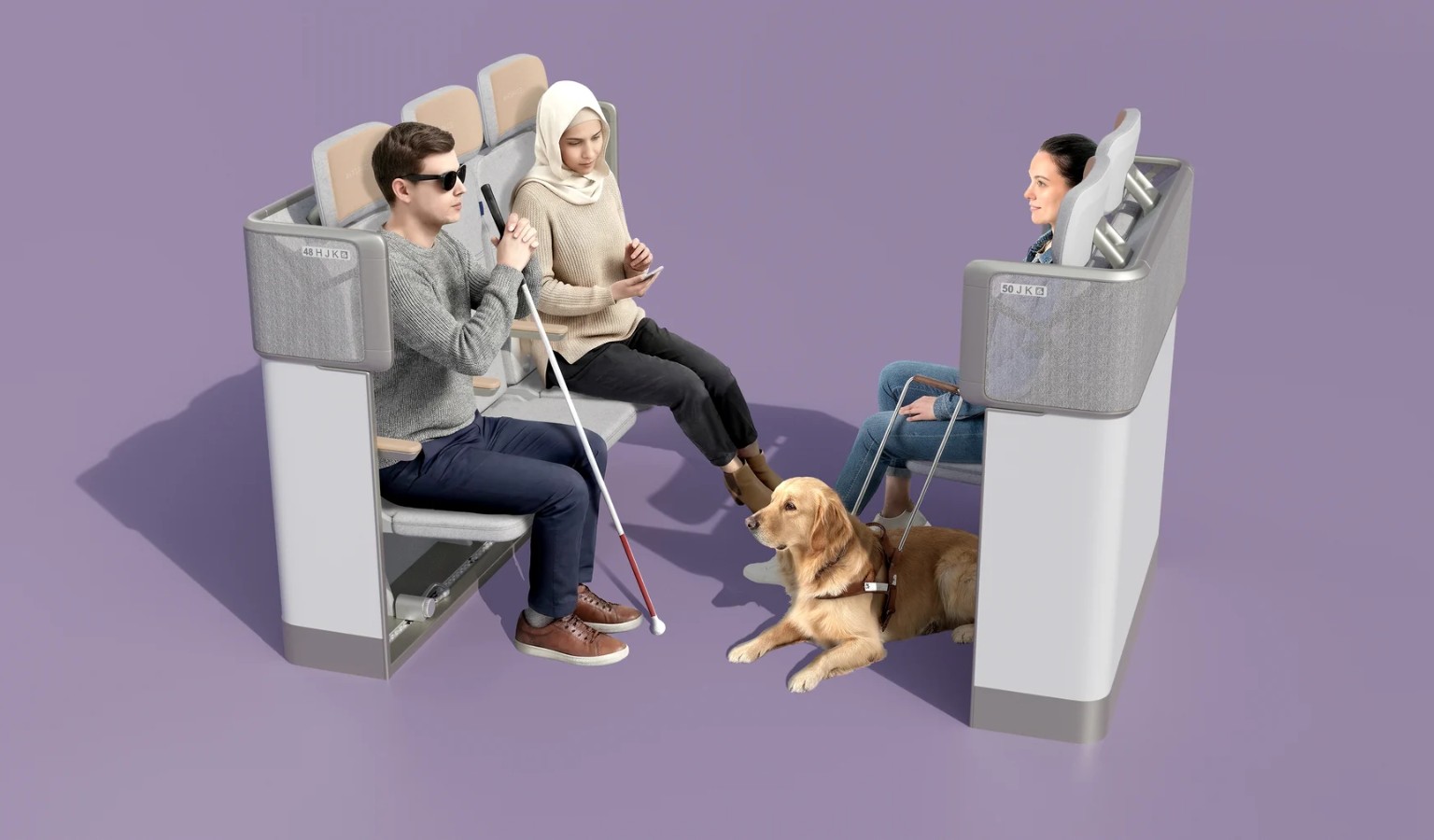
What sets the U Suite apart from a purely compliance-driven accommodation is its design philosophy. Rather than carving out a designated wheelchair space and calling it done, Airbus engineered a reconfigurable zone that serves multiple passenger types.
The same footprint that accommodates a wheelchair user can, with foldable seating and adjustable components, become a lie-flat rest area for long-haul travelers, a shared compartment for families, or a co-working space for business passengers who want to hold a meeting at 35,000 feet. Airlines can reconfigure the space between flights depending on demand.
All of this helps ensure that accessibility hasn’t been added as a box-ticking exercise or a special-case add-on — instead, it’s designed in a way that improves the cabin experience for everyone, which is a principle the accessibility community has championed for years.
The road to 2032
The U Suite is still in development. A full-scale mock-up made its public debut at the Aircraft Interiors Expo in Hamburg in April 2026, where airlines and industry partners got their first hands-on look at the concept. Airbus is working with partners including AMF-Bruns, Ipeco, and Sunrise Medical on the specialized components, and has incorporated direct feedback from wheelchair users throughout the design process.
Regulatory approval remains the most significant hurdle. Certifying wheelchair restraint systems, floor-track integration, and safety protocols across all phases of flight is a complex process, and Airbus is targeting first delivery to airlines around 2032 — ambitious, but achievable if testing continues to go well.
The U Suite was also recognized as a finalist in the Accessibility category at the Crystal Cabin Awards, considered the aviation industry’s highest honor for cabin innovation.
Boy, has it been a long time coming…
Aviation has lagged behind other transport modes in accessibility for a long time. Buses, trains, and ferries in many parts of the world have already moved toward board-in-your-own-chair solutions. The fact that flying — the most technically complex of all mass transit — is only now catching up reflects both the scale of the regulatory and engineering challenges, and how little urgency the industry has historically felt to solve the problem.
The Airspace U Suite won’t reach passengers for several years yet. But its existence — tested in real flight conditions, presented publicly, and built with wheelchair users as active participants rather than afterthoughts — represents a genuine shift in how one of the world’s largest aircraft manufacturers is thinking about who flying is for.
If it reaches scale, the answer could finally be: everyone.




2 Responses
My daughter has severe cerebral palsy . She uses a moulded carve wheelchair. She requires to be hoisted from her chair to have personal care done by her cares as she can’t use the public toilet on the plane . Will this basic care also be provided by the airline.
I’m not sure what your daughter’s options will be in the future regarding a hoist on a plane, but I think the situation will remain not too dissimilar to how things are right now in terms of personal care. Generally, if any intimate assistance is needed during a flight, cabin crew are not able to provide that — your daughter would need to travel with a companion who could help. As I say, I’m not certain about the hoist situation specifically, but I did see that Airbus are working on a changing spaces table for some of their aircraft, which suggests the industry is beginning to take complex needs more seriously.
Hope this helps!