Nobody planned that detail. It’s a small, honest byproduct of a longer story: how a four-person workshop ended up dressing a national athlete for the biggest stage in her sport.
Why an athlete would choose a small workshop’s trousers
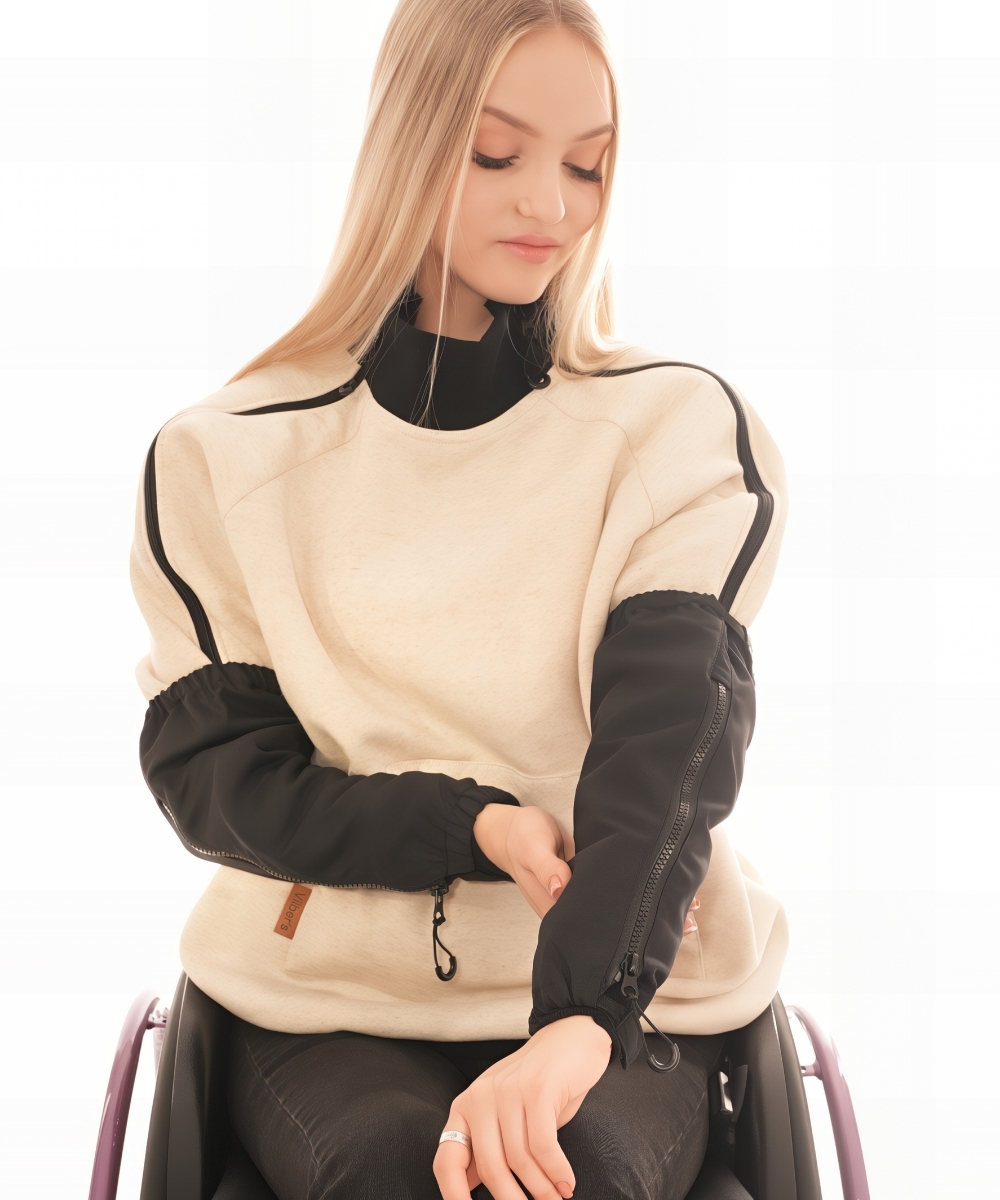
Most brands, when releasing an adaptive clothing line, start from a standard pattern and adjust it, usually by raising the waistband to fit a seated position. Vilber’s took a different route: building the pattern around sitting from the first piece, not adjusting one built for standing. The most visible result is the back seam, gone entirely, exactly where a seated body would otherwise press and rub all day.
It’s the kind of problem that’s easy to describe and hard to solve well, which is probably why a Paralympic athlete ended up choosing a workshop of four people over larger brands.
How the trousers ended up on the ice
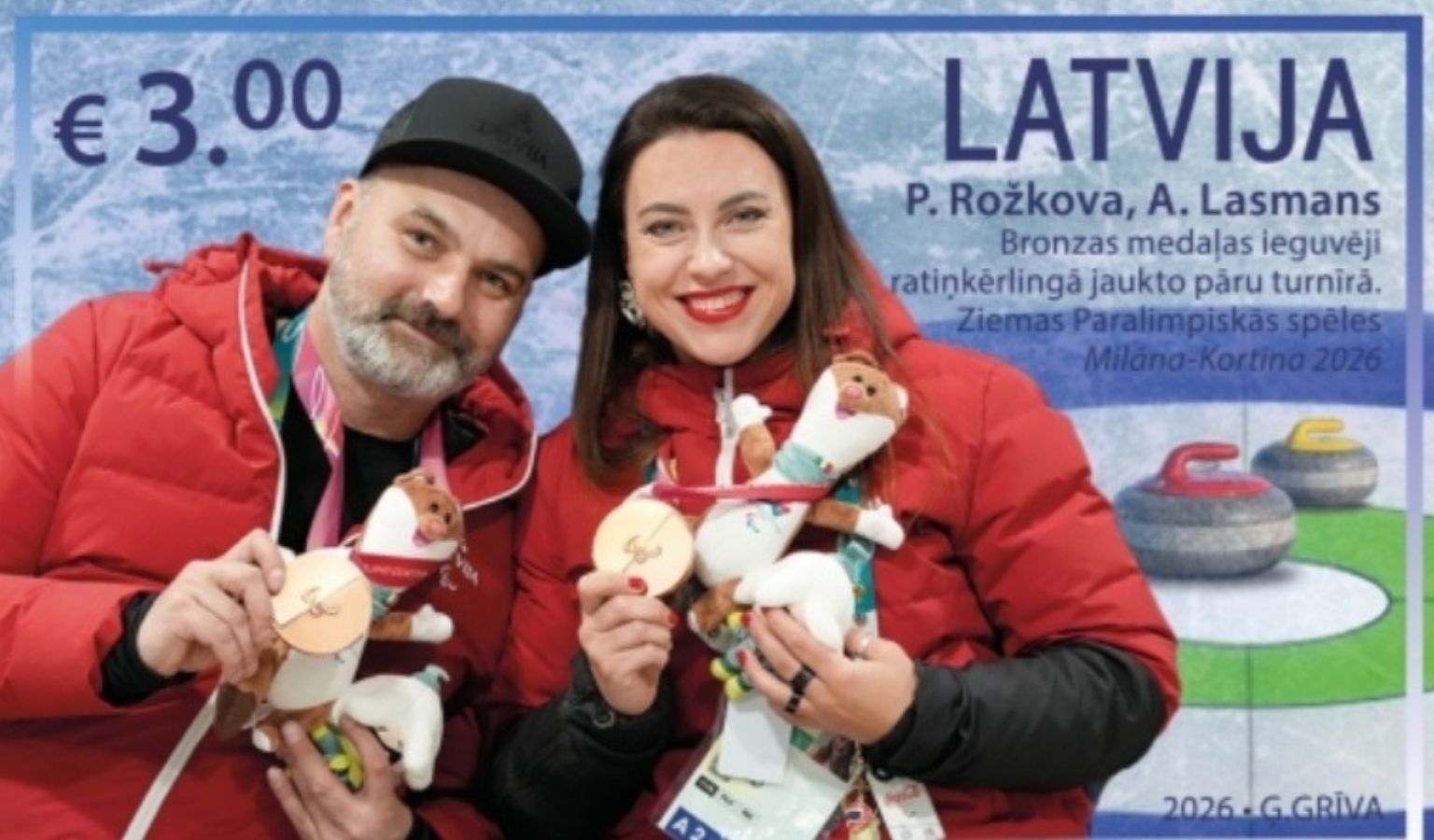
Vilber’s made trousers for the whole Latvian delegation at Milano Cortina 2026: eleven people, including both curling teams, coaches, and medical staff. The mixed team of six players competed but didn’t place. The mixed doubles pair, Rožkova and Lasmans, won bronze. Across the group, the feedback was the same: the trousers gave them comfort during play, comfort they didn’t have to think about. For clothing, that’s about the best review there is. If it’s truly good, you stop noticing it’s there.
The trousers are the same adaptive softshell trousers sold to any customer, not a special sports edition. They needed to move well in a wheelchair, hold warmth on the ice, and hold up to repeated transfers in and out of equipment.
This wasn’t a sponsorship deal. The team chose Vilber’s themselves, and the Latvian Paralympic Committee purchased the trousers for them accordingly, the same way it would buy any other piece of competition gear.
None of it was designed with a postage stamp in mind. It was designed to solve a real, physical problem well enough that a national team would choose to wear it into competition and stop thinking about it once they did. The stamp is just the moment that made that choice visible to everyone else.
A small country, a big stage
Latvia has about 1.8 million people, smaller than many single cities. And Latvians keep turning up in unexpected places on the world stage: in the NHL, in the NBA, building technology companies with international reach, and, in early 2025, winning an Academy Award for Best Animated Feature.
Rožkova and Lasmans’s medal fits that pattern. Not built on scale, but on years of world championships, a fifth-place finish before their first gold, a quarterfinal exit the year after, and a bronze medal match that came down to an extra end.
Vilber’s is a small piece of the same story. Not a large manufacturer solving adaptive clothing at volume, but four people in Vangaži, working out a seam and a fabric choice until it holds up on the biggest stage there is. When it does, a national athlete notices and chooses it, medal or no medal.
Explore the trousers Team Latvia wears, or see the full range of adaptive clothing at vilbers.com.
Read more about Latvia’s result at the Latvian Paralympic Committee and see the World Curling recap of the bronze medal match.
FAQ
Who made the trousers worn by Latvia’s Paralympic wheelchair curling team?
Vilber’s, an adaptive clothing workshop in Vangaži, Latvia. The team chose the adaptive softshell trousers themselves for the entire eleven-person delegation at Milano Cortina 2026, including both curling teams, coaches, and medical staff; the Latvian Paralympic Committee then purchased them as competition gear. It wasn’t a sponsorship arrangement.
What appears on the Latvijas Pasts stamp?
The stamp shows Poļina Rožkova and Agris Lasmans holding their medals after Latvia’s first-ever Winter Paralympic medal, won at Milano Cortina 2026. Rožkova is wearing Vilber’s Cordura sleeve protectors.
What makes Vilber’s clothing different from standard adaptive wear?
Most adaptive clothing adjusts a standard pattern, usually by raising the waistband. Vilber’s builds the pattern around a seated position from the first piece, removing the back seam entirely rather than working around it, and designs everything to look like ordinary, everyday wear rather than medical apparel.
Where is Vilber’s based?
Vangaži, Latvia, a small town north of Riga, with a four-person production team.