TAP Air Portugal Destroyed a Disabled Traveler's New Wheelchair, Then Made Him Wait Two Hours to Find Out
Chris Espiritu’s long-awaited trip to Portugal with his wife has turned into nothing short of a nightmare, and it began the moment they landed at Lisbon’s Humberto Delgado Airport. It’s a story that plays out all too often in the lives of people who rely on mobility aids, and a stark reminder of why airports and airlines are so hard to trust with vital equipment. The consequences of that damage are as stark as they are life-altering, even when the “inconvenience” is supposedly temporary. Temporary in whose eyes, I ask.
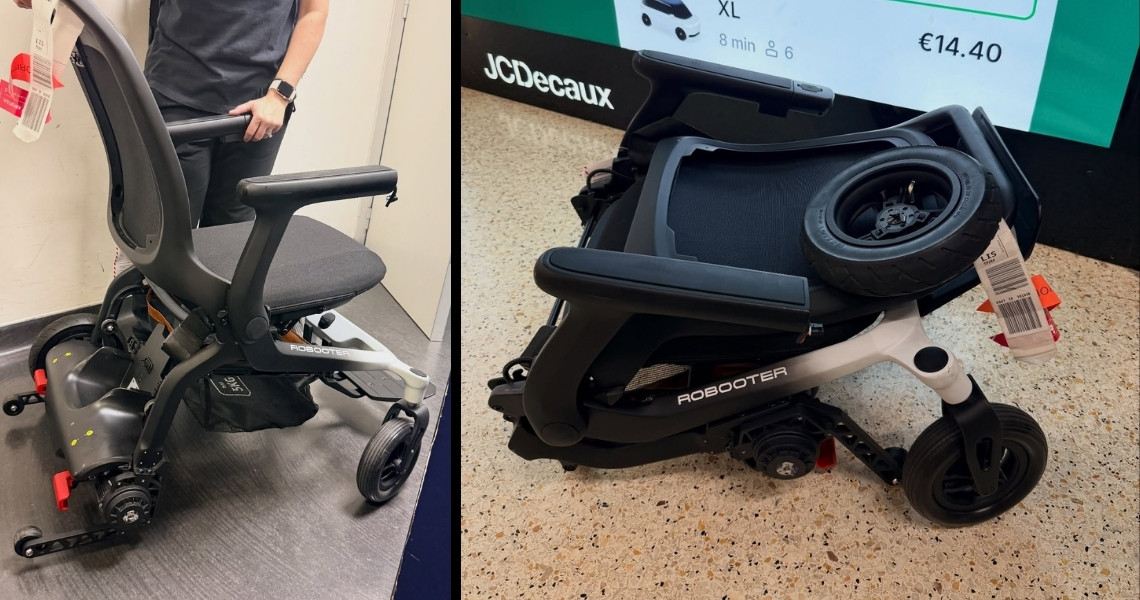
Chris, who posted his story on Threads, had spent months preparing for this trip. He and his wife both recognized his limitations after a fall on their last visit to Lisbon, one that hyperextended both his knees and accelerated his gradual transition to full-time wheelchair use. Ahead of leaving, he researched different types of motorized wheelchairs and scooters, attended the Abilities Expo in New York, and weighed renting against buying a mobility aid, not just for the trip but for everyday life. He ultimately chose the Robooter E80, a lightweight power chair suited to his needs. Before boarding his TAP Air Portugal flight, Chris removed the breakable parts, including the battery and controller, folded the chair, strapped it down, and personally walked TAP’s staff through how to handle it. He asked to bring it into the cabin but was told it had to go in the hold.
Was the damage preventable?
Without a shadow of doubt this level of damage was completely avoidable. Nothing about Chris’ account suggests he did anything wrong. He avoided a soft protective cover because covers do little beyond guarding against scratches, and instead stripped the chair down to its most transport-safe state himself. He coordinated directly with gate staff. The failure sits with TAP and with the Groundforce Portugal staff who operate ground handling at Humberto Delgado Airport. Groundforce Portugal is majority owned by Menzies Aviation. The buck stops with one of these stakeholders, if not all. We can’t say for sure if the chair was dropped, crushed under other cargo, or mishandled during the transfer process (either deliberately or as an accident), but what we do know is that Chris is now facing the rigmarole of having both sides (airline and airport) blame each other. An all too familiar pattern of frustration that disabled travelers are left to absorb the consequences of, while those unaffected continue their finger-pointing.
How common is this?
Unfortunately, very. U.S. airlines alone damaged, lost, delayed, or pilfered more than 11,000 passenger wheelchairs in a single year, a volume that pushed federal regulators to act. Under rules finalized by the Department of Transportation, U.S. and foreign airlines operating flights to and from the United States must now treat a damaged mobility device as presumptively the airline’s fault, provide a loaner chair, let the passenger choose how the device gets repaired, and return delayed equipment within 24 hours domestically or 30 hours on long-haul international routes. Airlines that violate these protections can face fines running into six figures per violation. If Chris’ trip originated in the United States, as his account suggests, TAP is very likely bound by these same obligations, regardless of the fact that the damage occurred on Portuguese soil.
None of that matters much to a traveler stuck without a way to leave his hotel room. Chris was given a manual airport loaner chair that TAP does not even stock in a motorized version, then had to scramble to find a private rental company in Lisbon on his own, all while his manual backup chair sat at home in the U.S. being used to train his future service dog.
What should happen next?
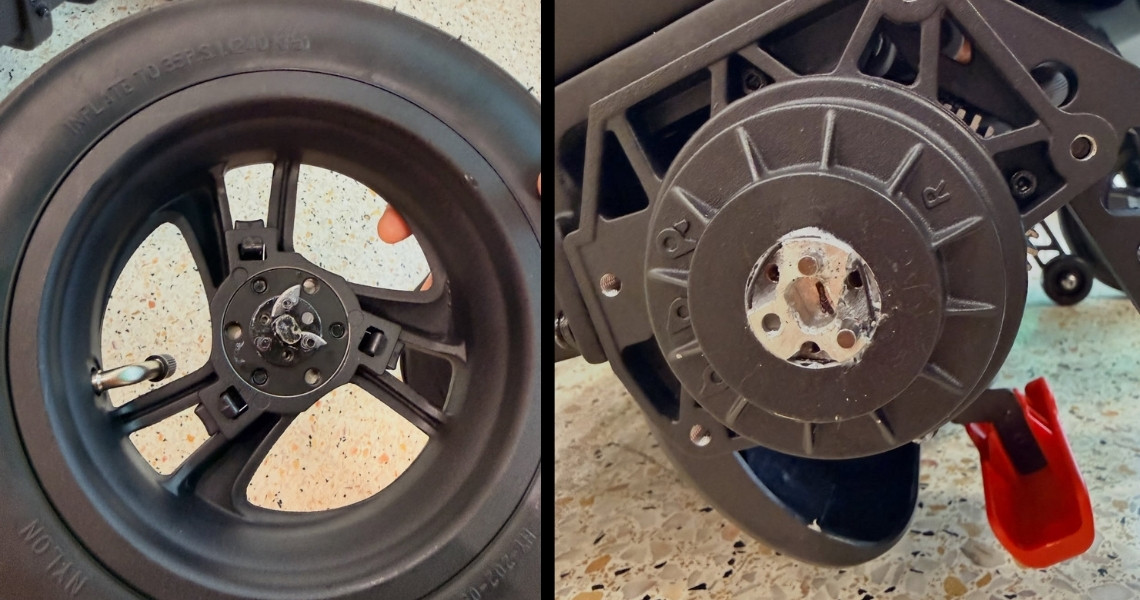
TAP Air Portugal, Menzies Aviation, and/or the 3rd party ground staff in the US owe, at minimum, immediate written confirmation of fault, a functioning replacement chair matched to his needs, and full compensation, not a fourteen-day investigation while he loses irreplaceable days of a trip he described as essential to his mental health. Airlines love to point to their accessibility policies in press materials. This is the test of whether those policies mean anything when a real passenger is standing at baggage claim looking at a wheel that has been snapped in half.
Wheelchair users do not need more apologies from gate agents. They need airlines and airports that treat mobility equipment with the same care as their own aircraft, and regulators willing to enforce the rules already on the books.
Coming back to the UK from Spain several years ago my NHS supplied wheelchair was damaged to the extent it was unusable .even the short push from the airport to the car. It had old type metal spokes in the big wheels and they were damaged buckling both wheels and the brakes were wrenched off the frame. I reported it but had no response .nor compensation . There was not even the temp loan while in the airport. I needed
the toilet but my disability didn’t allow me to even hobble there.we left very
frustrated and hate to admit that I wet myself.





One Response
Coming back to the UK from Spain several years ago my NHS supplied wheelchair was damaged to the extent it was unusable .even the short push from the airport to the car. It had old type metal spokes in the big wheels and they were damaged buckling both wheels and the brakes were wrenched off the frame. I reported it but had no response .nor compensation . There was not even the temp loan while in the airport. I needed
the toilet but my disability didn’t allow me to even hobble there.we left very
frustrated and hate to admit that I wet myself.